


THERAPY & PRACTICE
Review of the THERA-Trainer Masterclass 2025
Unleashing therapeutic potential – ten years of the Neurorehabilitation Technology Masterclass: evidence, robotics and practice in interdisciplinary and international dialogue

Jakob Tiebel
Health Business Consultant
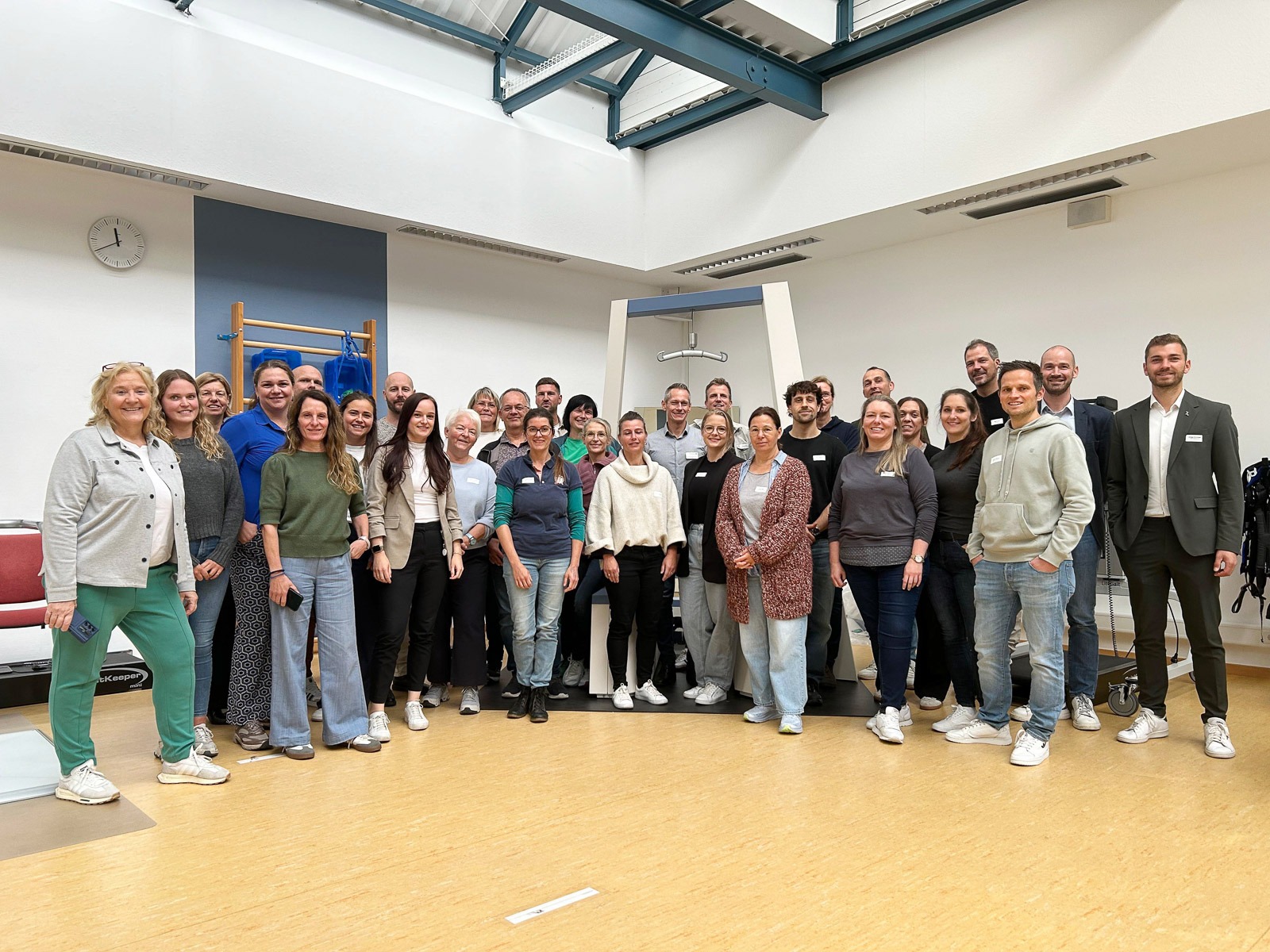
Last year’s THERA-Trainer Masterclass once again showed why it has been a firm fixture in the neurorehabilitation training calendar for almost ten years. Under the headline slogan “Unleashing therapeutic potential”, specialists from the fields of therapy, science and practice came together to gain in-depth information about robotics in the rehabilitation of mobility after stroke and to learn about specific concepts and implementation strategies. The combination of evidence-based lectures and practical expert workshops once again confirmed the Masterclass’s aspiration to combine theory and clinical reality in a meaningful way.
Unleashing therapeutic potential – 10 years of dialogue.
Special thanks are extended to our hosts at Diana Klinik Bad Bevensen, who created the ideal environment for intensive professional exchange through their open-door policy, insights into their therapeutic departments and excellently organised infrastructure. The clinic tours and practical colloquium provided direct insight into existing care concepts and prompted numerous discussions regarding their transferability and further development.
The programme covered a wide range of topics: from practical examples of device-supported circuit training in neurorehabilitation to the development of multimodal neglect therapy concepts and strategic insights into mobility-oriented rehabilitation models such as “Mo.Ritz”. This was complemented by perspectives from both outpatient and inpatient care settings, as well as a current update on research and development initiatives. The lectures emphasised the therapeutic potential of evidence-based technologies – provided they are sensibly integrated into existing structures and supported by an interdisciplinary approach.
The programme covered a wide range of topics: from practical examples of device-supported circuit training in neurorehabilitation to the development of multimodal neglect therapy concepts and strategic insights into mobility-oriented rehabilitation models such as “Mo.Ritz”. This was complemented by perspectives from both outpatient and inpatient care settings, as well as a current update on research and development initiatives. The lectures emphasised the therapeutic potential of evidence-based technologies – provided they are sensibly integrated into existing structures and supported by an interdisciplinary approach.
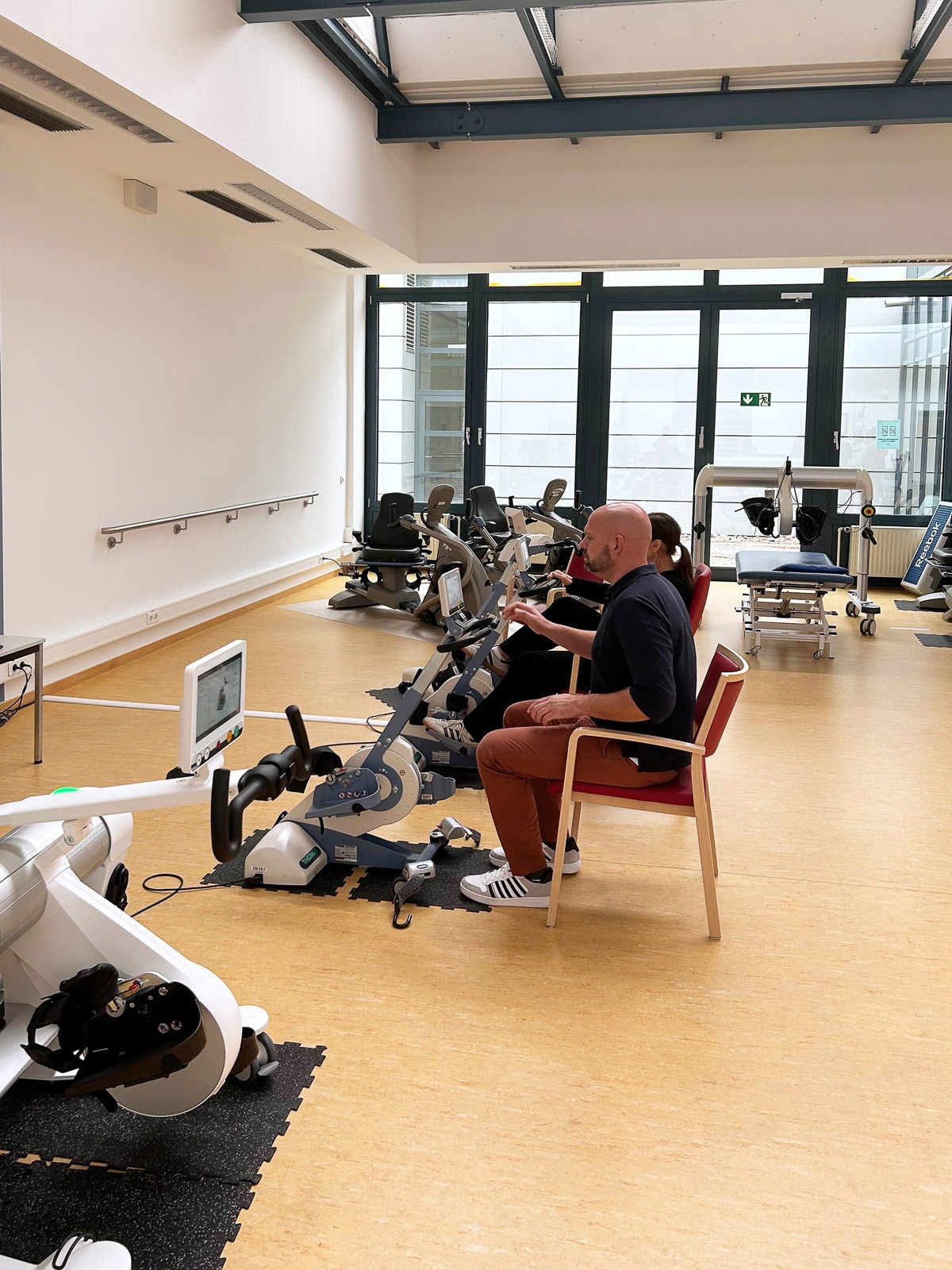
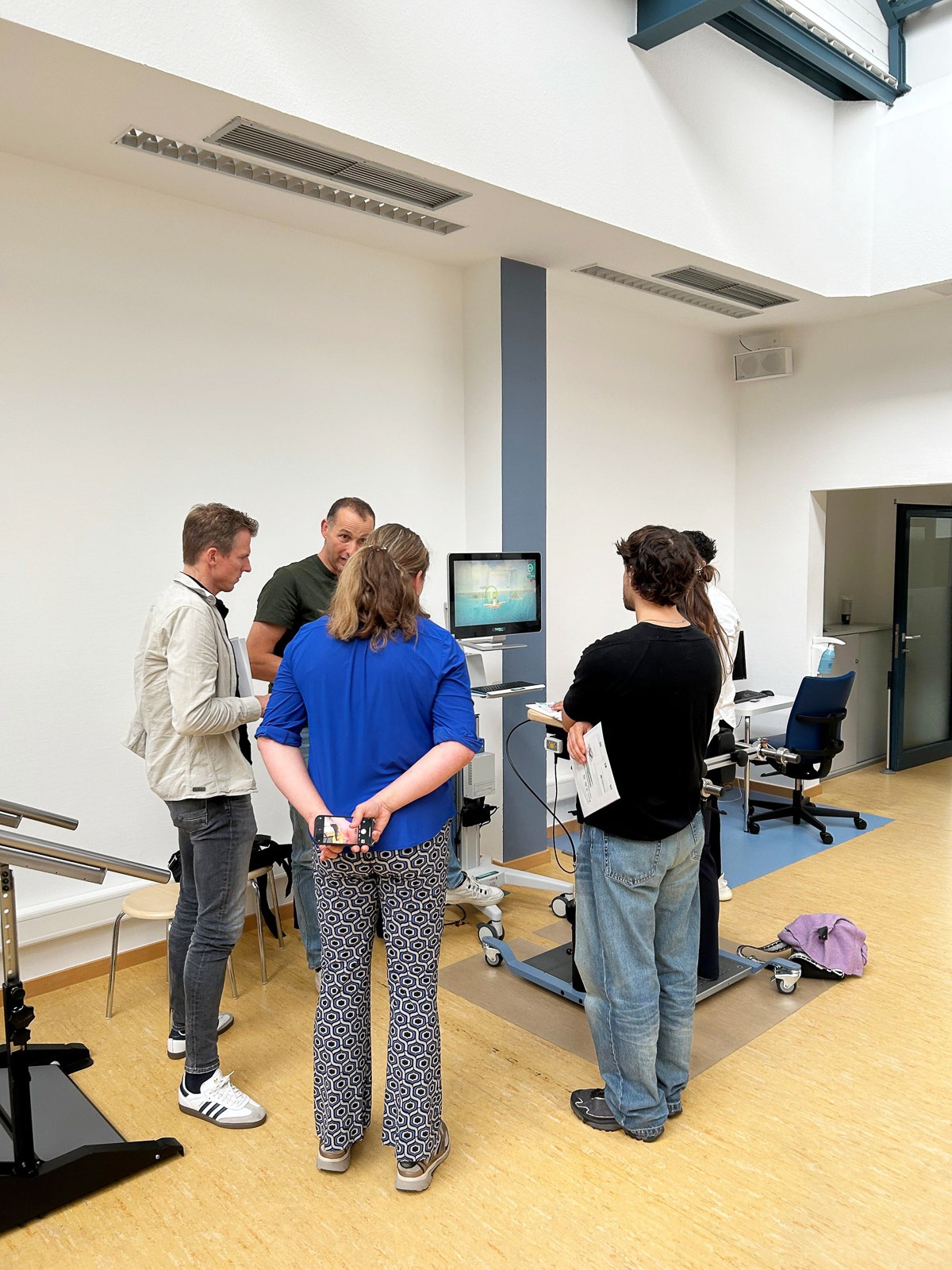
The intensive dialogue between the participants was particularly valuable. This year, for the first time, it extended far beyond national borders: colleagues from the Netherlands enriched the discussions and opened up additional perspectives on different healthcare systems, logics of care and implementation strategies. This international perspective was perceived by many as a clear added value.
We extend our sincere thanks to all speakers for their clinical expertise, transparency, and willingness to share evidence-based insights, as well as to all delegates who enriched the Masterclass through their questions, discussions and networking. Last but not least, the continuing interest in the Neurorehabilitation Technology Masterclass underlines the relevance of this format within the THERA-Trainer community.
We extend our sincere thanks to all speakers for their clinical expertise, transparency, and willingness to share evidence-based insights, as well as to all delegates who enriched the Masterclass through their questions, discussions and networking. Last but not least, the continuing interest in the Neurorehabilitation Technology Masterclass underlines the relevance of this format within the THERA-Trainer community.
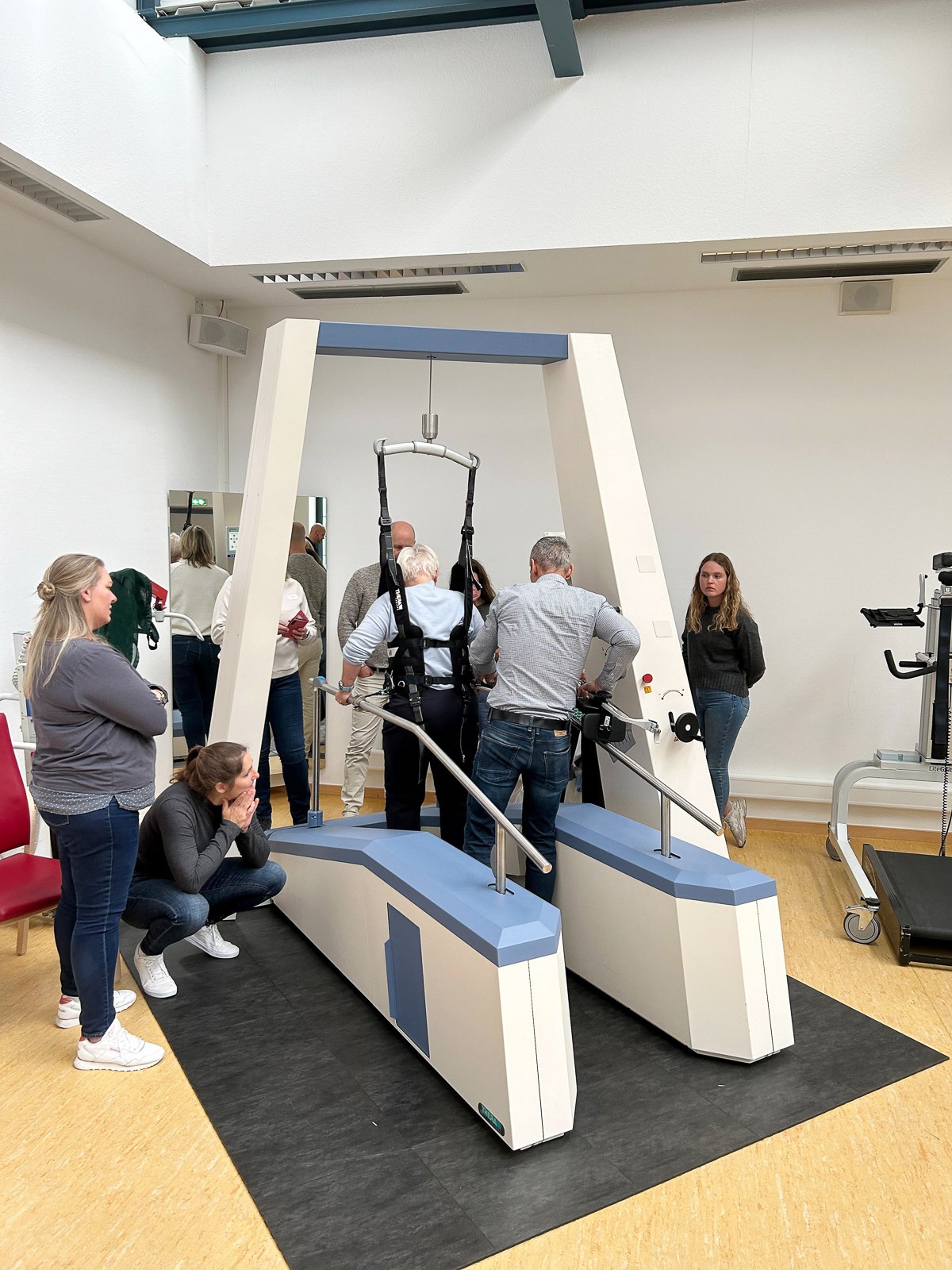
We are already looking ahead: in 2026, the symposium will be held at the Moritz Klinik Bad Klosterlausnitz. Once again, a challenging and practical programme is planned over two days, focusing on the latest developments in robotics, evidence-based therapy concepts and specific implementation issues. The Masterclass will remain a central platform for actively shaping the future of neurorehabilitation and unleashing therapeutic potential in a targeted manner.
Less show, more substance: quality, exchange and evidence-based practice.
Comments
Ten years of existence in a field that is developing as dynamically as neurorehabilitation is no coincidence. It is the result of a conscious, content-based approach. The THERA-Trainer Masterclass has experienced periods of significant growth, enhanced visibility and rapid expansion throughout its history. However, it has also consciously taken a step back, becoming smaller, more focussed and more specific – not for lack of demand, but out of a clear desire to ensure quality and deepen professional discourse. Looking back, this decision is a key success factor.
The basic concept has remained stable over the years: evidence-based content, practical relevance, openness to discussion and critical reflection. At the same time, the Masterclass has continued to evolve. New topics have been added, perspectives expanded and formats adapted. This reflects a central reality of rehabilitation: change is not a disruption, but a constant. Anyone who takes rehabilitation seriously not only has to accept change, but actively shape it.
The Masterclass offers a rare space for this. A space in which complex developments can be synthesised and condensed. A space in which technology is not viewed in isolation, but always in the context of therapeutic action, the reality of care and evidence-based criteria. And above all, a space that thrives on exchange – on encounters, shared experiences, practical testing and questioning.
Last year’s THERA-Trainer Masterclass once again demonstrated this in an impressive way. It was not merely a lecture format, but rather a forum for dialogue between therapy, science and clinical practice. Robotics in mobility rehabilitation after stroke was not only presented, but also categorised, discussed and linked to concrete implementation strategies. The combination of evidence-based specialist presentations and practical workshops demonstrated how closely theory and clinical reality must align for innovation to be effectively implemented.
The fact that this exchange is now also taking place across national borders is a logical next step. The participation of colleagues from the Netherlands showed how valuable it is to look at other healthcare systems, organisational logics and approaches to solutions – not as a comparison in the sense of “better or worse”, but as a learning field.
After ten years, the Masterclass is neither routine nor nostalgic. It is a living format that is constantly readjusting itself without losing its core. Especially at a time when technological developments, economic pressure and professional requirements continue to increase, it remains a place of concentration: on quality, on exchange and on the shared task of shaping rehabilitation for the future.
Ten years of existence in a field that is developing as dynamically as neurorehabilitation is no coincidence. It is the result of a conscious, content-based approach. The THERA-Trainer Masterclass has experienced periods of significant growth, enhanced visibility and rapid expansion throughout its history. However, it has also consciously taken a step back, becoming smaller, more focussed and more specific – not for lack of demand, but out of a clear desire to ensure quality and deepen professional discourse. Looking back, this decision is a key success factor.
The basic concept has remained stable over the years: evidence-based content, practical relevance, openness to discussion and critical reflection. At the same time, the Masterclass has continued to evolve. New topics have been added, perspectives expanded and formats adapted. This reflects a central reality of rehabilitation: change is not a disruption, but a constant. Anyone who takes rehabilitation seriously not only has to accept change, but actively shape it.
The Masterclass offers a rare space for this. A space in which complex developments can be synthesised and condensed. A space in which technology is not viewed in isolation, but always in the context of therapeutic action, the reality of care and evidence-based criteria. And above all, a space that thrives on exchange – on encounters, shared experiences, practical testing and questioning.
Last year’s THERA-Trainer Masterclass once again demonstrated this in an impressive way. It was not merely a lecture format, but rather a forum for dialogue between therapy, science and clinical practice. Robotics in mobility rehabilitation after stroke was not only presented, but also categorised, discussed and linked to concrete implementation strategies. The combination of evidence-based specialist presentations and practical workshops demonstrated how closely theory and clinical reality must align for innovation to be effectively implemented.
The fact that this exchange is now also taking place across national borders is a logical next step. The participation of colleagues from the Netherlands showed how valuable it is to look at other healthcare systems, organisational logics and approaches to solutions – not as a comparison in the sense of “better or worse”, but as a learning field.
After ten years, the Masterclass is neither routine nor nostalgic. It is a living format that is constantly readjusting itself without losing its core. Especially at a time when technological developments, economic pressure and professional requirements continue to increase, it remains a place of concentration: on quality, on exchange and on the shared task of shaping rehabilitation for the future.
Jakob Tiebel
Health Business Consultant
Jakob Tiebel is OT and studied applied psychology with a focus on health economics. He has clinical expertise from his previous therapeutic work in neurorehabilitation. He conducts research and publishes on the theory-practice transfer in neurorehabilitation and is the owner of an agency for digital health marketing.
References:
Related contents
Find related exciting contents in our media library.
Mehr laden
This is not what you are searching for? Knowledge

Meet our specialists.
Are you interested in our solutions? Schedule a meeting with a Consultant to talk through your strategy and understand how TEHRA-Trainer can help you to advance rehabilitation.