


THERAPY & PRACTICE
From therapy device to care pathway
Review of the THERA-Trainer Rehabilitation Masterclass at the Mo.Ritz Therapy Centre, Moritz Klinik

Jakob Tiebel
Health Business Consultant
The true value of therapy devices extends far beyond the setting in which they are used. What matters most is the clinical impact they deliver in patient care: more precise therapeutic decision-making, greater treatment intensity, clear treatment progression, and smoother transitions between inpatient rehabilitation, outpatient therapy and long-term aftercare.
The THERA-Trainer Rehabilitation Masterclass at the Mo.Ritz Therapy Centre at the Moritz Klinik Bad Klosterlausnitz clearly illustrated this connection. The focus was not on technology as an end in itself, but rather on a key question in modern neurorehabilitation: How can guidelines, clinical experience, standardised assessments, robotics and integrated care be combined in such a way that patients derive the greatest possible benefit in their everyday lives?
Rehabilitation is more than the sum of individual therapies
The event was opened by Dr Hans Ziegenthaler, Senior Consultant at the Moritz Klinik. His introduction gave participants an initial overview of the hospital and its specialist departments. What became clear was that the effectiveness of modern rehabilitation arises from the interplay of medical management, care, diagnostics, therapeutic treatment, provision of medical equipment, family engagement and aftercare. It does not begin with a therapy device – nor does it end when the patient leaves the treatment room. It should be understood as a coordinated, phased and clinically justified process. For this process to work, the individual elements must be properly coordinated.
When new technology also demands new structures
Jens Müller, physiotherapist and Head of the Therapy Department at the Moritz Klinik, went on to outline the evolution of the Mo.Ritz concept for delegates. His presentation demonstrated that establishing a device-assisted therapy environment reflects a vision, rather than merely an investment decision. The decision to implement new rehabilitation technologies in a structured way has an impact on the definition of workflows, responsibilities and therapeutic decision-making processes. Their introduction is therefore always accompanied by a process of organisational development.
As a result, Mo.Ritz became a change management project within the clinical setting, addressing not only spatial, technical and logistical issues. Crucially, it was the close collaboration with the therapeutic team in the design of new treatment pathways that made all the difference. After all, a device cannot make therapeutic treatment decisions. Clear indications, defined responsibilities, training concepts and clear criteria for the initiation, progression and conclusion of therapy are essential. Only by translating technology into clinical practice does a technical possibility evolve into a clinically meaningful element of patient care.
As a result, Mo.Ritz became a change management project within the clinical setting, addressing not only spatial, technical and logistical issues. Crucially, it was the close collaboration with the therapeutic team in the design of new treatment pathways that made all the difference. After all, a device cannot make therapeutic treatment decisions. Clear indications, defined responsibilities, training concepts and clear criteria for the initiation, progression and conclusion of therapy are essential. Only by translating technology into clinical practice does a technical possibility evolve into a clinically meaningful element of patient care.
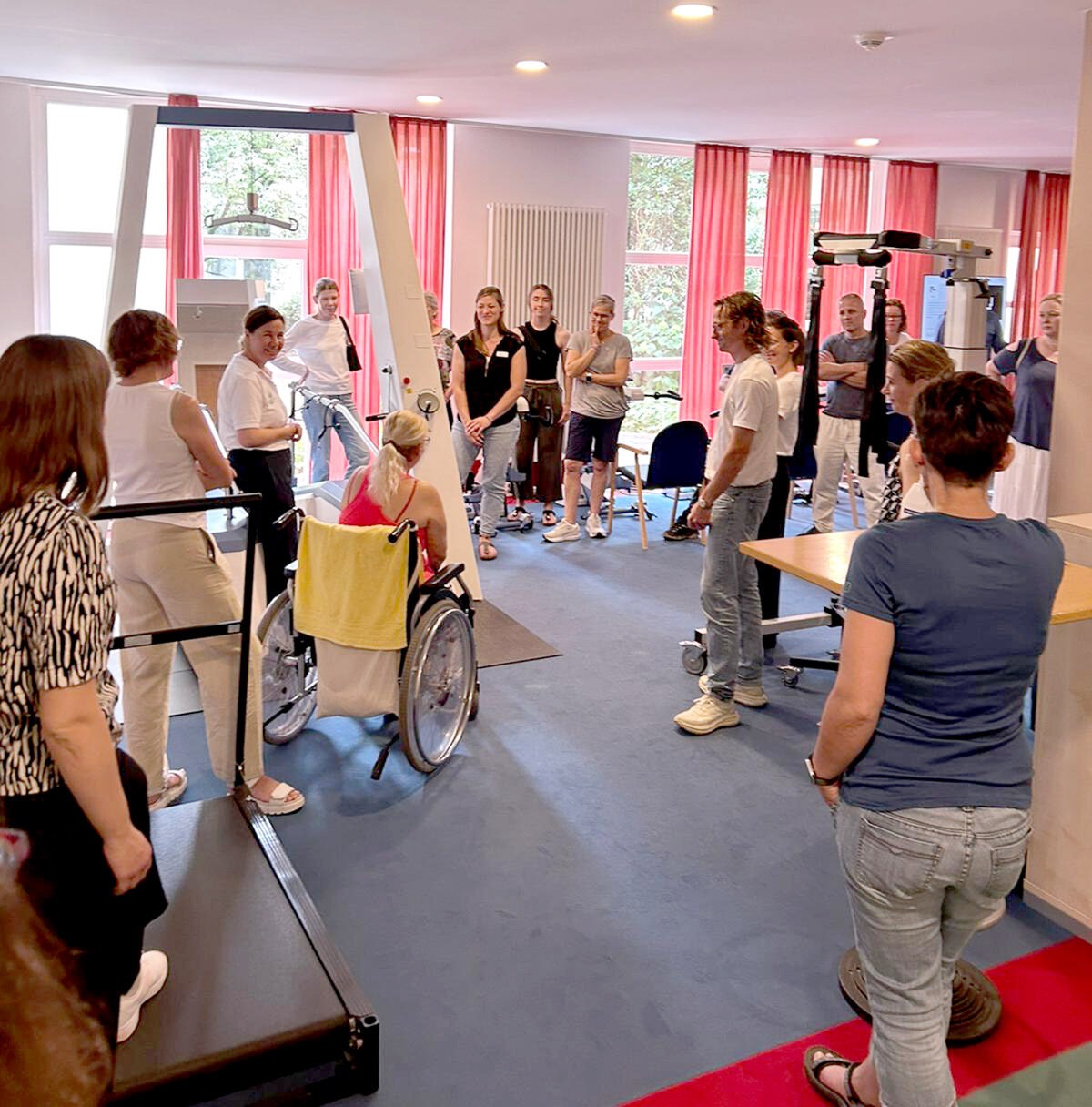
Technology only enhances patient care when it is meaningfully integrated into clinical decision-making and treatment pathways.
From modern equipment to a well-conceived treatment space
During the subsequent guided tour, delegates were able to experience the Mo.Ritz Therapy Centre first hand as a consistently well-conceived treatment environment. Standardised assessments, device-assisted interventions and therapeutic measures dovetail across phases and disciplines. Technological capabilities are systematically integrated into coordinated therapy concepts.
Which patients benefit from electromechanical gait training? Which patients benefit from robotic-assisted gait training, and when is treadmill training, overground walking or standing training more appropriate? And in which cases does a targeted combination of different approaches offer the greatest benefit?
These questions shape the therapeutic decision-making process. Crucially, it is the well-grounded selection of interventions, their rational combination and integration into clear treatment pathways. In this way, the specific strengths of each available technology can be used to targeted effect in patient care.
TheMoS: a new approach to mobility therapy after stroke
The new TheMoS guideline on mobility therapy after stroke served as a central scientific point of reference for the Masterclass. Alongside the tour of the hospital, Prof Susanne Saal and Anja Röck provided insights into the current evidence base for gait therapy.
TheMoS is set to supersede the current ReMoS guideline, establishing itself as the new evidence- and recommendation-based framework for the management of mobility impairments after stroke.
The guideline follows a clear internal structure, organised according to interventions and target criteria. Prof Saal particularly emphasised the importance of practical implementation. Guidelines are designed to structure clinical decision-making, reduce uncertainty and be reliably integrated into everyday patient care.
In neurorehabilitation in particular, interventions must be planned on a patient-specific, phase-appropriate basis and coordinated across a range of care settings. To this end, TheMoS consolidates current evidence to provide evidence-based recommendations. As such, the guideline will provide valuable guidance for a complex care setting in which inpatient, day-patient and outpatient treatment phases must be closely coordinated.
How guidelines are put into practice
This is demonstrated by Anja Röck, BSc Physiotherapy, co-developer of the new guideline-based gait laboratory at the SRH health centres in the Northern Black Forest. As a member of the innovation team, she played a key role in the development of the guideline-based care concept.
Her presentation showed the concrete steps required to translate evidence-based gait rehabilitation into everyday clinical practice. This includes conceptual planning, decisions relating to spatial and technical infrastructure, practitioner qualification, and the integration of procedures into existing treatment pathways.
In this way, the abstract question of scientific evidence was transformed into a practical question of implementation, ensuring that evidence-based recommendations genuinely reach patients.
Assessments: measuring to make better decisions
In the afternoon, Janet Gewalt from the Moritz Klinik turned the spotlight onto the role of standardised assessments. In everyday clinical practice, assessments are sometimes regarded as an additional documentation task. When used correctly, however, they offer considerably more than that: they form the basis for therapeutic decision-making.
Instruments such as the Functional Ambulation Category for assessing ambulatory function, and the Berg Balance Scale or Mini-BESTest for evaluating balance and postural control, help to establish a detailed baseline assessment. They support the selection of appropriate interventions, make changes visible, and enable treatment progression to be evaluated objectively.
Assessments therefore create a shared language. They combine observation, clinical experience and measurable outcomes – making decisions more robust and easier to justify in interprofessional exchange.
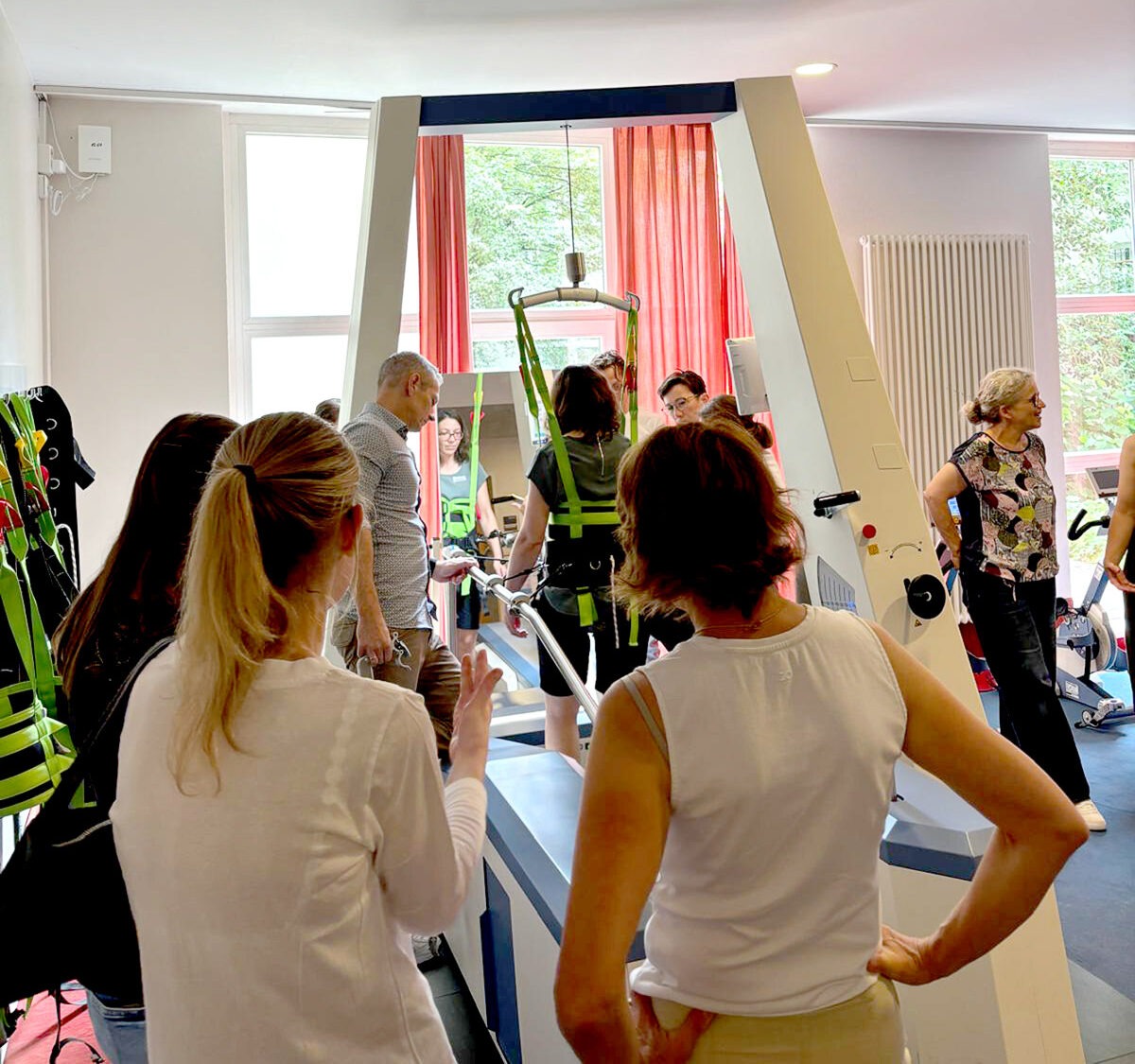
High repetition numbers are not enough
The presentations and discussions also highlighted a key tension at the heart of modern neurorehabilitation. Device-assisted therapy can increase treatment intensity, enable a high number of targeted repetitions, and make treatment progression more objectively measurable. However, these potential benefits do not materialise on their own.
Points of intense discussion included inclusion and exclusion criteria for electromechanical gait training, the transition from robotic-assisted therapy to treadmill-based training, and the question of when patients should progress to overground walking.
The transfer into everyday life was of particular importance to participants. Improvements achieved within the protected therapeutic setting are clinically significant. However, they only achieve clinical effectiveness when patients become more independent, active and mobile in their daily lives – in other words, when successful transfer to the participation level is achieved.
The key question was therefore not just: Can a patient walk better under therapeutic conditions? But also: To what extent does the patient apply these newly acquired skills beyond the therapy room?
Exchange as part of the development of care provision
The first day of the event concluded with a joint evening reception near the hospital. The informal setting offered space for in-depth discussion, critical enquiry, and exchange between professionals from a range of clinical disciplines and care settings.
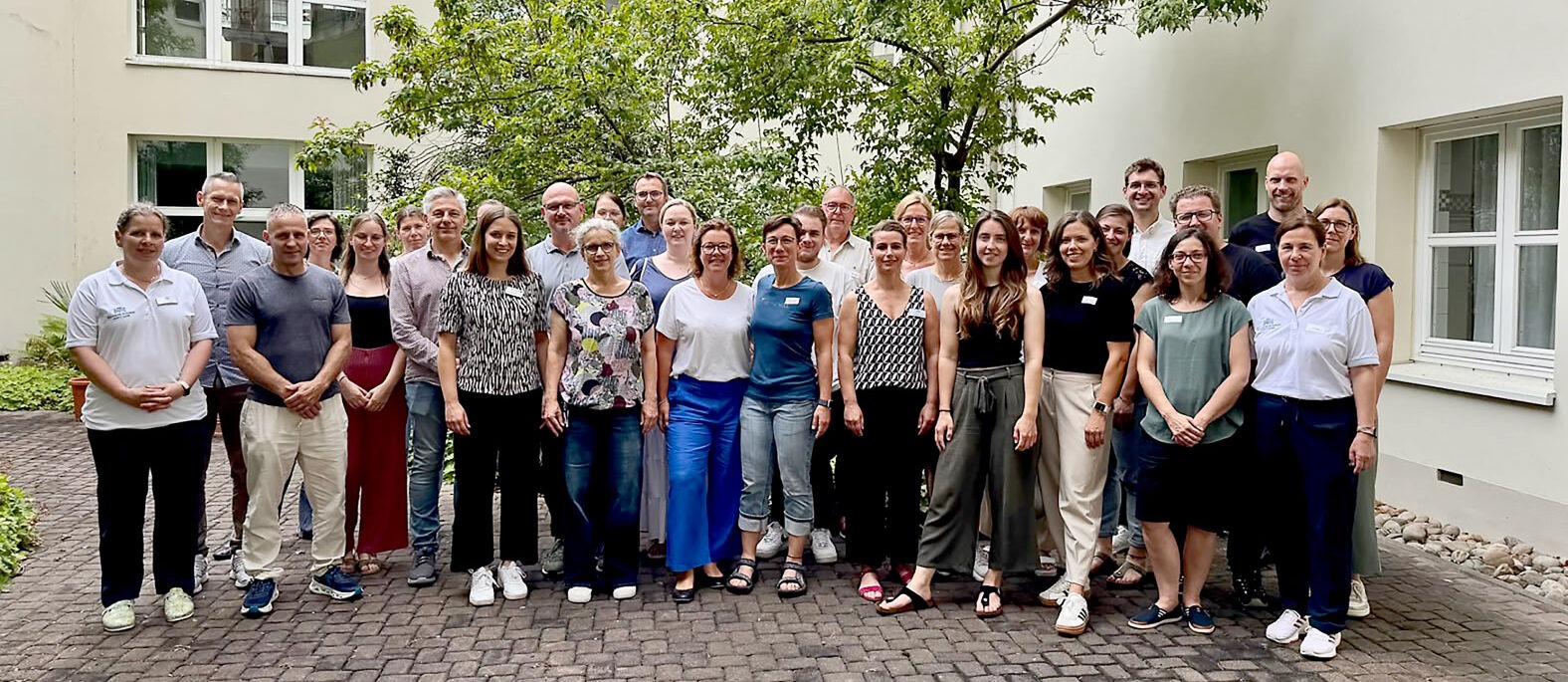
This is a particular strength of the annual Masterclass event. It brings together individuals who not only discuss modern gait rehabilitation in theory, but who are also responsible for its implementation in everyday clinical practice and who continue to develop it further under real-world conditions.
The discussions that emerge in this setting are far more than a supporting programme. They establish the foundations for exchanging clinical experience, critically appraising established routines, and integrating innovative treatment strategies into everyday practice.
The greatest gap often occurs at the interface
The second day of the event focused on the transition from inpatient rehabilitation to outpatient follow-up care. Peter Georgas-Frey from Fachkliniken Wangen presented the development of an outpatient centre affiliated with the hospital. This enables patients to transition directly from neurological rehabilitation into aftercare provided in close association with the hospital.
His presentation therefore addressed one of the greatest challenges within the healthcare system: Gaps in care frequently arise not during inpatient treatment itself, but at the interface with aftercare. If therapeutic goals are not consistently pursued, information is transferred incompletely, or appropriate follow-on services are not arranged in a timely manner, even high-quality inpatient rehabilitation can lose its long-term efficacy.
A successful care pathway must therefore extend beyond the discharge date.
Modern neurorehabilitation requires not only better equipment, but above all more robust systems and reliable care transitions.
Rehabilitation during the chronic phase
Marko Schütze, who owns an interdisciplinary specialist practice treating neurological patients, complemented this perspective by drawing on his experience in outpatient care. His presentation demonstrated that device-assisted therapy can also play a significant role in the chronic phase – provided it is applied appropriately as part of a multimodal approach and with a patient-centred focus.
It is not solely about improving individual body functions. Mobility, communication, activity and social participation must be considered as a whole. By way of example, he demonstrated how standing and gait training can be combined with speech and language therapy interventions.
Such emancipatory approaches deliberately move away from rigid professional silos. As a consequence, the emphasis shifts away from determining which profession is responsible for a specific function, and towards the shared therapeutic goal for the patient, and how therapies dovetail across disciplines.
From knowledge to therapeutic practice
The follow-up practical workshop saw selected case studies presented to the therapy group for discussion. Treatment sequences – particularly on the Lyra gait trainer – were demonstrated. The format combined clinical case work with hands-on use of the technology. Participants had the opportunity not only to observe modern gait laboratory techniques, but also to trial them and reflect on their experience as a group.
Combining case studies, demonstrations and hands-on experience supports the transfer of knowledge into clinical practice. After all, implementing device-assisted therapy requires more than simply regurgitating study findings. Therapists must be able to assess movement quality, understand device settings, interpret patient responses and formulate appropriate progressions. Technological proficiency is therefore always a matter of clinical decision-making competence.
Combining case studies, demonstrations and hands-on experience supports the transfer of knowledge into clinical practice. After all, implementing device-assisted therapy requires more than simply regurgitating study findings. Therapists must be able to assess movement quality, understand device settings, interpret patient responses and formulate appropriate progressions. Technological proficiency is therefore always a matter of clinical decision-making competence.
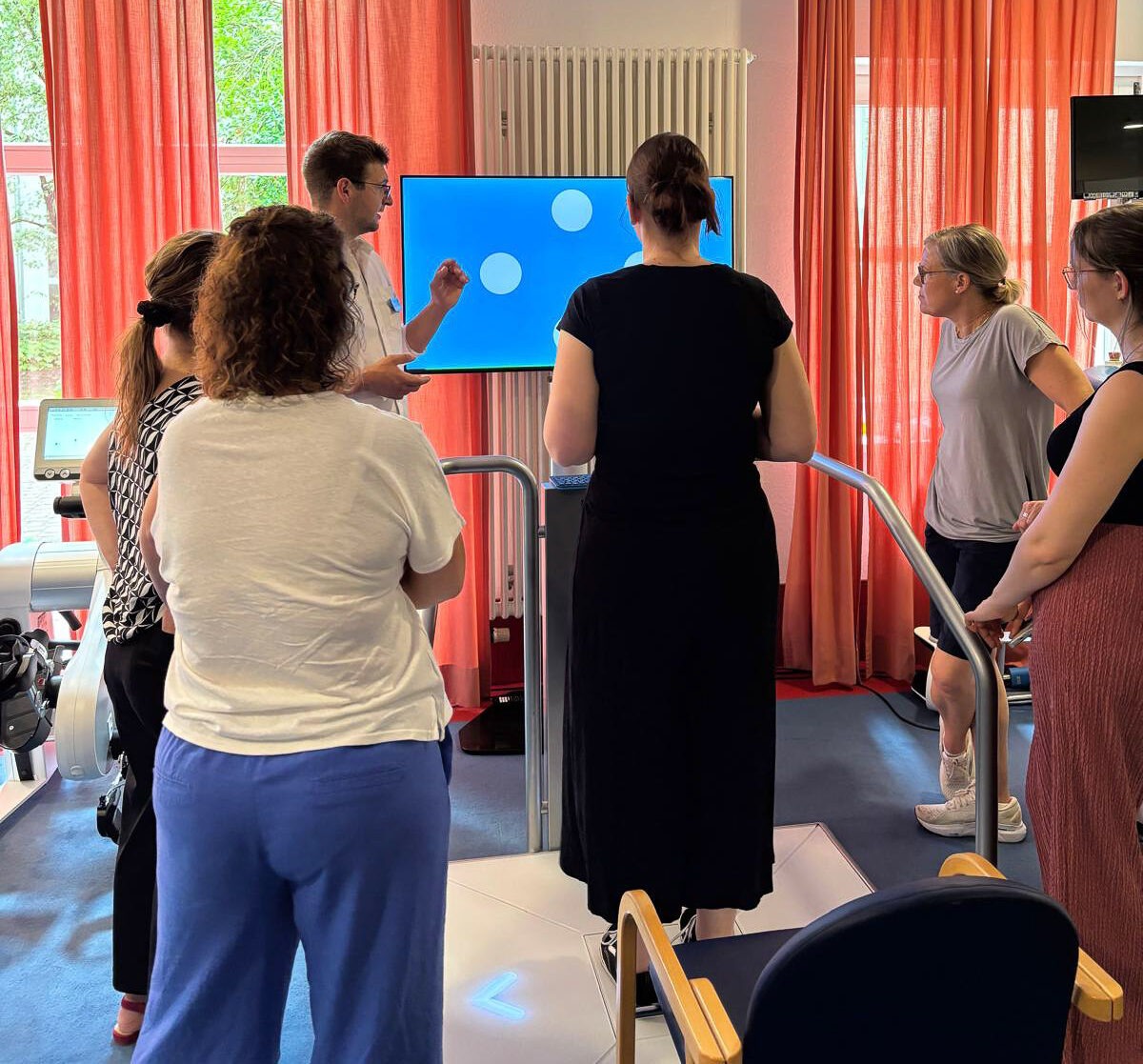
It is not the device that transforms care, but its implementation
The closing panel discussion drew together the key themes addressed across both days of the event. The message was clear: translating evidence into practice is not an afterthought. It is central to the development of modern care. Guidelines, assessments and technologies remain ineffective unless they are integrated into clear processes, interprofessional decision-making and integrated care pathways.
At the same time, health services research must in future investigate more intensively how new concepts can be introduced under real-world conditions, permanently embedded and carried forward across care interfaces.
There is significant potential particularly at the transition from inpatient rehabilitation to outpatient therapy. This is frequently the critical juncture at which gains made during therapy are either consolidated and transferred into daily life, or an otherwise successful rehabilitation pathway loses momentum due to insufficient continuity of care.
Modern neurorehabilitation needs better systems
The THERA-Trainer Rehabilitation Masterclass at the Moritz Klinik provided a clear illustration of what will be crucial to neurorehabilitation in the years ahead. Publication of a guideline alone does not change clinical practice. Nor does the acquisition of a new therapy device.
The clinical value of modern rehabilitation lies in its implementation: when evidence is translated into reliable routines, assessments underpin therapeutic decision-making, technologies are employed in a targeted manner, and treatment goals are upheld across sector boundaries.
Modern neurorehabilitation therefore does not simply require more technology. It needs better systems, within which technology can flourish..
The Masterclass continues into 2027
The THERA-Trainer Rehabilitation Masterclass will take place again next year. The venue has yet to be confirmed. Stay tuned – and be there when clinical expertise, hands-on experience and innovative rehabilitation technologies come together again in 2027.
Jakob Tiebel
Health Business Consultant
Jakob Tiebel is OT and studied applied psychology with a focus on health economics. He has clinical expertise from his previous therapeutic work in neurorehabilitation. He conducts research and publishes on the theory-practice transfer in neurorehabilitation and is the owner of an agency for digital health marketing.
References: