


TECHNOLOGY & DEVELOPMENT
From practitioner to development companion
The new role of therapists in the digital age. A future psychological perspective for modern rehabilitation
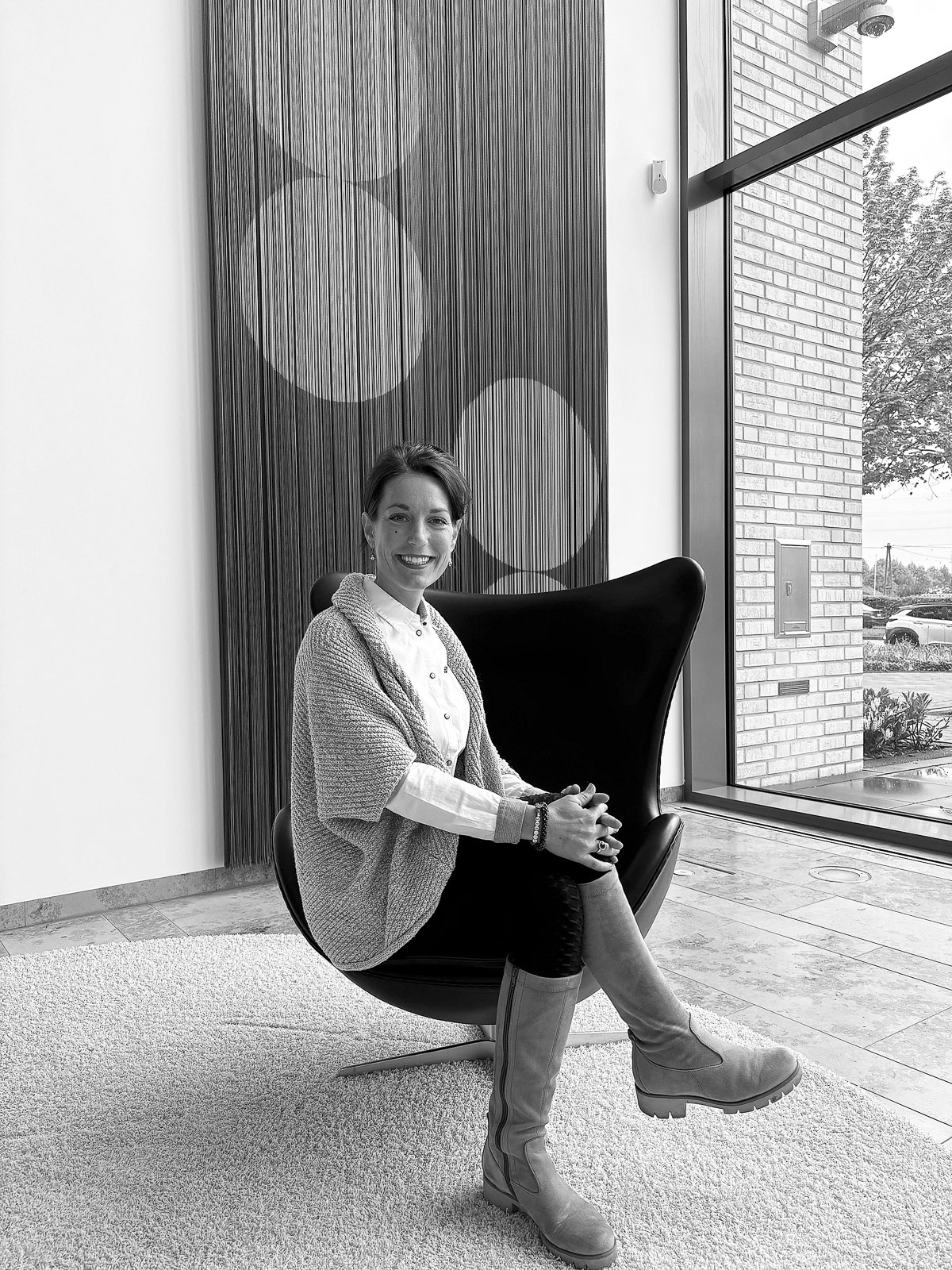
Linda Kaiser
Head of Science & Communication, opta data Future Foundation
A silent but profound change
The digitalisation of the healthcare system is often described as technical progress. Teletherapy, apps, wearables, digital training programmes and artificial intelligence are changing processes, approaches and structures. But a closer look reveals that the actual change is not a technical one, but a professional and psychological one. For some years now, therapists have been experiencing a subtle shift in their professional identity. Patients come to the practice more informed, but not necessarily more orientated. They bring with them data, apps, training plans and contradictory recommendations – and at the same time uncertainty, excessive demands or unrealistic expectations. The question is therefore not whether therapy is becoming digital. It is rather what role therapists have to play in a digital health world.
For some years now, therapists have been experiencing a subtle shift in their professional identity. Patients come to the practice more informed, but not necessarily more orientated. They bring with them data, apps, training plans and contradictory recommendations – and at the same time uncertainty, excessive demands or unrealistic expectations. The question is therefore not whether therapy is becoming digital. It is rather what role therapists have to play in a digital health world.
For some years now, therapists have been experiencing a subtle shift in their professional identity. Patients come to the practice more informed, but not necessarily more orientated. They bring with them data, apps, training plans and contradictory recommendations – and at the same time uncertainty, excessive demands or unrealistic expectations. The question is therefore not whether therapy is becoming digital. It is rather what role therapists have to play in a digital health world.
Digitalisation is not changing therapy – it is exposing its core
Digital technologies have made knowledge available. Movement analyses, training suggestions and health information can be accessed at any time. What they cannot deliver is meaning. They can measure, but not categorise. They can compare, but not evaluate what makes sense for a specific person in a specific life situation.
From a psychological perspective, this creates tension: the more information available, the greater the need for orientation. Patients often know what they could do – but not what the right thing to do is at that particular moment. This is exactly where modern therapeutic expertise begins.
In the digital age, therapy is becoming less about imparting knowledge and more about providing orientation. The therapist is no longer primarily the one who explains, but the one who helps to reduce complexity, sort out expectations and structure development. This is not a loss of professionalism – it is its intensification.
From a psychological perspective, this creates tension: the more information available, the greater the need for orientation. Patients often know what they could do – but not what the right thing to do is at that particular moment. This is exactly where modern therapeutic expertise begins.
In the digital age, therapy is becoming less about imparting knowledge and more about providing orientation. The therapist is no longer primarily the one who explains, but the one who helps to reduce complexity, sort out expectations and structure development. This is not a loss of professionalism – it is its intensification.
For some years now, therapists have been experiencing a subtle shift in their professional identity.
Therapy as a learning process – not repair work
Rehabilitation has long been understood as functional restoration: improving mobility, building strength, reducing pain. These goals remain relevant, but fall Short. Modern neuropsychological models show that the body is not a passive object that is repaired, but a learning system.
Movement is not created by willpower or instruction alone. Even before a muscle is activated, the nervous system has assessed whether a movement is safe, sensible and energetically justifiable. This assessment is based on experience, emotion and expectation – not solely on objective findings.
This is why therapists encounter situations every day in which patients are functionally “ready” but feel insecure, are evasive or stagnant. It is not a lack of motivation, but a reflection of a system that has learnt to be cautious.
Under these conditions, therapy becomes a learning process: patients learn to trust their bodies again, to realistically categorise stress and to be open to new experiences. This perspective shifts the focus from purely performing exercises to shaping experience.
Movement is not created by willpower or instruction alone. Even before a muscle is activated, the nervous system has assessed whether a movement is safe, sensible and energetically justifiable. This assessment is based on experience, emotion and expectation – not solely on objective findings.
This is why therapists encounter situations every day in which patients are functionally “ready” but feel insecure, are evasive or stagnant. It is not a lack of motivation, but a reflection of a system that has learnt to be cautious.
Under these conditions, therapy becomes a learning process: patients learn to trust their bodies again, to realistically categorise stress and to be open to new experiences. This perspective shifts the focus from purely performing exercises to shaping experience.
In the digital age, therapy is becoming less about imparting knowledge and more about providing orientation.
Future-oriented pedagogy as a frame of reference for therapeutic action
This is where the concept of future-oriented pedagogy can be categorised in a meaningful way. Future-oriented pedagogy is not a pedagogical approach to methodology or an educational concept in the traditional sense. It describes an interdisciplinary framework that deals with the question of how people remain capable of learning and acting under conditions of uncertainty, change and complexity.
When applied to therapy, this means that rehabilitation is a transitional process. Patients are caught between old and new resilience, between certainty and uncertainty, and between control and trust. Therapy accompanies this transition.
In therapy, future-oriented pedagogical action is not characterised by instruction, but by the creation of experiential spaces. Therapists structure learning processes, dose challenges, provide orientation and enable self-efficacy. They help patients to deal with uncertainty without avoiding it.
In this way, therapy becomes a form of applied future-oriented pedagogy in the health context – not theoretical, but highly practical.
When applied to therapy, this means that rehabilitation is a transitional process. Patients are caught between old and new resilience, between certainty and uncertainty, and between control and trust. Therapy accompanies this transition.
In therapy, future-oriented pedagogical action is not characterised by instruction, but by the creation of experiential spaces. Therapists structure learning processes, dose challenges, provide orientation and enable self-efficacy. They help patients to deal with uncertainty without avoiding it.
In this way, therapy becomes a form of applied future-oriented pedagogy in the health context – not theoretical, but highly practical.
Teletherapy and digital formats: what really counts
The discussion about teletherapy is often polarised: either as an inferior substitute or as a solution to all healthcare problems. The scientific evidence paints a more differentiated picture, in the sense that digital therapy formats can be effective – if they are well structured.
The critical factor is not the medium, but the quality of the relationship, the clarity of the guidance and the ability to organise transfer into everyday life. Teletherapy makes visible what therapy has always been: success does not happen during appointments, but between them.
Therapists who work effectively in digital settings are not characterised by technical sophistication, but by psychological intuition. They can motivate, structure, dose and provide feedback – even without being physically present. Digitalisation strengthens these skills, but it does not replace them.
The critical factor is not the medium, but the quality of the relationship, the clarity of the guidance and the ability to organise transfer into everyday life. Teletherapy makes visible what therapy has always been: success does not happen during appointments, but between them.
Therapists who work effectively in digital settings are not characterised by technical sophistication, but by psychological intuition. They can motivate, structure, dose and provide feedback – even without being physically present. Digitalisation strengthens these skills, but it does not replace them.
Digital applications, data and the new translational capacity
Apps, wearables and digital health applications generate data. Step counts, movement volumes, load durations and progress curves can be helpful – or overwhelming. Data alone does not change behaviour. It needs categorisation.
A new therapeutic core competence emerges here: the translation of data into experience. Therapists help patients to understand what readings mean – and what they do not mean. They prevent overinterpretation, relativise fluctuations and draw attention to correlations rather than individual values.
This is a challenging task. It requires clinical judgment, psychological understanding and experience. It cannot be automated because it is always context-dependent.
A new therapeutic core competence emerges here: the translation of data into experience. Therapists help patients to understand what readings mean – and what they do not mean. They prevent overinterpretation, relativise fluctuations and draw attention to correlations rather than individual values.
This is a challenging task. It requires clinical judgment, psychological understanding and experience. It cannot be automated because it is always context-dependent.
Artificial intelligence is increasingly being used in rehabilitation.
Artificial intelligence and the question of the human being
Artificial intelligence is increasingly being used in rehabilitation. It can analyse movements, recognise patterns and provide feedback. What it cannot do is take responsibility or shape relationships.
Therapy is caught between stress and protection, and between progress and retreat at all times. These decisions are rarely unambiguous. They require experience, intuition and the ability to read non-verbal signals. This is precisely where humans remain indispensable. The future does not lie in replacing the therapist, but using technological asistance in a sensible way. AI can provide support – accountability remains with the practitioner.
Therapy is caught between stress and protection, and between progress and retreat at all times. These decisions are rarely unambiguous. They require experience, intuition and the ability to read non-verbal signals. This is precisely where humans remain indispensable. The future does not lie in replacing the therapist, but using technological asistance in a sensible way. AI can provide support – accountability remains with the practitioner.
Modern therapy teaches far more than just movement exercises.
Relationships as a key factor in the digital age
A common misconception is that relationships lose importance in digital settings. In actual fact, the opposite happens. The less context there is, the more important the quality of the relationship becomes.
A therapeutic relationship creates security. It facilitates learning, change and regulation. It is not a soft factor, but a neurobiological mechanism of action. Patients do not open up because an app demands it, but because they feel understood. In the digital age, this expertise is growing in visibility – and value.
A therapeutic relationship creates security. It facilitates learning, change and regulation. It is not a soft factor, but a neurobiological mechanism of action. Patients do not open up because an app demands it, but because they feel understood. In the digital age, this expertise is growing in visibility – and value.
The skills conveyed by therapy today
Modern therapy teaches far more than just movement exercises. It teaches skills that patients need in the long term:
• Self-regulation
• Realistic load appraisal
• Dealing with uncertainty
• Body awareness
• Confidence in one’s own ability to act
These skills extend beyond therapy. They are of central importance in a dynamic working and living environment.
• Self-regulation
• Realistic load appraisal
• Dealing with uncertainty
• Body awareness
• Confidence in one’s own ability to act
These skills extend beyond therapy. They are of central importance in a dynamic working and living environment.
Conclusion: The future of therapy is human
The digital era is not changing therapy at its core. It is making visible what therapy has always been: a companion to development. Therapists are not needed less, but more clearly.
They are development companions, translators, regulators and sources of orientation. Future-oriented pedagogy provides a framework for understanding this role – not as an add-on, but as a precise description of professional practice.
The future of therapy is not digital or analogue. It is human, reflective and professional.
For me, future-oriented pedagogy does not mean preparing people for a very specific future, but accompanying them in such a way that they remain capable of dealing with uncertainty, change and physical transitions. Therapy is not a repair shop, but a learning space. Where people develop a renewed sense of trust in their bodies, future capability is created – quietly, through experience and for the long term.
They are development companions, translators, regulators and sources of orientation. Future-oriented pedagogy provides a framework for understanding this role – not as an add-on, but as a precise description of professional practice.
The future of therapy is not digital or analogue. It is human, reflective and professional.
For me, future-oriented pedagogy does not mean preparing people for a very specific future, but accompanying them in such a way that they remain capable of dealing with uncertainty, change and physical transitions. Therapy is not a repair shop, but a learning space. Where people develop a renewed sense of trust in their bodies, future capability is created – quietly, through experience and for the long term.
The digital era is making visible what therapy has always been.
Linda Kaiser
Head of Science & Communication, opta data Future Foundation
Linda Kaiser learned the healthcare profession from the ground up. As a physiotherapist, she worked in neurorehabilitation for over a decade and experienced first-hand the challenges and opportunities involved in caring for patients. In doing so, she recognised that physiotherapy can not only heal, but also sustainably shape the entire healthcare system – provided it has the right framework to do so. To play an active role in shaping this framework, she expanded her knowledge about the healthcare system and, alongside her practical work, completed a bachelor’s degree in Health and Social Management followed by a Master of Science in Public Health. This pathway enabled her to link theory with practice even more strongly, and to engage with the structural, political and economic challenges of physiotherapy. She now brings her professional expertise to her role as scientific director, overseeing academic management and future workshops at the opta data Zukunfts-Stiftung foundation. Here she analyses scientific studies, develops future strategies for healthcare and works with interdisciplinary teams to strengthen the future viability of the healthcare professions. In doing so, she employs the future compass, a tool developed by future psychologist Prof. Thomas Druyen, that enables systematic navigation through the challenges of the coming years.
References:
Related contents
Find related exciting contents in our media library.
Mehr laden
This is not what you are searching for? Knowledge

Meet our specialists.
Are you interested in our solutions? Schedule a meeting with a Consultant to talk through your strategy and understand how TEHRA-Trainer can help you to advance rehabilitation.