


THERAPY & PRACTICE
When the brain and body train together
How one facility is redefining rehabilitation with the OmniCycle® Connect

At a long-term care facility in Schaumburg, Illinois, USA, a former world traveler‘s determination to leave her wheelchair behind captures everything modern rehabilitation technology can make possible when the right tool engages the brain and the body together.
As a former airline employee, she had visited more than 30 countries. When the therapy team at Bella Terra Schaumburg asked where she wanted to go on the facility’s OmniTour™ – a virtual cycling environment that immerses patients in real-world destinations – she didn’t hesitate. Her choice: Buenos Aires.
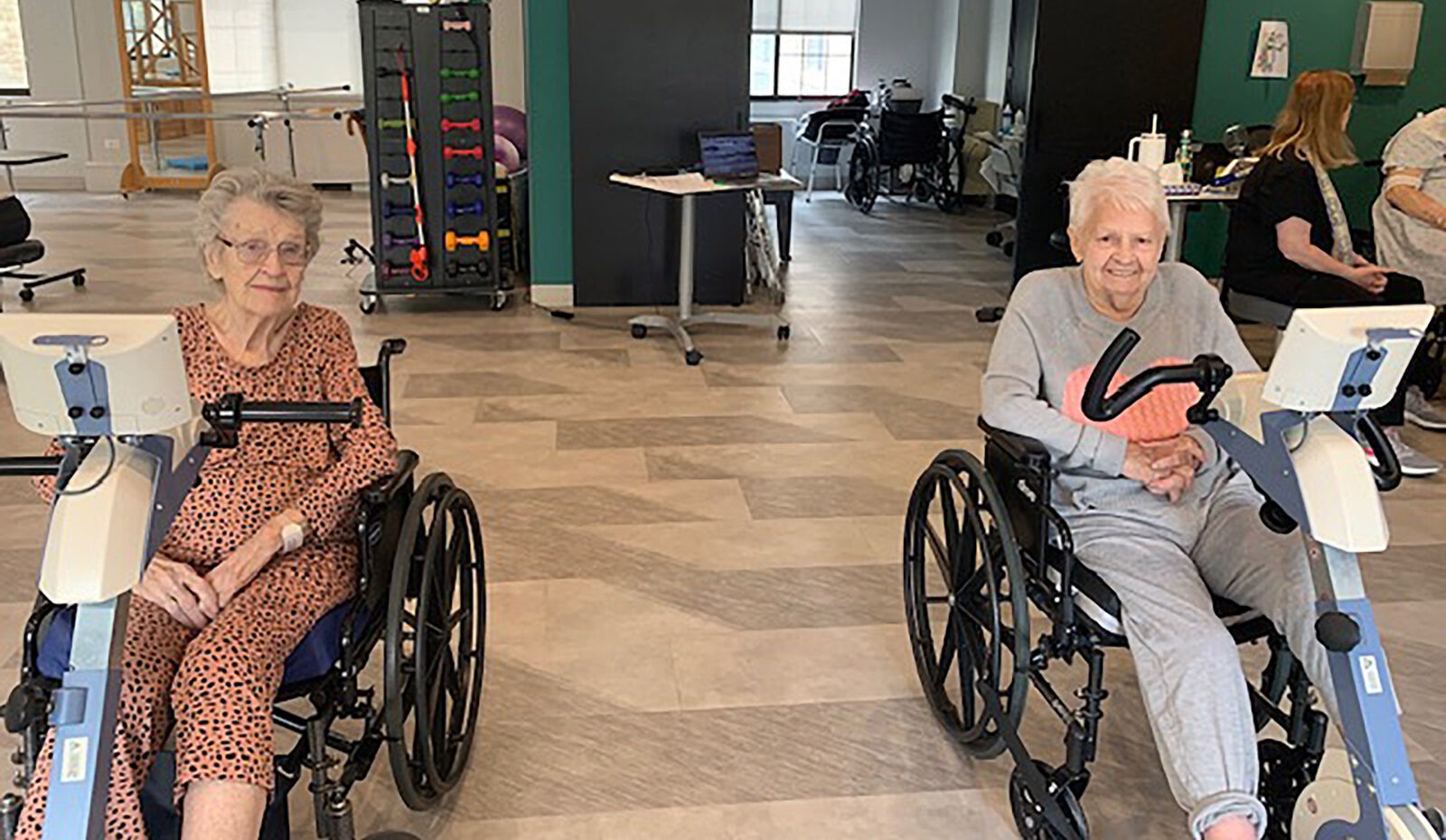
Within moments, she was cycling. Her legs turned the pedals of an OmniCycle® Connect while the OmniTour filled with the streets of one of her favorite cities in the world.
Karin O’Donnell, a Clinical Program Consultant with Accelerated Care Plus (ACP), was there for the session. What struck O’Donnell wasn’t just the resident’s smile. It was what she said before the session ended: she was determined to get out of her wheelchair.
This session is just one example of the opportunities the OmniCycle Connect creates for residents – and highlights the foundation around which the Bella Terra Schaumburg team has structured their approach.
A gym built around the patient
Bella Terra Schaumburg is a 150-plus-bed skilled nursing and long-term care facility in Schaumburg, Illinois. It serves a mixed census of subacute, long-term, and memory care residents.
When the facility remodeled its first floor, rehabilitation received prime real estate – a bright, open gym visible from the main entrance. At its center sit two OmniCycle Connect units that are in use from the first group therapy warm-up of the morning to the last restorative session of the afternoon, serving skilled patients, long-term residents, and everyone in between.
When the facility remodeled its first floor, rehabilitation received prime real estate – a bright, open gym visible from the main entrance. At its center sit two OmniCycle Connect units that are in use from the first group therapy warm-up of the morning to the last restorative session of the afternoon, serving skilled patients, long-term residents, and everyone in between.
She was determined to get out of her wheelchair.
Accessible by design
The OmniCycle Connect is built for patients of all abilities. Motor-assist technology automatically adjusts to the patient’s effort, supporting those with significant deficits while progressively challenging those nearing discharge.
Assisted, active-assisted, active, and isokinetic exercise modes allow therapists to match the intervention to each individual, whether that means a gentle active-assisted session for a frail long-term resident or a high-resistance challenge for a patient preparing to go home.
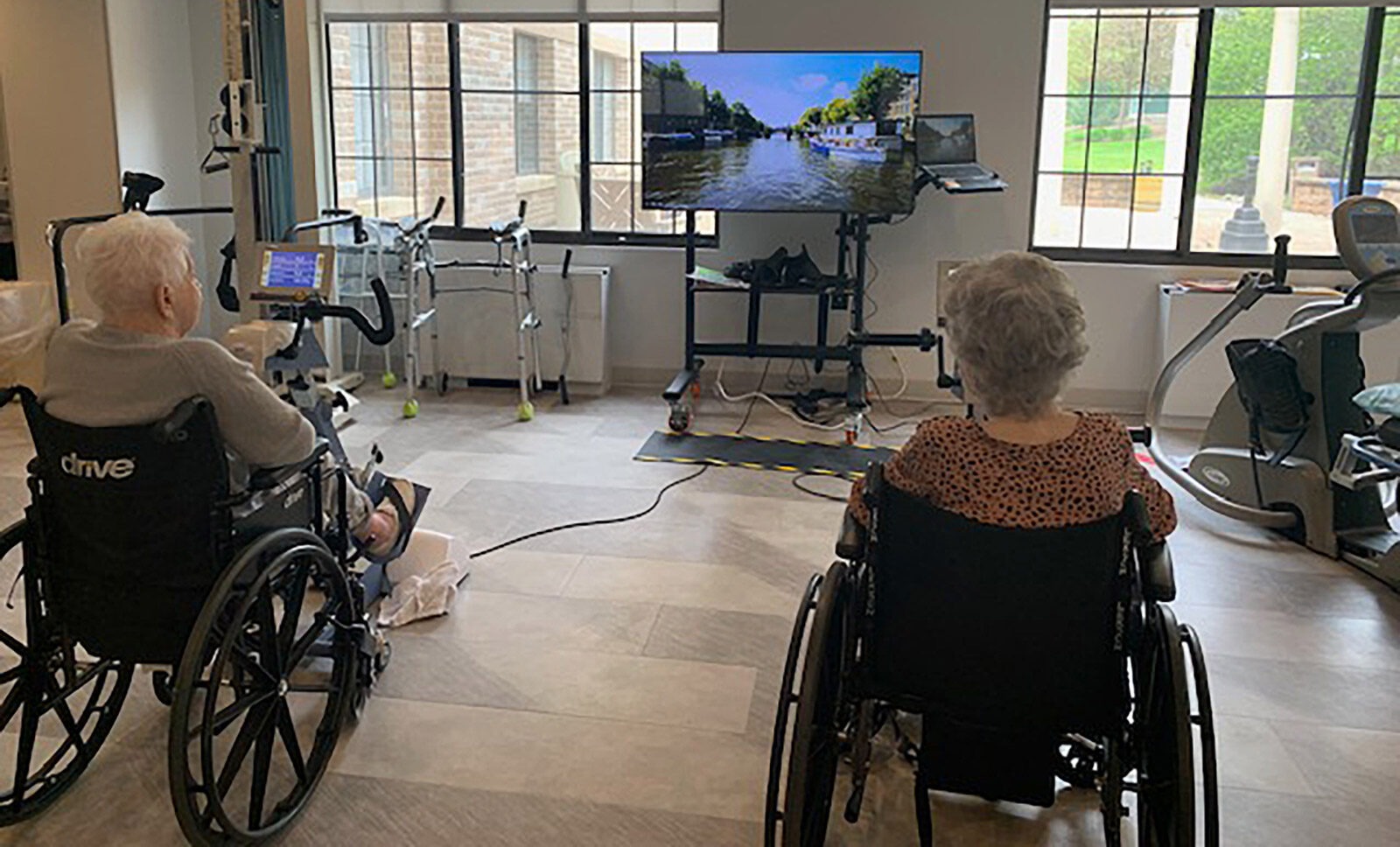
Bluetooth enables both units to connect to the OmniTour, allowing the team to layer cognitive and motivational challenges. But the foundation of the tool is the cycle itself.
GET IN TOUCH
Getting them to keep showing up is where outcomes are made or lost.
Biofeedback as a clinical tool
The OmniCycle Connect’s biofeedback interface displays real-time performance data throughout each session. Left-right limb symmetry, active engagement percentage, motor output, and duration are all visible to the patient and therapist via touchscreen.
Rick Camacho, MOT, OTR/L, Director of Rehabilitation at the facility, has seen how that visibility changes motivation. When patients finish a session and see the difference in output between their stronger and weaker sides, education happens naturally. Patients leave with a clearer understanding of their own deficits and a concrete goal for the next session. That understanding, Camacho notes, empowers them to want to do more.
Rick Camacho, MOT, OTR/L, Director of Rehabilitation at the facility, has seen how that visibility changes motivation. When patients finish a session and see the difference in output between their stronger and weaker sides, education happens naturally. Patients leave with a clearer understanding of their own deficits and a concrete goal for the next session. That understanding, Camacho notes, empowers them to want to do more.
The OmniCycle Connect delivers on all of these. But the case for the technology at Bella Terra Schaumburg is also a human one.
Dual-Task training: engaging the whole patient
Cycling’s benefits extend well beyond the musculoskeletal. Aerobic cycling increases blood flow to the brain, with associated improvements in coordination, planning, and memory.1 The OmniCycle Connect’s biofeedback interface adds a cognitive aspect to every session, allowing patients to monitor their own performance and self-regulate their effort throughout.
By pairing the OmniCycle Connect with the virtual cycling environment, the cognitive demand increases further. Patients process dynamic visual information, make navigational choices, and often engage in conversation with staff or fellow patients.
Camacho describes the combination of physical resistance and mental engagement as the most impactful way to use the technology.
Motivation, socialization, and the long game
In post-acute rehabilitation, getting patients to show up is only half the challenge. Getting them to keep showing up is where outcomes are made or lost.
With two OmniCycle Connect units running simultaneously in a shared OmniTour environment, group therapy sessions become a social experience as much as a clinical one.
Camacho recalls one session in which two residents, one from the memory care unit, began chatting about places they had visited; a conversation prompted by their shared experience. On subsequent visits, they looked for each other, knowing the gym was where they would meet.
For the therapy team, that kind of connection is just the cherry on top.
The moment that started it all
Rehabilitation technology is evaluated on clinical specifications: exercise modes, biofeedback capabilities, adaptability across patient populations, and documentation support. The OmniCycle Connect delivers on all of these. But the case for the technology at Bella Terra Schaumburg is also a human one.
The resident and former world traveler who chose Buenos Aires – cycling through familiar streets, her legs moving against resistance she could see and feel – stated her goal without hesitation. She was determined to get out of that wheelchair.
And the team at Bella Terra Schaumburg had exactly the right tools to help her try.
Camacho describes the combination of physical resistance and mental engagement as the most impactful way to use the technology.
References:
- 1Leyland, L. A., Spencer, B., Beale, N., Jones, T., & van Reekum, C. M. (2019). The effect of cycling on cognitive function and well-being in older adults. PloS one, 14(2), e0211779. https://doi.org/10.1371/ journal.pone.0211779