


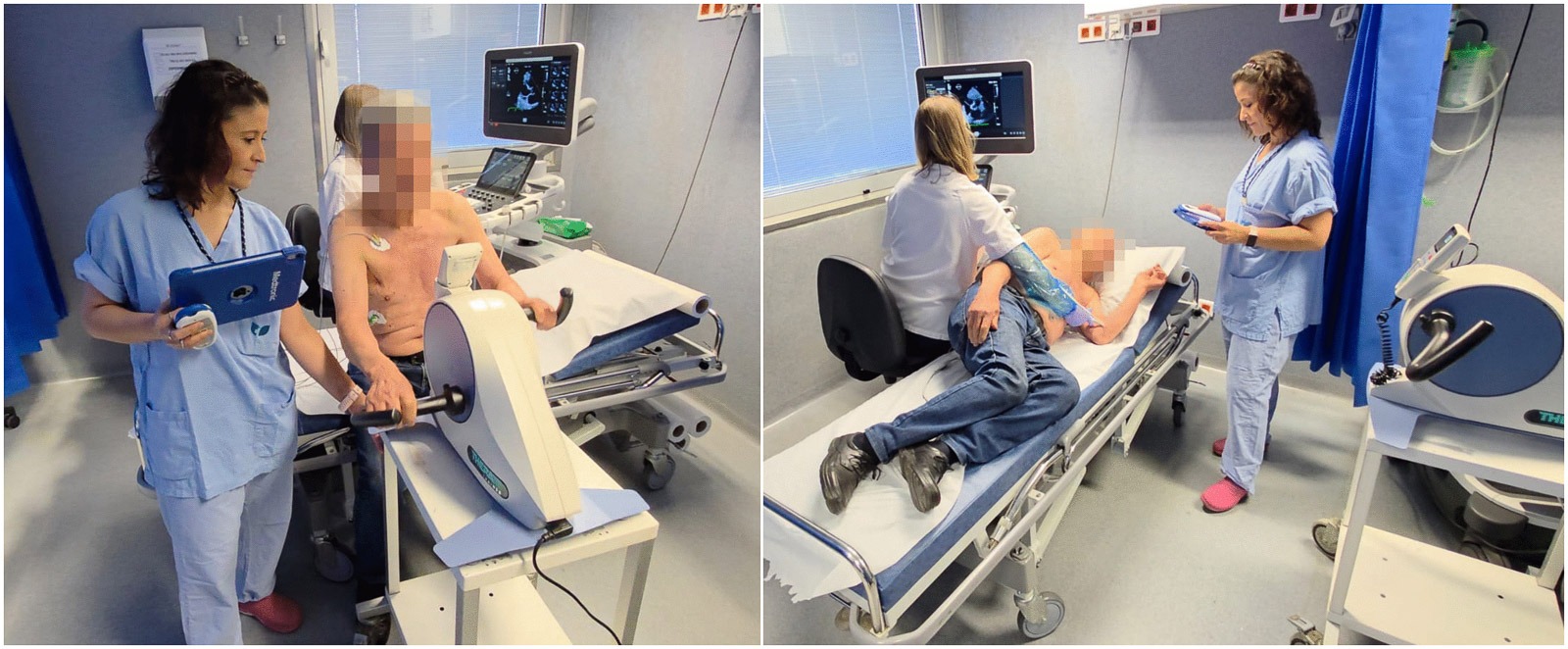
TECHNOLOGY & DEVELOPMENT
Arm ergometry: a window into cardiac function
In a prospective, ESC-compliant (European Society of Cardiology) screening study involving pacemaker patients, the portable ergometer THERA-Trainer mobi enables diastolic stress echocardiography. Gentle, finely graduated and safe enough for a multimorbid target population, it offers a practical solution for patients in whom conventional exercise testing often reaches its limits.

Jakob Tiebel
Health Business Consultant
Heart Failure with Preserved Ejection Fraction (HFpEF) accounts for around half of all heart failure cases and is associated with reduced quality of life, frequent hospitalisations and increased mortality. Diagnosis is particularly challenging in older patients with a pacemaker. In this population, multimorbidity and the haemodynamic consequences of long-term right ventricular pacing often converge. At the same time, pacing artefacts and mechanical dyssynchrony on resting echocardiography can affect precisely those Doppler parameters on which HFpEF diagnosis largely relies. As a result, without exercise stress testing, the condition frequently goes undetected in this patient group, potentially delaying guideline-directed therapy.
In the Portuguese PM-HFpEF study, the THERA-Trainer mobi is used to provide standardised exercise loading as part of diastolic stress echocardiography. The procedure offers practical advantages for this patient group.
In the Portuguese PM-HFpEF study, the THERA-Trainer mobi is used to provide standardised exercise loading as part of diastolic stress echocardiography. The procedure offers practical advantages for this patient group.
Gentle for very elderly pacemaker cohorts
Conventional exercise testing is generally performed using the legs, either on a cycle ergometer or a treadmill. For elderly and frail cardiac patients, however, this can already represent a considerable obstacle. In the PM-HFpEF study, arm ergometry was therefore purposefully chosen. It is often more readily performed in older, multimorbid adults, and thus matches the typical profile of many pacemaker patients, while also enabling a rapid return to the supine position for the ultrasound imaging that immediately follows.
Studies on arm ergometry demonstrate that it can generate sufficient cardiovascular loading, even in patients with limited exercise capacity, to reveal exertion-dependent changes in cardiac filling pressures.
Studies on arm ergometry demonstrate that it can generate sufficient cardiovascular loading, even in patients with limited exercise capacity, to reveal exertion-dependent changes in cardiac filling pressures.
Flexible and space-saving in the examination room
During the examination, the THERA-Trainer mobi is positioned on a height-adjustable table directly in front of the patient, who sits upright at the edge of the examination couch. The device integrates seamlessly into the diagnostic workflow rather than requiring adaptation of the entire assessment setup. Following completion of the exercise phase, the table can be swiftly withdrawn, allowing the echocardiographic examination to continue without the need for time-consuming repositioning.
Finely graduated and precision-controlled
Another advantage of the THERA-Trainer mobi is its precisely titratable exercise load. The study protocol employs short, standardised stages of 30 seconds’ exercise loading each, combined with defined resistance increments.
Following an adaptation phase at 0.4 kg (approximately 2 N·m), resistance is increased in up to six increments to a maximum of 3.0 kg (15 N·m). The aim is to achieve a submaximal heart rate of 100 to 110 beats per minute. This fine gradation allows even individuals with significantly limited exercise tolerance to be guided in a controlled, stepwise manner towards a diagnostically meaningful exercise intensity.
Following an adaptation phase at 0.4 kg (approximately 2 N·m), resistance is increased in up to six increments to a maximum of 3.0 kg (15 N·m). The aim is to achieve a submaximal heart rate of 100 to 110 beats per minute. This fine gradation allows even individuals with significantly limited exercise tolerance to be guided in a controlled, stepwise manner towards a diagnostically meaningful exercise intensity.
Safety as part of the study protocol
Exercise loading is conducted under continuous ECG monitoring by trained staff, with pacemaker recipients additionally monitored via intracardiac electrogram. The test is terminated immediately upon reaching the target heart rate or the onset of limiting symptoms.
The seated position, controlled increase in exercise load and straightforward handling of the THERA-Trainer mobi support a well-controlled examination procedure, even in vulnerable patient groups.
The seated position, controlled increase in exercise load and straightforward handling of the THERA-Trainer mobi support a well-controlled examination procedure, even in vulnerable patient groups.
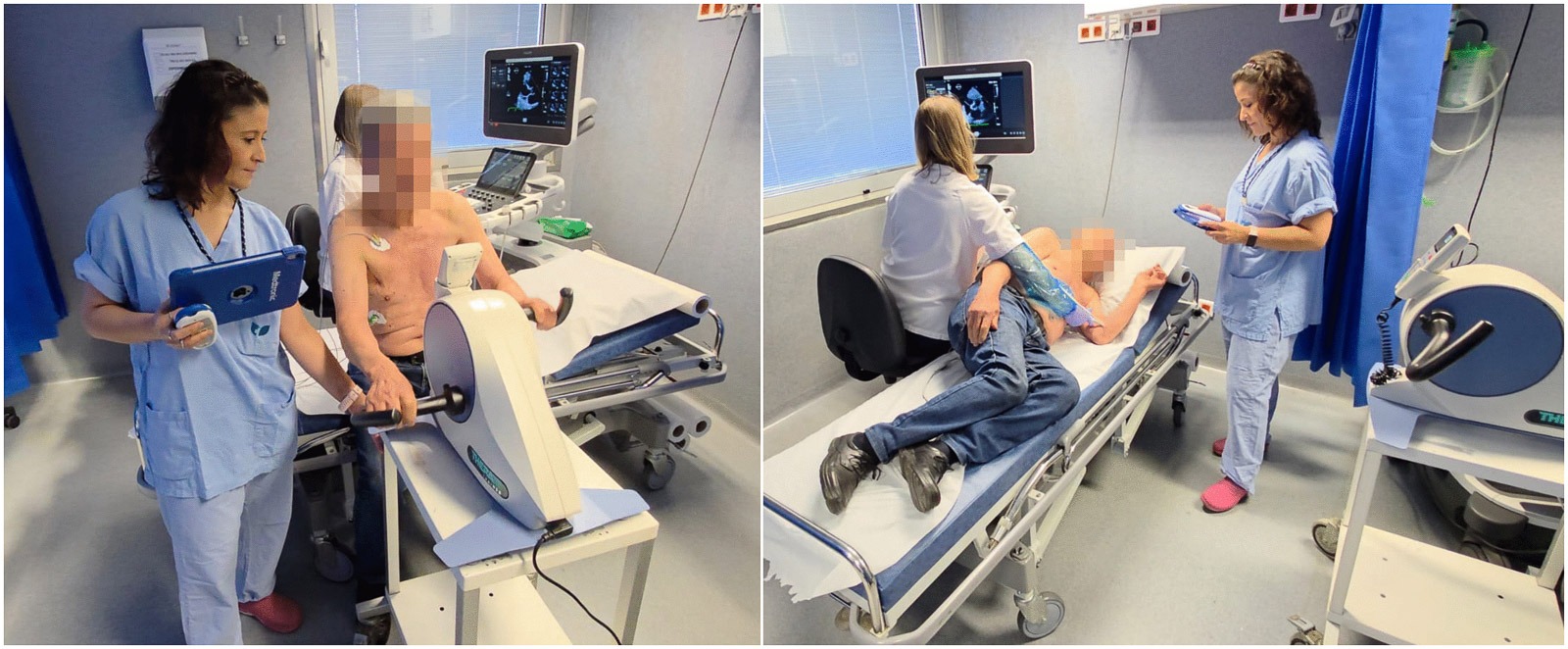
Diastolic stress echocardiography using an upper-body ergometer
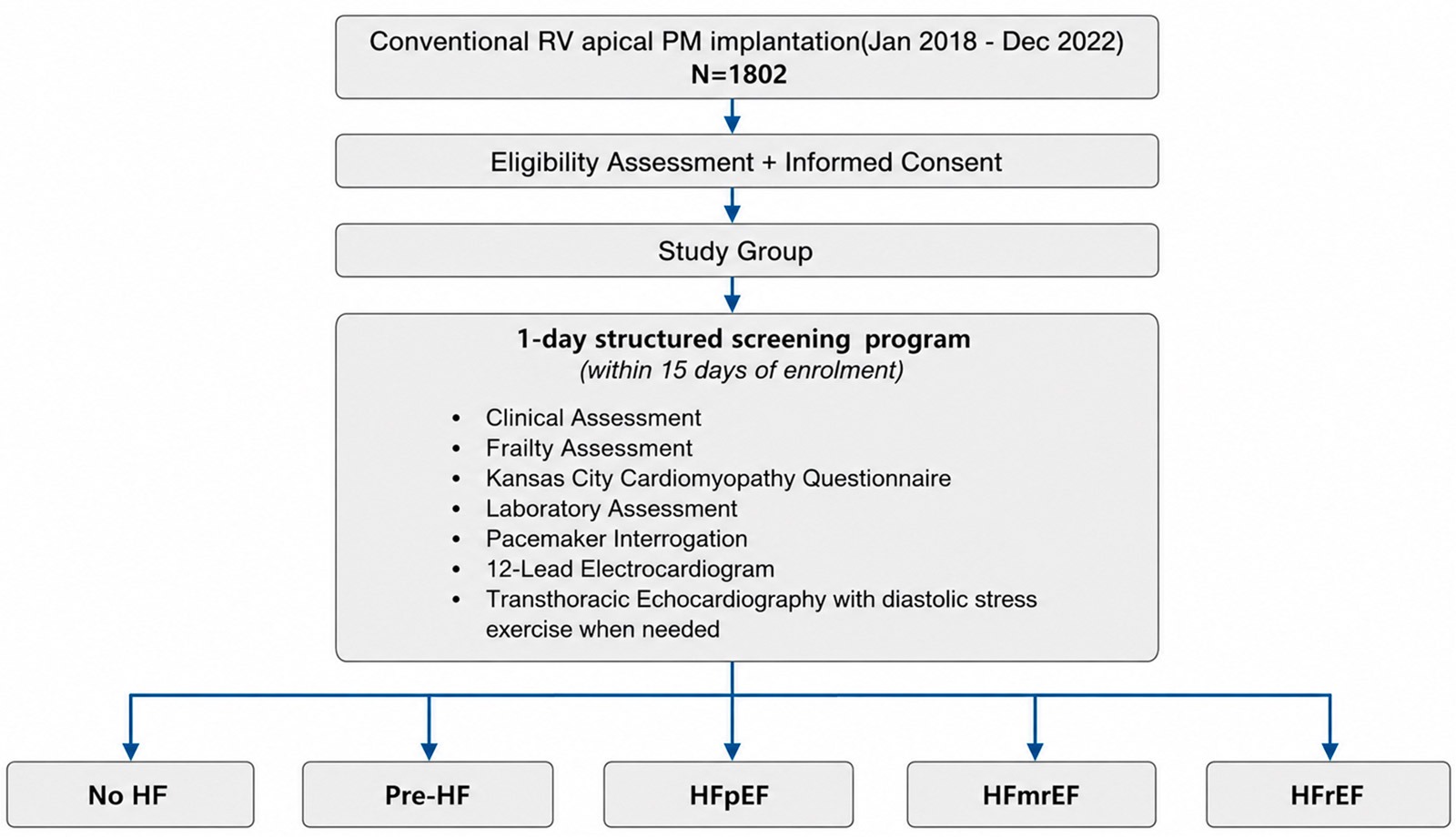
Overview of the screening programme and diagnostic pathway of the PM-HFpEF study.
The key benefit: detecting HFpEF during exercise
For pacemaker patients in particular, exercise-dependent diagnostics can prove crucial. In HFpEF, changes in cardiac filling pressures often only become apparent during physical exertion. If the examination remains confined to resting conditions, there is therefore a risk that the condition may go undetected in this growing patient group.
Within the study setup, the THERA-Trainer mobi provides the practical basis for applying standardised exercise stress even in older, multimorbid patients, with echocardiographic examination performed immediately afterwards.
Within the study setup, the THERA-Trainer mobi provides the practical basis for applying standardised exercise stress even in older, multimorbid patients, with echocardiographic examination performed immediately afterwards.
HFpEF only becomes apparent under exercise stress and is frequently overlooked in pacemaker patients.
The THERA-Trainer mobi enables safe, exercise-dependent diagnosis in a seated position.
Conclusion
In this context, the THERA-Trainer mobi fulfils a function that goes beyond that of a conventional training device. It provides a controlled, titratable exercise load with flexible spatial integration, making it ideally suited to diastolic stress echocardiography.
This enables diagnostic assessment even in patients for whom conventional exercise stress testing is of limited suitability, helping to unmask potentially latent HFpEF during exertion.
This enables diagnostic assessment even in patients for whom conventional exercise stress testing is of limited suitability, helping to unmask potentially latent HFpEF during exertion.
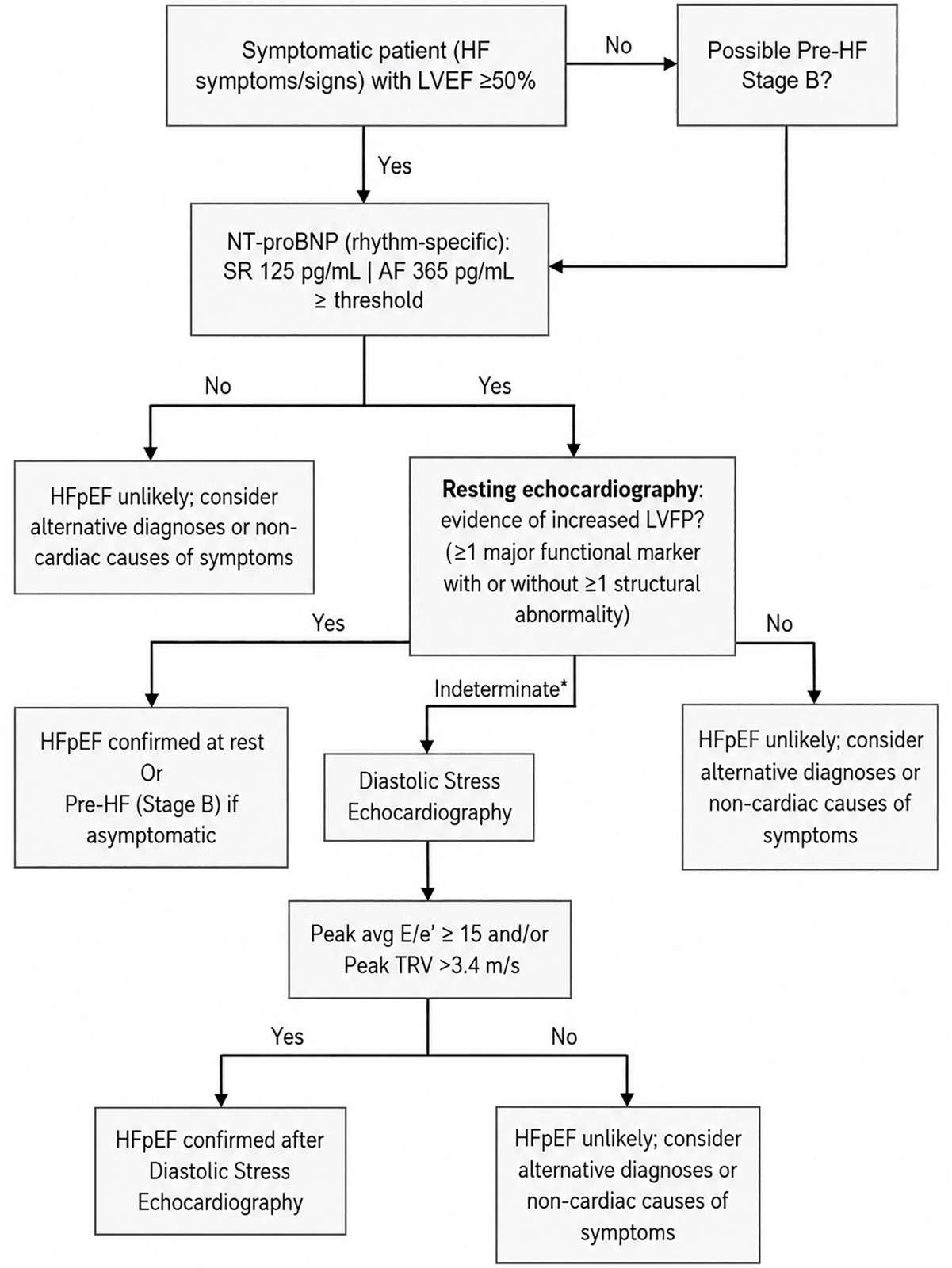
Diagnostic assessment process: assessment at rest, referral for diastolic stress echocardiography and post exercise assessment.
With controlled 30-second exercise intervals to achieve the submaximal target heart rate.
Jakob Tiebel
Health Business Consultant
Jakob Tiebel is OT and studied applied psychology with a focus on health economics. He has clinical expertise from his previous therapeutic work in neurorehabilitation. He conducts research and publishes on the theory-practice transfer in neurorehabilitation and is the owner of an agency for digital health marketing.
References:
- Original work Santos, E., Teixeira, R., Almeida, J., Fonseca, P., Oliveira, M., Gonçalves, H., Primo, J., Diaz, S., Barros, A., Vilela, E., Sampaio, F., Saraiva, F., Oliveira, M., & Fontes de Carvalho, R. (2026). Screening for HFpEF in pacemaker patients: Study design and protocol of the PM HFpEF study. PLOS ONE, 21(6), e0349667. https://doi.org/10.1371/ journal.pone.0349667