


SCIENCE
Steps to greater mobility
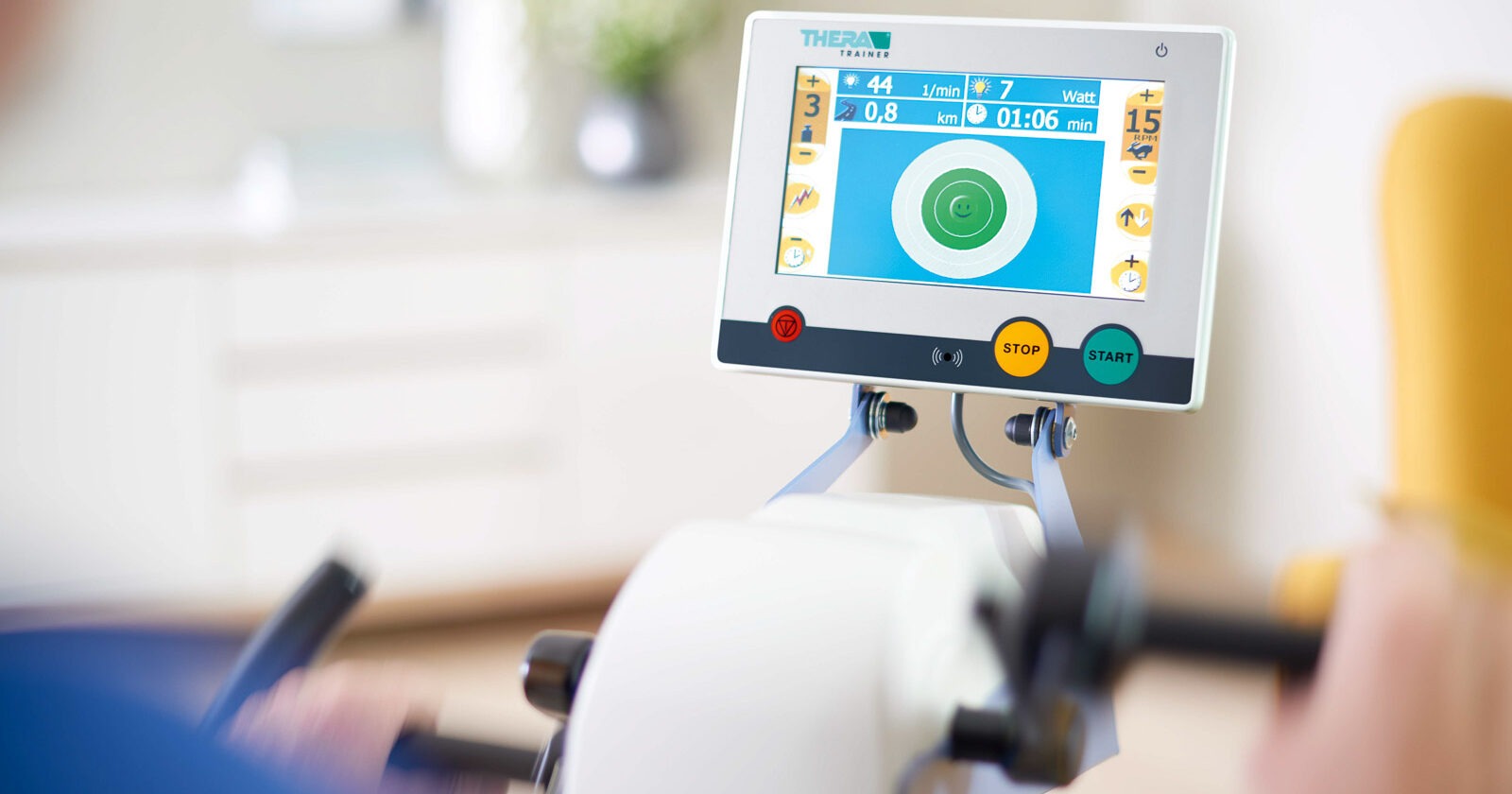
A recent prospective study demonstrates that older stroke patients with atrial fibrillation or diabetes mellitus can also achieve significant functional gains during early rehabilitation. Of particular interest are the objectively recorded changes observed during training with the THERA-vital motor-assisted movement exerciser (editor’s note: predecessor model of the THERA-Trainer tigo) used as part of the rehabilitation programme.

Jakob Tiebel
Health Business Consultant
Atrial fibrillation and diabetes mellitus are among the most common comorbidities after stroke and are associated with a less favourable prognosis. Romanova et al. (2025) therefore investigated whether these cardiometabolic comorbidities influence functional recovery during early inpatient rehabilitation.
The prospective study enrolled 46 post-stroke patients with a mean age of approximately 70 years. Over a period of 3.5 weeks, they received 120 minutes of rehabilitation daily, five days a week. Alongside individual therapeutic exercises, various training devices were introduced from the third to fifth day onwards – including the THERA-vital. After completion of rehabilitation, approximately 80% of participants demonstrated a functional improvement.
Notably, patients with atrial fibrillation or diabetes mellitus did not differ significantly from patients without these comorbidities. Even after matching for age and sex, this finding remained consistent. Age, by contrast, proved to be significantly more relevant to rehabilitation outcome.
The progress metrics recorded during training are particularly insightful. Practically all patients were able to increase their training duration – on average from approximately 9–10 minutes at the outset to around 18–20 minutes by the end of rehabilitation. In 98% of patients, load distribution between the lower extremities also improved, approaching a more balanced engagement of both sides.
The results therefore provide two important insights from everyday clinical practice. First, atrial fibrillation and diabetes mellitus do not appear to significantly influence early functional recovery after stroke. Second, the training data collected using the cycling trainer show how load tolerance and bilateral limb contribution can change objectively within a few weeks.
The study demonstrates the additional value that device-based training parameters can offer for the objective documentation of rehabilitation progress – particularly in older and medically complex patients. The presence of individual cardiometabolic comorbidities is less crucial than whether patients can be enrolled in active rehabilitation at an early stage, following a structured pathway tailored to their functional performance level.
GET IN TOUCH
Conclusion
Early rehabilitation after stroke resulted in functional improvements in the majority of patients – irrespective of the presence of atrial fibrillation or diabetes mellitus. Approximately 80% of the total sample demonstrated improvements. Age was the only factor that differed significantly between patients with and without improvement. These findings underscore the importance of early-initiated rehabilitation and demonstrate that atrial fibrillation and diabetes mellitus did not significantly influence early functional recovery in this study. The rehabilitation programme comprised individual therapeutic exercises alongside training with various devices, including the THERA-vital (editor’s note: predecessor model of the THERA-Trainer tigo).
Jakob Tiebel
Health Business Consultant
Jakob Tiebel is OT and studied applied psychology with a focus on health economics. He has clinical expertise from his previous therapeutic work in neurorehabilitation. He conducts research and publishes on the theory-practice transfer in neurorehabilitation and is the owner of an agency for digital health marketing.
References:
- Romanova, E., et al. (2025). Functional Recovery in Patients with Atrial Fibrillation and Diabetes Mellitus Following Early Post-Stroke Rehabilitation. SN Comprehensive Clinical Medicine, 7, 431.