


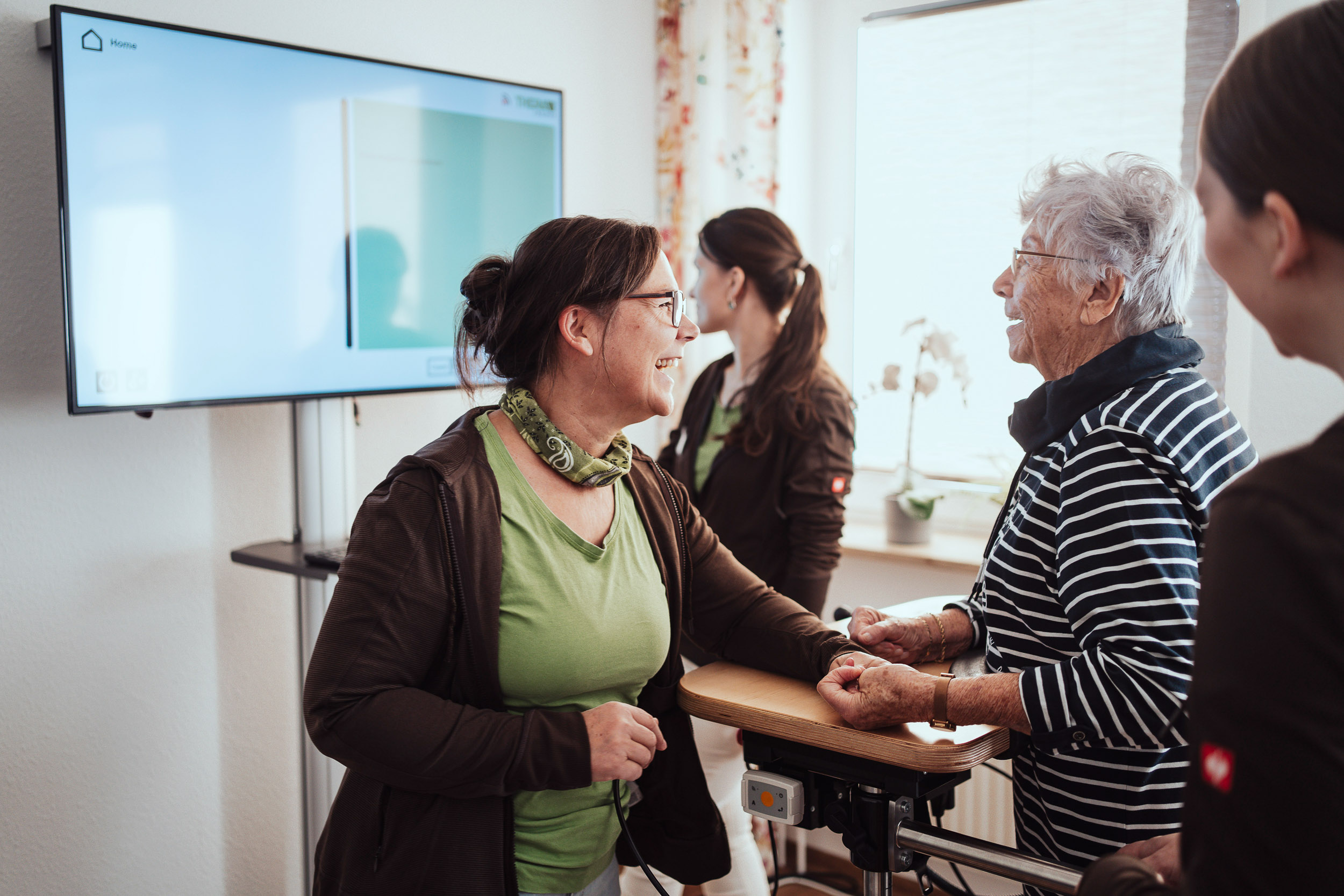
Discover how a pioneering occupational therapy practice in Neubrandenburg uses modern technologies to improve mobility, boost motivation, and enhance quality of life for elderly clients — even those with dementia.

In conversation with Manuela and her colleague Wiebke Penkuhn, who joined the team as a young occupational therapist after completing her training a year ago, we take a look at the work of the practice, the challenges of daily life and the opportunities that innovative technologies offer for therapy.
Manuela Panter: As an independent occupational therapy practice, we care for clients in a therapeutic centre that includes both day care and full inpatient care. We primarily care for geriatric clients, many of whom have dementia, cerebral apoplexy or other neurological symptoms. However, we also treat other clients with specific needs who come to us for treatment from outside the facility. What makes us unique is the support we provide during the transition from home care to outpatient therapy, right through to day care and full inpatient care. Our clients benefit from a holistic approach, which specifically includes training in mobility and practical skills for everyday situations. We place a strong emphasis on modern technology-supported therapy methods and innovative approaches to sustainably improve our clients’ quality of life, while also strengthening the evidence base for our work.
Redaktion: How did the integration of the practice into the day care facility come about?
Manuela Panter: A crucial moment was when the managing director of ProPersona Care approached me to see whether we could create something together. It was a perfect fit, because he had a similar vision to me. The facility here in Neubrandenburg was still under construction at the time, and I had the opportunity to help in the design of the therapy rooms. That was a fortunate coincidence and an important foundation that allowed us to establish ourselves and grow in this way.
Wiebke Penkun: I wasn’t personally involved in setting up the practice, so can only talk about it from today’s perspective. I’m familiar with other facilities from my training and through colleagues. I’m certainly lucky and feel privileged to work in such a modern practice that offers so many possibilities and such a varied environment.
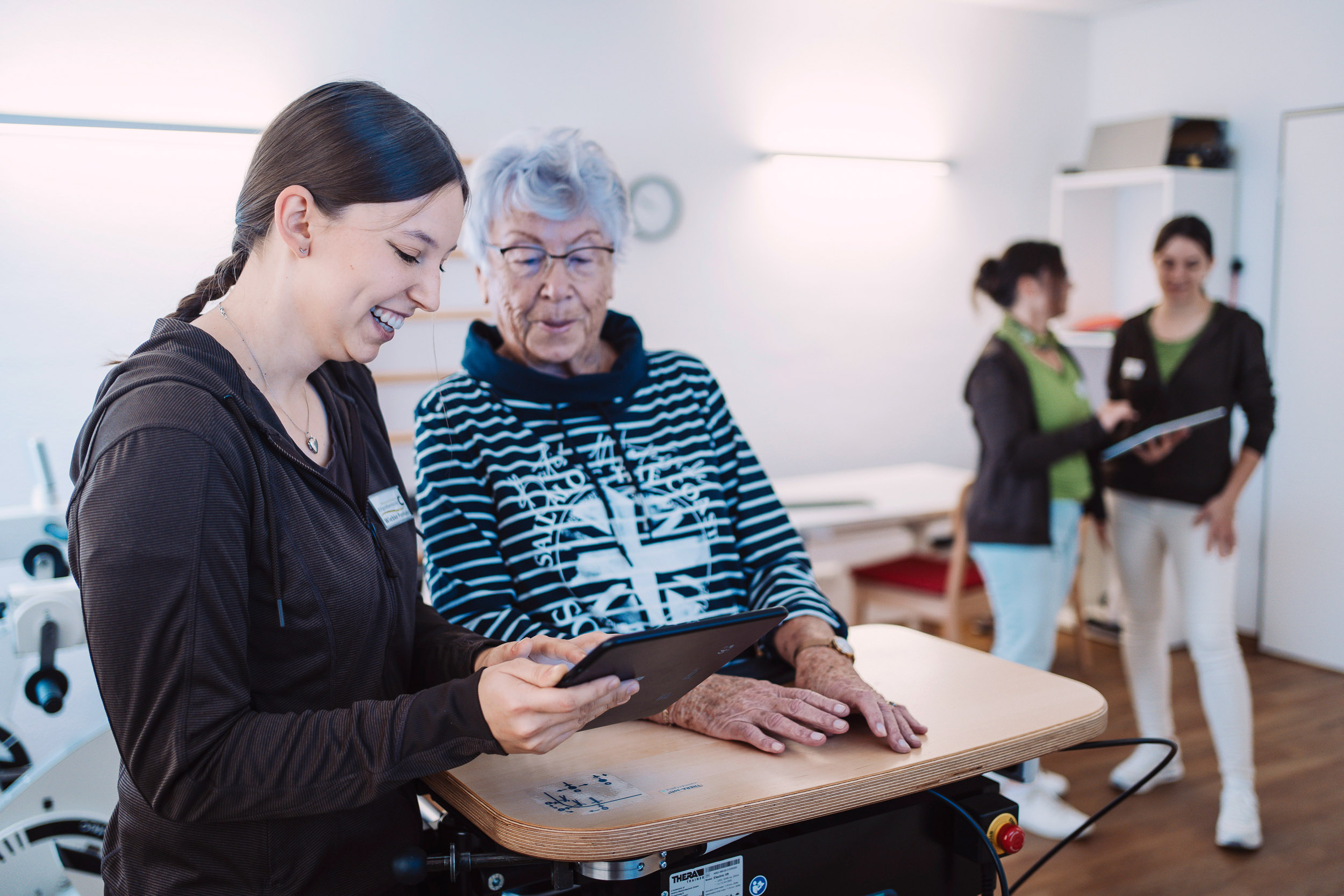
Redaktion:You place particular emphasis on modern therapeutic equipment such as the balance trainer and the THERA-Trainer senso to promote mobility and fall prevention among your clients. How do you specifically use these technologies in your practice?
Manuela Panter: We have been working with these devices for about two years now. We started with a trial phase in which we initially tried out all the technical and practical aspects. At first I was sceptical whether clients would cope with these technologies, but their positive feedback and willingness to engage quickly convinced us. Today, these devices are an integral part of our work.
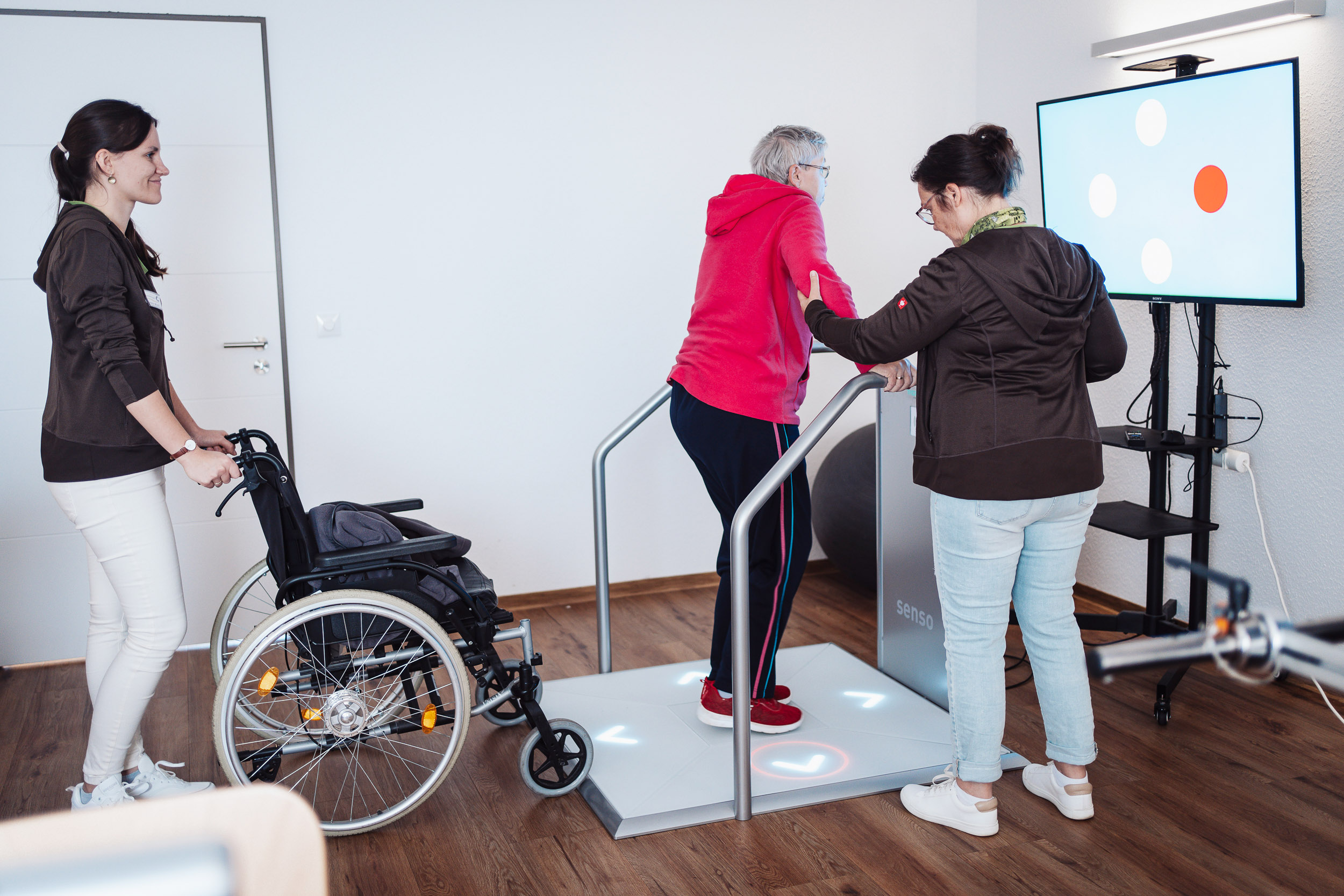
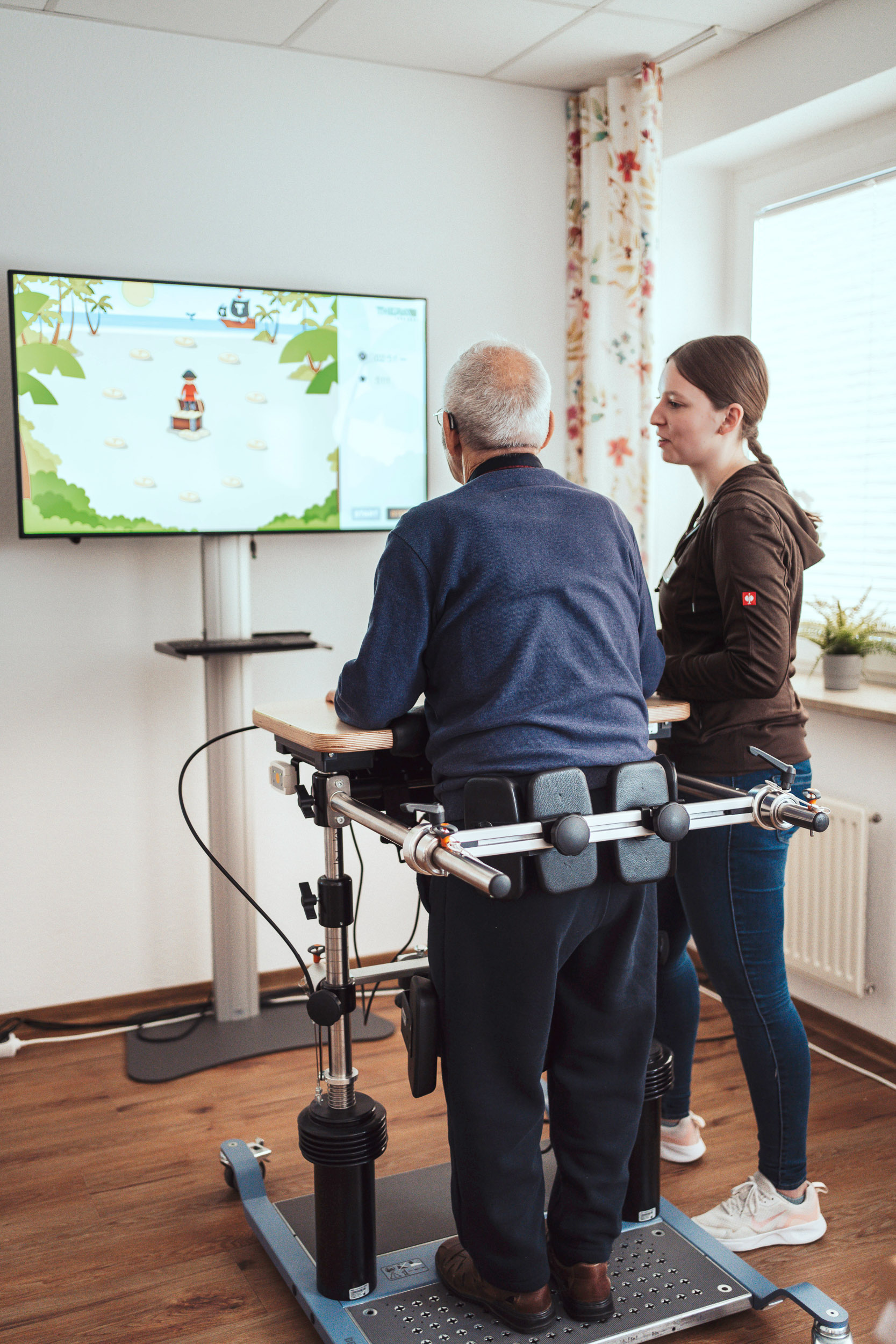
We primarily use the THERA-Trainer balo to mobilise less mobile clients into a standing position and to train their postural control. It also enables us to create practice scenarios in a standing position that mimic everyday activities. We are expanding this range with the THERA-Trainer senso, which offers cognitive-motor training to promote dual-task abilities that strengthen not only motor skills but also executive functions. This is a particularly effective intervention for our clients to minimise the risk of falls – particularly in situations where multiple environmental stimuli challenge their balance and spatial movement.
Redaktion:How do clients respond to the equipment?
Wiebke Penkun: I regularly see clients who can stand and walk with much more confidence after therapy on the balance trainer. One client, for example, was able to train in a standing position again after a long time. This was an incredible moment for him – and for us too. Overall, the experiences have been overwhelmingly positive.
Manuela Panter:I still vividly remember one client in a wheelchair. She was able to stand on her own again after training on the balance trainer. That was such an emotional moment for her, because her mobility and body awareness had noticeably improved. Her initial scepticism gave way to a renewed confidence, and she regained a degree of independence – a success that moved us all deeply. It’s a lovely feeling to see someone who is initially sceptical make such progress.
Redaktion: What challenges do you experience with clients who, for example, are living with dementia?
Manuela Panter: The integrated biofeedback features offer sophisticated cognitive and motor training options, which is what makes the equipment so valuable. What really surprised me was how positively people with dementia respond to it. I would even go so far as to say that dementia isn’t necessarily a reason to
exclude someone from using these technologies – quite the opposite. When used in a therapeutically practical and appropriate way, this equipment offers significant benefits for this group, allowing them to enjoy their training exercises and rediscover their abilities. Many dementia patients experience a feeling of self-efficacy, something they often miss in their daily lives when many things no longer work as they used to. Device-based therapy and interactive biofeedback create a judgement-free environment that is free from emotional baggage and often leads to a noticeable boost in motivation.
Wiebke Penkun: I’ll admit I was initially a bit sceptical about whether some clients would be able to cope with the technology. But as soon as they realise that they can manage the exercises and that the technology provides practical support – while even motivating them in a fun way – they really start to enjoy it. The progress they make can be truly impressive.
Manuela Panter: The practice is funded exclusively through billing for occupational therapy prescriptions. Investments in modern therapy equipment must, of course, be properly thought through, but in the long run, they pay off for us. Introducing modern therapeutic methods increases the demand for our services and brings us recognition as a specialist practice for occupational therapy – both regionally and within the professional community.
My vision is that we continue to professionalise and specialise both as a practice and as representatives of our profession. Modern, evidence-based therapeutic methods are crucial in this regard. We aim not only to set therapeutic standards, but also to sustainably improve Interdisciplinary collaboration in geriatric rehabilitation and care. Our practice is increasingly developing into an open space for clients to connect and a source of inspiration for healthcare professionals.
Being part of a team that not only thinks about innovation, but lives it daily, is a great feeling!
Redaktion: Did you decide immediately after the trial phase to permanently deploy the equipment?
Manuela Panter: Yes, that was a clear-cut decision. The measurable progress and the positive feedback from our clients convinced us. At the same time, we noticed as a team that the equipment significantly expands our range of therapeutic options. The included assessments, various tasks and clear exercises provide a helpful framework – something that can guide us through the transparent presentation of results in the therapy process, supporting evidence-based therapeutic action.
It opens up new approaches, particularly in complex cases. In addition, we are experiencing an increasing demand for therapy, which motivates us to continuously think about how we can meet this growing demand in the future.
Wiebke Penkun: The equipment also takes some of the burden off us. For example, with the help of the standing frame, we can work safely and effectively in a standing position even with severely affected clients. Without technological support, this would involve considerably more physical effort and strain – both for the clients and for us as therapists.
Redaktion: The demand for occupational therapy and the care of older people in day care is growing. What do you think are the reasons for this?
Manuela Panter:Demographic developments are certainly a determining factor. The number of older people dependent on care and support is continuously rising, particularly in cases of degenerative diseases such as dementia.
At the same time, many residential care facilities are reaching their capacity limits, which is why alternatives such as day care are increasingly in demand. In addition, there is a growing awareness that specialised care and modern therapeutic approaches have an enormous impact on the quality of life.
Wiebke Penkun: I have noticed that many relatives view day care as a genuine relief, as they often can’t manage the care at home on their own. At the same time, they place great importance on ensuring that their relatives receive high-quality, personalised care. The holistic view of the individual in occupational therapy, as well as the collaboration with family members, is invaluable.
What particularly impresses me is how impactful the work with clients is here, particularly those with dementia. While I learned a lot about this during my training, it’s only in practice that the urgency and importance of this work in everyday life become truly tangible. .
Redaktion: How do you plan to meet the increasing demand for your services while ensuring high-quality care?
Manuela Panter: We are, of course, focusing on expanding our capacities, but we place great importance on the targeted continuing professional development of our specialist team. Quality is our highest priority, which is why we also work closely with other care providers to develop our concept and integrate new approaches.
Wiebke Penkun: I really value the high quality standards here. Continuous development and the opportunity to learn something new motivate me and help me to successfully meet the growing demands.
Redaktion:To what extent is the use of modern therapeutic equipment taught during training?
Wiebke Penkuhn:Modern technologies currently play only a minor role in occupational therapy training and, unfortunately, are not yet standard. There is a lack of time within the curriculum and even a lack of access to the technology itself. Equipment such as the balance trainer or the THERA-Trainer senso are virtually unknown to many trainees, as they are rarely covered or used in practical training at school. It’s only during internships, at facilities that use this kind of technology, that trainees get a deeper insight into their potential. To make the training future-proof, it is important to give more weight to technological content in the curriculum and to strengthen collaboration between schools and innovative establishments.
Redaktion: The concept is a flagship example. How do you present your establishment to the outside world? And what role does image play in your positioning as a modern and progressive establishment?
Manuela Panter: We place great emphasis on communicating our concept and vision to the outside world. This includes participating in specialist conferences where we can exchange ideas with other experts and present our model. Collaborating with regional networks and health organisations is also a key part of this, as it increases the profile of our practice and strengthens our networking. We have also established international contacts and actively exchange ideas. It’s something we really enjoy and it provides us with the necessary validation.
Redaktion: What do you both want for the future?
Manuela Panter: I would like our model to be an inspiration for other day care facilities and occupational therapy practices. Modern technologies and interprofessional collaboration shouldbecome the rule and not the exception.
Wiebke Penkun: I hope that many young therapists get the opportunity to work in such innovative practices. It would be amazing if the use of modern technologies became standard practice in occupational therapy.
Related contents
Find related exciting contents in our media library.

Meet our specialists.
Are you interested in our solutions? Schedule a meeting with a Consultant to talk through your strategy and understand how TEHRA-Trainer can help you to advance rehabilitation.
You need to load content from reCAPTCHA to submit the form. Please note that doing so will share data with third-party providers.
More InformationYou are currently viewing a placeholder content from Turnstile. To access the actual content, click the button below. Please note that doing so will share data with third-party providers.
More Information