


Discover how Ambulant-Physio Ergo Logo in Cottbus blends physiotherapy, occupational therapy, speech therapy, and robotics to provide evidence-based, participation-oriented care. Learn more about their interdisciplinary concept and inspiring patient outcomes.

Torsten Erler: We combine tradition with innovation. We have been gaining extensive experience with the major empirical treatment concepts for 25 years and at the same time we see the need for evidence-based, guideline-oriented practice. We are innovative and we work with the latest technologies. One challenge is that we specialise in out-of-hospital intensive care, among other things. I’m sure we’ll talk about this later, but this already explains why we use a healthy mix of tradition and modernity.
Interviewer: We’ll go into that in more detail later. Let’s first talk about interprofessionality. You combine physiotherapy, occupational therapy and speech therapy. The practice landscape in Germany today is predominantly organised on a unidisciplinary basis. What is the benefit of patients receiving all their therapies at the same location?
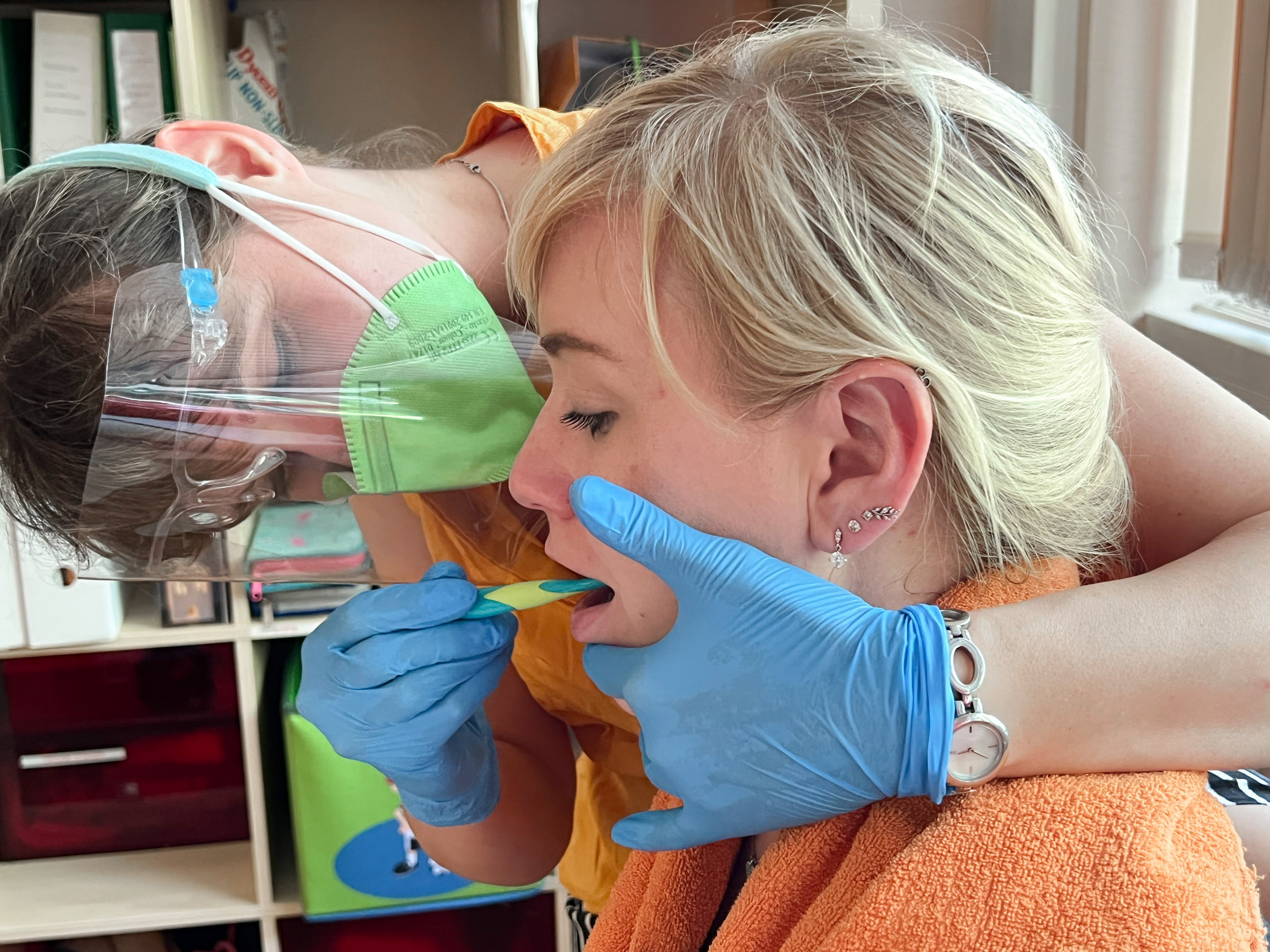
Torsten Erler: As I mentioned, many of our patients have serious conditions. Some of them have a tracheostomy tube and a stomach tube for artificial feeding since they can’t swallow. All of this places special demands on therapy that cannot be met by one speciality alone. Our advantage is that we can work together in an interdisciplinary way. This not only increases the duration of treatment, but also the quality of care, and opens up completely new treatment options.
Interviewer: What role do the relatives of seriously affected patients play?
Torsten Erler: Particularly in the case of patients with impaired consciousness and cognitive limitations, the relatives are involved whenever possible – if they want to be – and play an active role in shaping the therapy. Relatives can often interpret the patient’s behaviour during therapy in a completely different way than we can. The assessment of facial expressions, gestures and other physical reactions is extremely important. And who can do this better than those closest to the patients? We want to put our patients at the very centre of treatment. This is only possible in the case of patients with serious conditions if there is close co-ordination and co-operation with the relatives, nursing staff and physicians. From goal setting to the continuous therapy process itself, we are connected as well as we can be with every actor involved in the overall care process.
Interviewer: On your website, you write that Ambulant-Physio Ergo Logo is the right choice for all those looking for good therapy. What makes for good therapy in your opinion, Mr Erler?
Interviewer: In terms of modern treatment approaches, you are a strong advocate of device-assisted therapy and the use of robotics in your practice. What are the advantages of this?
Interviewer: What exactly are the effects of combining the therapies in this way?
Torsten Erler: We experience a significant increase in patient vigilance. Through verticalisation, we achieve conditions for an ideal alignment of the body with respect to gravity, where the head is first of all positioned and swallowing is physiologically possible. This is also possible when lying down or sitting, but it is often much better when standing. Sometimes we even do gait training, which we interrupt in order to include short swallowing sequences or to do oral stimulation. The device support is simply great. It allows us to work very effectively and efficiently, to make corrections in a few easy steps and create optimal conditions. This is very fortunate and would not be possible without the use of technology.
Interviewer: How do you ensure that the treatments are actually goal-oriented and effective?
Torsten Erler: We have set up our own ICF-based documentation for this purpose. This defines participation and includes all the activities we do with our patients. All professional groups report according to the same framework. The result is a very clean and consistent documentation and an excellent doctor’s report. Transfer of learning is particularly important to us – which brings us to the topic of evaluation. Starting with the question: What can the patient achieve in therapy? For example, a transfer or change of position with forty percent initiative – let’s see what actually sticks in everyday life. This is the biggest challenge. Often we see that patients have some ability in therapy, but for various reasons that ability isn’t always there in everyday life. This is what needs to be worked on. In addition, we also use standardised assessments in the individual treatment fields in order to objectify relevant parameters both clinically and therapeutically. We always have students in our practice who are still studying. That’s great, because they always check what we are doing with a scientific expectation that everything is up to date. We’re never bored (laughs).
Interviewer: I can very well believe it. I wish you continued success and thank you very much for the interview, Mr Erler.
Related contents
Find related exciting contents in our media library.

Meet our specialists.
Are you interested in our solutions? Schedule a meeting with a Consultant to talk through your strategy and understand how TEHRA-Trainer can help you to advance rehabilitation.
You need to load content from reCAPTCHA to submit the form. Please note that doing so will share data with third-party providers.
More InformationYou are currently viewing a placeholder content from Turnstile. To access the actual content, click the button below. Please note that doing so will share data with third-party providers.
More Information