


Motor-assisted movement training empowers people with ALS to stay active and independent at home. Discover the latest research findings and practical tips for better care routines—watch the full webinar now.

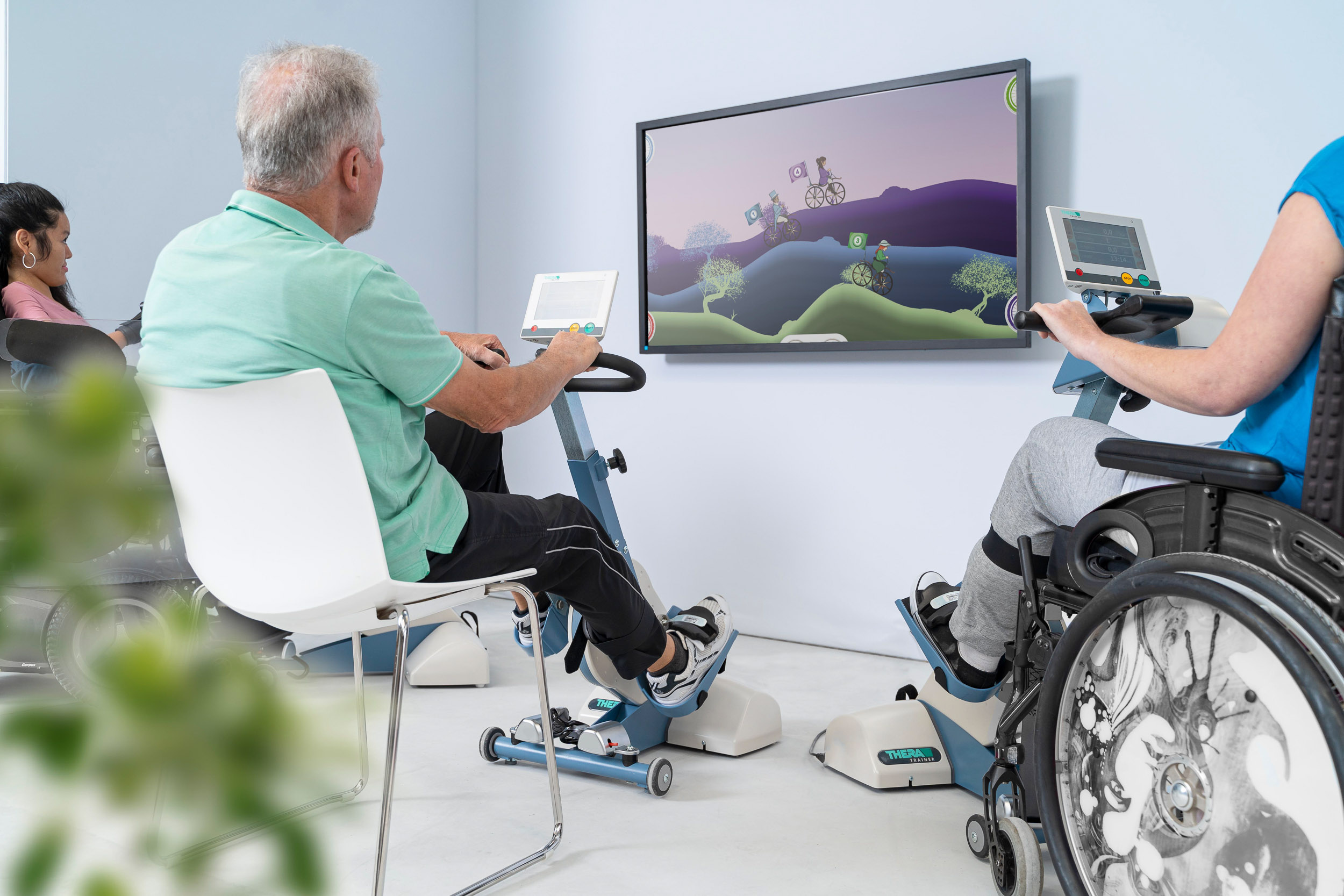
Motor-assisted movement training equipment refers to devices that support people with ALS in physiotherapy in the home environment. A regular movement routine in combination with motor-assisted movement training shows benefits and is already integrated into the standard ALS treatment plan. Interdisciplinary cooperation between various healthcare professionals (medicine, physiotherapy, medical aid suppliers) is essential at all stages: examination of the indication, advice and testing, supply of an exercise trainer, and ongoing training management. In a webinar for groups of healthcare professionals (medicine, physiotherapy, medical aid suppliers) and people with ALS, Dr André Maier, ALS outpatient clinic at Charité – Universitätsmedizin Berlin and Sabine Lamprecht, MSc Neurorehabilitation, owners of the HSH Lamprecht practice, discussed the current state of research on the topic of movement training in ALS and highlighted important implications for improved healthcare practice. The event was recorded and can be accessed online free of charge.
Usage and subjective experience of the effect of motor-supported movement exercisers among people with amyotrophic lateral sclerosis. Findings of a multi-centric observational study
Dr Meier reported in depth on the research results regarding the use of intensive motor-assisted movement training, and subjective experience of its effectiveness, in people with amyotrophic lateral sclerosis. They support the positive effects of the intervention in terms of training adherence, achievement of individual therapy goals and patient satisfaction. Dr Meier’s presentation reflected the results of current research on this topic in a practical way and supported the justification for extended care as part of a holistic approach to ALS treatment.
In the following contribution, Sabine Lamprecht emphasised that high-frequency motor-assisted movement training can be carried out at least 5 days a week for people with ALS. Provided that the attending therapists provide appropriate support and guidance, this supplementary training is an important adjunct to conventional physiotherapy. In the presentation, Sabine Lamprecht discussed important aspects of healthcare practice and training management.
Finally, the experts answered FAQs about the application of structured self-training in the home environment and were also available to answer questions from the webinar participants.

Related contents
Find related exciting contents in our media library.

Meet our specialists.
Are you interested in our solutions? Schedule a meeting with a Consultant to talk through your strategy and understand how TEHRA-Trainer can help you to advance rehabilitation.
You need to load content from reCAPTCHA to submit the form. Please note that doing so will share data with third-party providers.
More InformationYou are currently viewing a placeholder content from Turnstile. To access the actual content, click the button below. Please note that doing so will share data with third-party providers.
More Information