


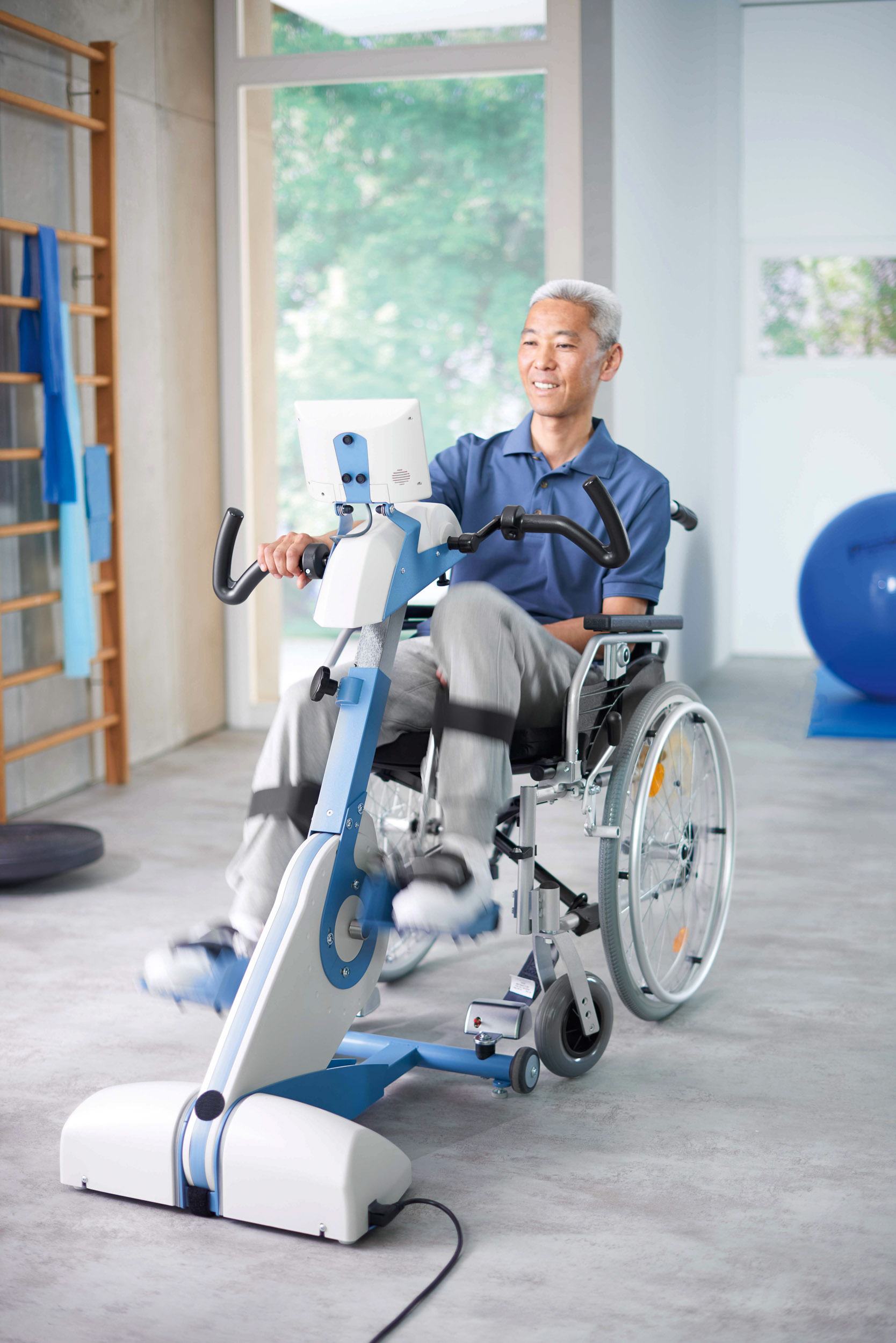
A 2023 review confirms that stationary cycling enhances walking speed and endurance in stroke patients. Learn how structured, moderate-to-intense aerobic training boosts recovery and complements gait rehabilitation.

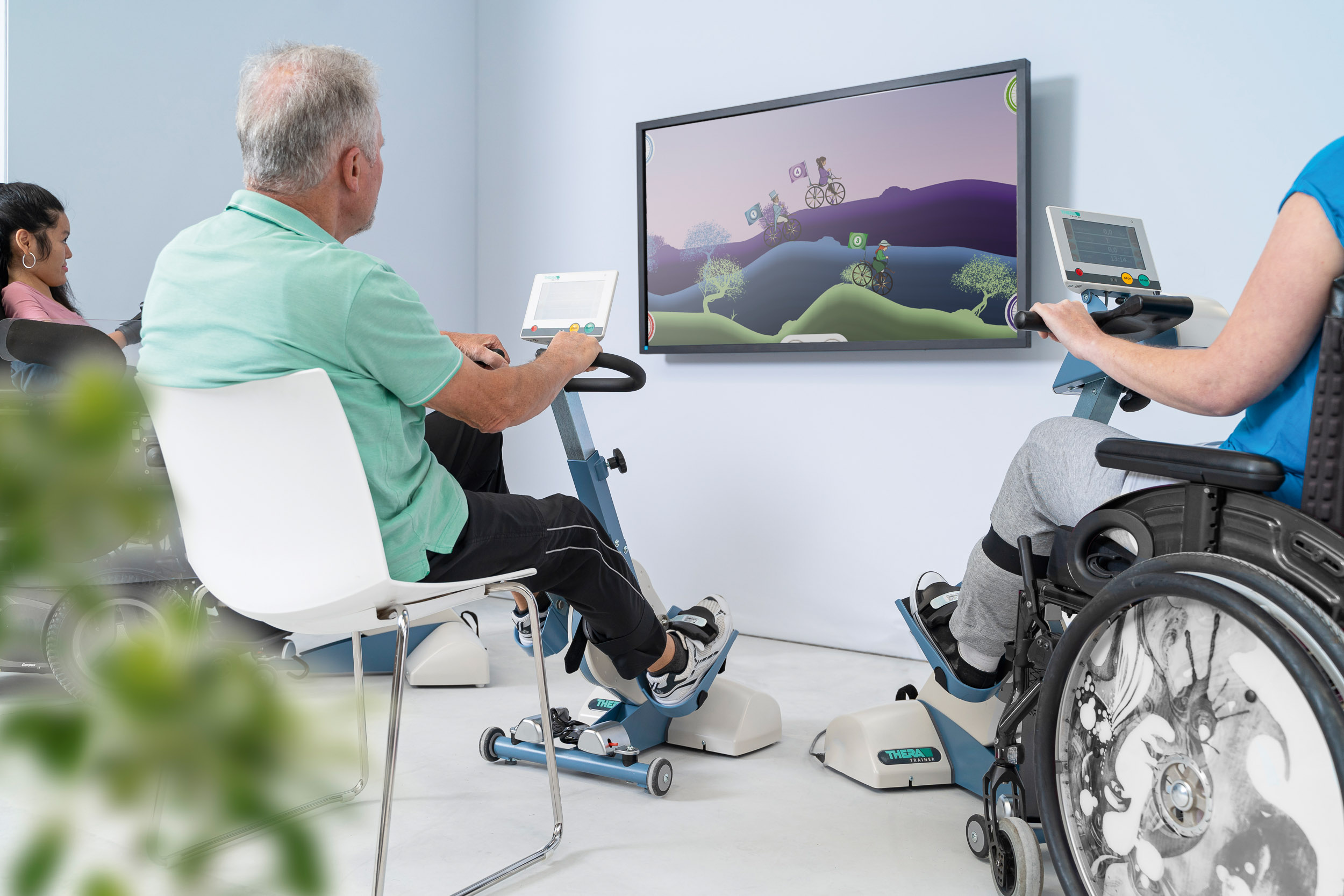
Stationary cyclical movement training is a safe and practicable method for implementing aerobic training to improve cardiovascular health in stroke patients. Although cyclical movement training is not typically used as a task-specific exercise approach to restore walking ability, numerous studies have reported improvements in walking parameters as a result of this type of training.
In a recent literature review from 2023, Medeeha Khan and colleagues from the Department of Physical Medicine and Rehabilitation at the Cleveland Clinic in the USA investigated the effects of stationary cycling on walking ability in adults after a stroke.
As part of a systematic literature search, the researchers searched relevant databases and registers for studies on the use of movement training in stroke patients. Where gait parameter results were reported in the studies, these were extracted to determine the relationship between the training protocol parameters and changes in gait parameters using calculated correlation coefficients.
A total of 11 articles were included in the analyses. Eight studies representing nine movement training intervention groups reported changes in walking ability, as measured by the six-minute walk test, with improvements ranging from 6.1 to 63.0 metres. Seven studies measured walking speed and reported improvements in the range of 0.01 to 0.21 m/s. Protocols that achieved the greatest improvements in walking ability prescribed aerobic exercise of moderate to high intensity. Significant positive correlations were measured between the change in walking speed and the number of training sessions as well as the total number of training minutes prescribed.
The researchers report that there is considerable heterogeneity in the study protocols in terms of intensity, frequency, training duration and protocol duration. However, none of the studies reported any deterioration in walking ability, and improvements were demonstrated even without the use of specific gait training. Exercise interventions that included moderate to intense aerobic exercise and 24 or more sessions showed the greatest effects in improving walking ability and walking speed.
This review supports the results of previous studies and shows that stationary cyclical movement training can significantly improve walking ability and walking speed in stroke patients. By repeatedly practising cyclical movements, specific muscle groups are trained and neuromuscular connections that are essential for walking are strengthened.
Previous studies have also shown that cyclical movement training can lead to activation of the central pattern generators (CPG) at spinal cord level. The researchers’ correlation analyses confirm that both the duration and the intensity of the training are decisive for the success of the treatment. In particular, studies that included moderate to intensive aerobic training with more than 24 sessions achieved the best results. Despite the heterogeneity of the protocols studied, no deterioration occurred even during intensive training, which emphasises the effectiveness and safety of cycling in stroke rehabilitation. Structured, progressive cyclical movement training cannot and should not replace intensive, task-specific gait training in stroke rehabilitation, although transfer effects have been demonstrated even without specific gait training.
Taking into account the current evidence on gait therapy, the results confirm that cyclical movement training is strongly recommended as a complementary therapy. Particularly in the early phase of rehabilitation and to increase the therapy dose, structured movement training should be an integral part of every rehabilitation routine.
- Khan M, Maag LM, Harnegie MP, Linder SM. The effects of cycling on walking outcomes in adults with stroke: a systematic review. Top Stroke Rehabil. 2024 Apr;31(3):259-271. doi: 10.1080/ 10749357.2023.2259167. Epub 2023 Sep 21. PMID: 37732513.
Related contents
Find related exciting contents in our media library.

Meet our specialists.
Are you interested in our solutions? Schedule a meeting with a Consultant to talk through your strategy and understand how TEHRA-Trainer can help you to advance rehabilitation.
You need to load content from reCAPTCHA to submit the form. Please note that doing so will share data with third-party providers.
More InformationYou are currently viewing a placeholder content from Turnstile. To access the actual content, click the button below. Please note that doing so will share data with third-party providers.
More Information