


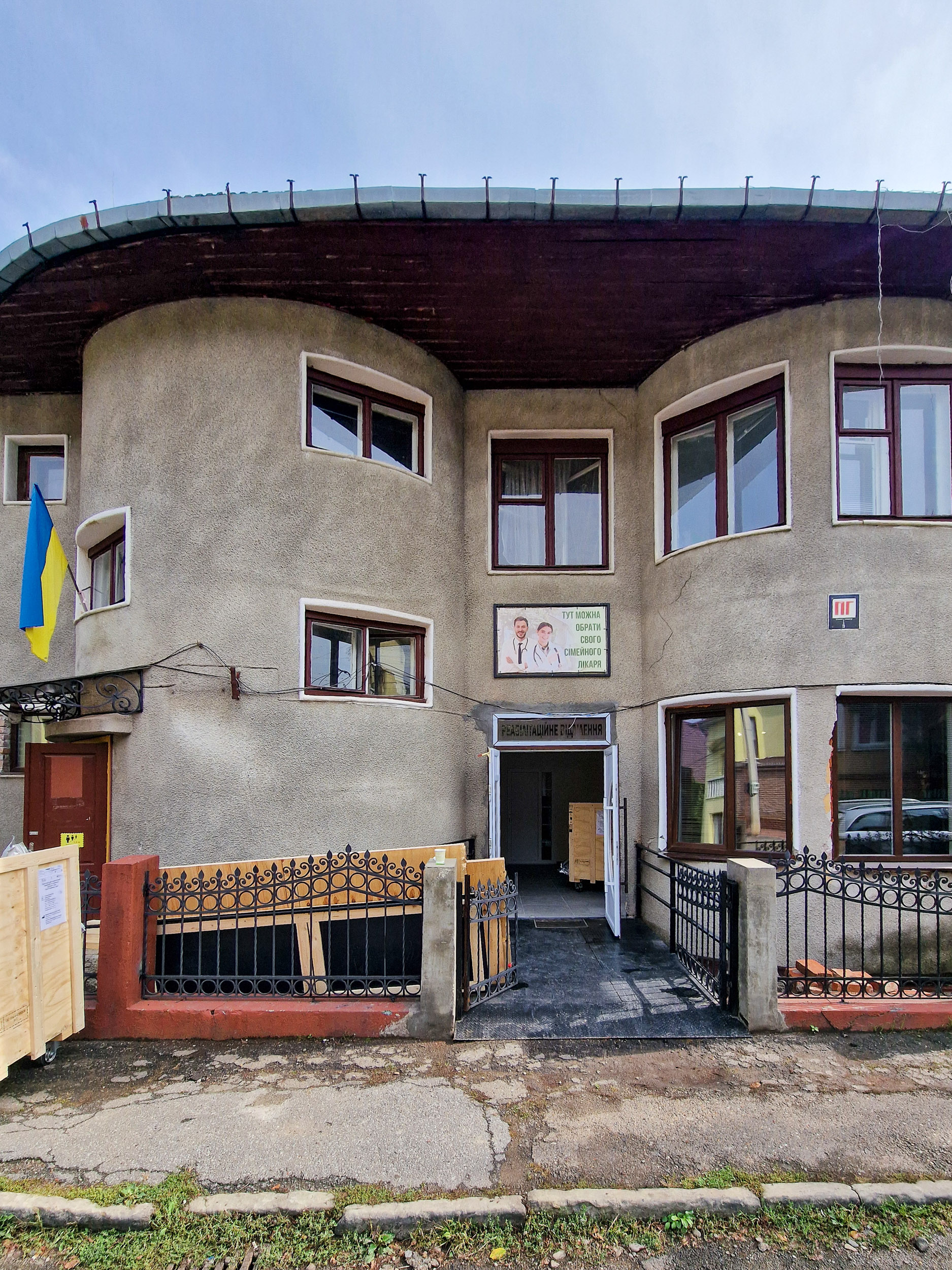
Despite war and adversity, Chernivtsi is emerging as a leading rehab centre in Ukraine. Learn how modern technology, interdisciplinary care, and international support drive innovation in patient rehabilitation.

role: it offers comprehensive treatment options for people with neurological, ortho-paedic and post-traumatic limitations, com-bining state-of-the-art medical approaches with an interdisciplinary therapy approach.
A highly qualified team of specialists from various disciplines works on creating individual therapy plans and implementing effective treatment concepts. In addition to traditional physiotherapeutic and occupational therapy measures, technical solutions are increasingly being integrated to make rehabilitation more targeted and efficient. At the same time, further developments in rehabilitative care present the centre with challenges – from structural and financial conditions to the training and specialisation of skilled professionals. Despite these challenges, the centre manages to continuously improve the quality of care through targeted partnerships, strategic investments and the constant interaction with international experts. A look at current developments shows how the rehabilitation centre in Chernivtsi copes with the tricky balancing act between medical progress and real challenges, turning it into a pioneering institution in rehabilitative medicine
As the professions of physiotherapist and occupational therapist are still relatively new in Ukraine, there is a high demand for qualified specialists. Training follows the guidelines of the Ministry of Education and comprises a four-year undergraduate course, which provides a solid theoretical and practical foundation. Following this, graduates can specialise in a two-year postgraduate course. This gives them the opportunity to acquire advanced knowledge in specific subject areas through targeted courses. While physiotherapy has steadily professionalised over recent years, occupational therapy is still developing and gaining in importance.
To meet the high demand for qualified staff and ensure practical training, the rehabilitation centre in Chernivtsi works closely with the Yuriy Fedkovych National Medical University and the Bukovinian State Medical University. This cooperation enables students to gain practical experience early on and prepare for the challenges of the profession. At the same time, both students and professionals benefit from a continuous interaction with science and research. This close networking enables the further development of modern rehabilitative approaches and the integration of innovative treatment methods into practice, thereby continuously improving the quality of rehabilitative care.
Modern device-based therapy is, of course, also playing an increasingly pivotal role in Ukraine. The scientific evidence clearly demonstrates the benefits of technology-based rehabilitation, and there is no doubt that innovative rehabilitation technologies are now an integral part of contemporary treatment approaches. Through the targeted use of modern equipment, functional progress can be more effectively promoted, therapy results objectively measured, and individualised treatment plans created.
The integration of these technologies into rehabilitative care, however, requires careful forward planning. Given the existing framework conditions, a targeted and gradual approach to investments is needed in order to utilise resources optimally and improve therapy quality on a long-time basis. New equipment is therefore carefully selected, with the focus on expanding existing treatment concepts without overwhelming the structural and financial possibilities.
Besides the acquisition of innovative systems, the training of professionals is also essential to ensure that the available technologies can be used efficiently. Since comprehensive modernisations cannot be implemented in one go, the centre concentrates on a step-by-step pragmatic approach. Proven methods are specifically combined with new approaches, technical solutions are integrated into existing processes and every advance is strategically planned. This precise and sustainable development process makes it possible to utilise modern rehabilitation technologies as effectively as possible under the circumstances and to continuously improve care.
At the same time, Ukraine has gained valuable experience in international exchange and received significant material support during
the ongoing war. New rehabilitation equipment, specialised training programmes for professionals and close collaboration with European experts have contributed to translating modern treatment approaches into practice more quickly. These developments not only enable a targeted improvement in the quality of care, but also the gradual expansion of rehabilitative structures in the country.
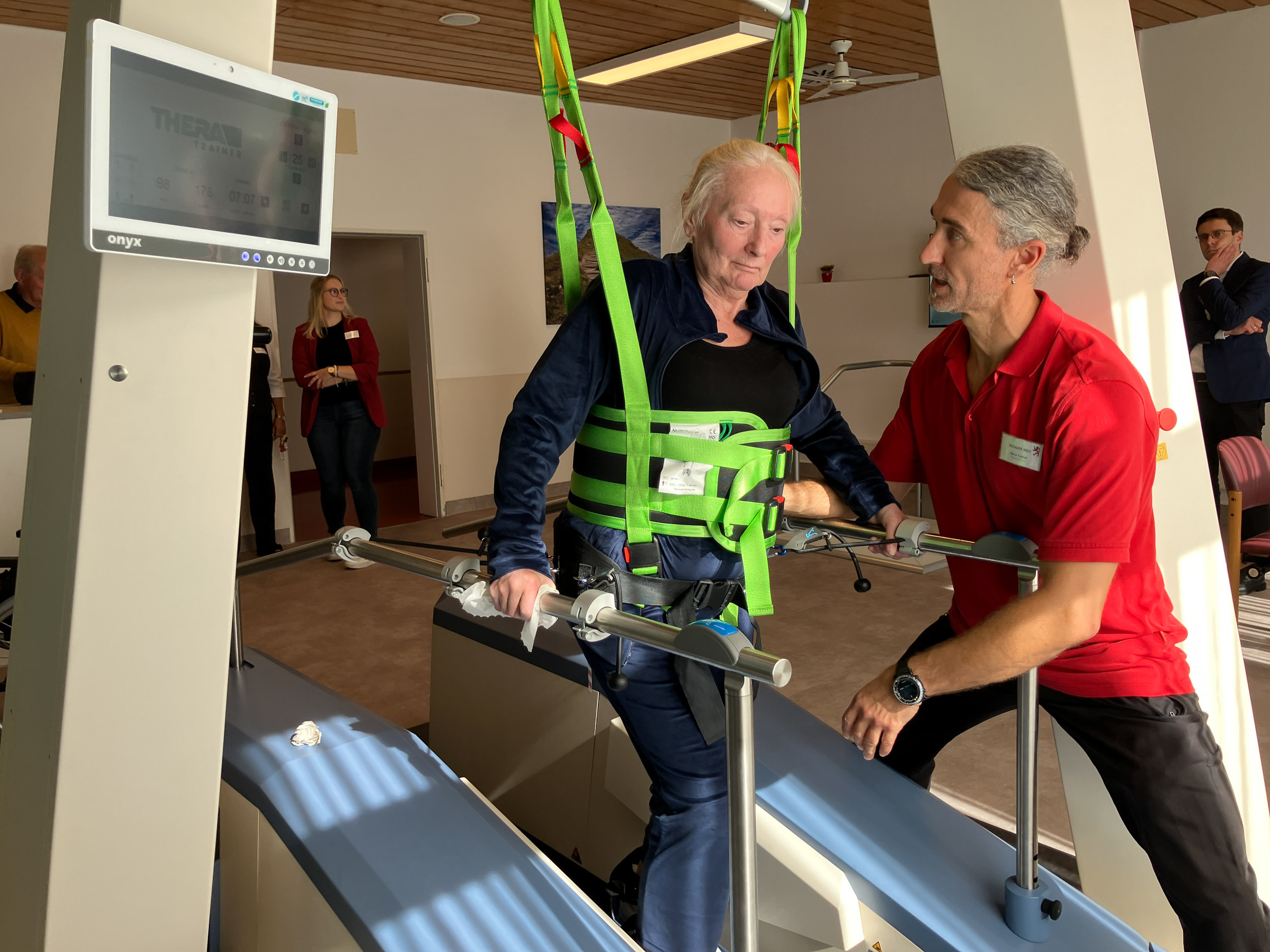
The twin city of Mannheim played a crucial role by supporting the establishment of a new polyclinic in the heart of Chernivtsi. Thanks to
a delivery of aid from Germany, the clinic was equipped with state-of-the-art medical technology from leading European manufacturers, including the gait trainer Lyra from THERA-Trainer. In August, two specialists travelled to Chernivtsi to install and commission the equipment and to train the staff. The hospital staff were also able to participate in product training in Germany – organised by the city of Mannheim.
Although the rehabilitation centre also treats civilian patients, the emphasis is on treating military personnel. Since the beginning of the
war, the physiotherapists have been working intensively with soldiers suffering from the consequences of mine explosions, neuropathies of the upper and lower extremities, as well as joint contractures following prolonged immobilisation and operations. In addition to the physical limitations, many patients face psychological challenges, such as anxiety and depressive disorders, apathy or occasional aggression.
Post-traumatic stress disorder (PTSD) is particularly common, requiring close interdisciplinary collaboration between physiotherapy, occupational therapy and psychology.
A comprehensive rehabilitative approach is essential to enable those affected to return to daily life in the best possible way. Modern therapeutic approaches and continuous interaction with international experts play a pivotal role in this regard. The direct knowledge transfer with rehabilitation specialists from eastern Ukraine remains a challenge, but the centre is actively working to expand networks and promote collaborations in order to share and develop experiences and proven methods in a targeted manner.
In addition to physical rehabilitation, significant importance is placed on providing psychological support. Many soldiers face not only physical challenges, but also profound psychological ones. Therefore, holistic rehabilitation approaches are increasingly being implemented, which provide psychosocial support alongside medical care, while assisting patients throughout the reintegration process.
The rehabilitation centre pursues clear long-term goals to further increase the quality of care and provide patients with the best possible support. A key concern is the successful reintegration of military personnel into civilian life. The objective is not only to improve physical functioning through the targeted use of innovative therapeutic approaches and cutting-edge technologies, but also to promote psychological stability. The combination of individual rehabilitation, social reintegration and psychological support forms the basis for sustainable recovery.
Furthermore, efforts are being made to expand the scope of rehabilitation services. The introduction of new technologies opens up additional treatment options and improves the quality of therapy. The targeted use of equipment can make rehabilitation processes even more effec-
tive and tailored to patient need. Step by step, the centre is working towards establishing itself as a leading institution for rehabilitative medicine in the region and meeting the high demands for modern, patient-centred care.
The rehabilitation centre in Chernivtsi performs essential work, particularly in caring for military personnel with musculoskeletal and neurological injuries. Despite challenges with regard to equipment and skills shortages, significant progress has already been achieved through international cooperation. In the long term, the focus lies on implementing inno-vative technologies and advancing the training of rehabilitation specialists to meet the increasing demand for high-quality services in this field.
Moreover, there is hope that rehabilitation services in Ukraine will no longer be determined primarily by the effects and consequences of the war. The future aim of the centre is to make a sustainable contribution to Ukrainian society as a whole, beyond its work with injured soldiers. Its long-term goal is to become a leading centre of excellence in rehabilitation, providing support to individuals from all backgrounds – whether recovering from accidents, illnesses or operations. The progress achieved despite the current challenges lays the foundation for a future where modern rehabilitation medicine becomes a vital part of the healthcare system, helping patients on their path to achieving the best possible recovery.

Related contents
Find related exciting contents in our media library.

Meet our specialists.
Are you interested in our solutions? Schedule a meeting with a Consultant to talk through your strategy and understand how TEHRA-Trainer can help you to advance rehabilitation.
You need to load content from reCAPTCHA to submit the form. Please note that doing so will share data with third-party providers.
More InformationYou are currently viewing a placeholder content from Turnstile. To access the actual content, click the button below. Please note that doing so will share data with third-party providers.
More Information