


THERAPY & PRACTICE
Guideline-based therapy
How the lyra is redefining gait rehabilitation at SRH Gesundheitszentrum Waldbronn
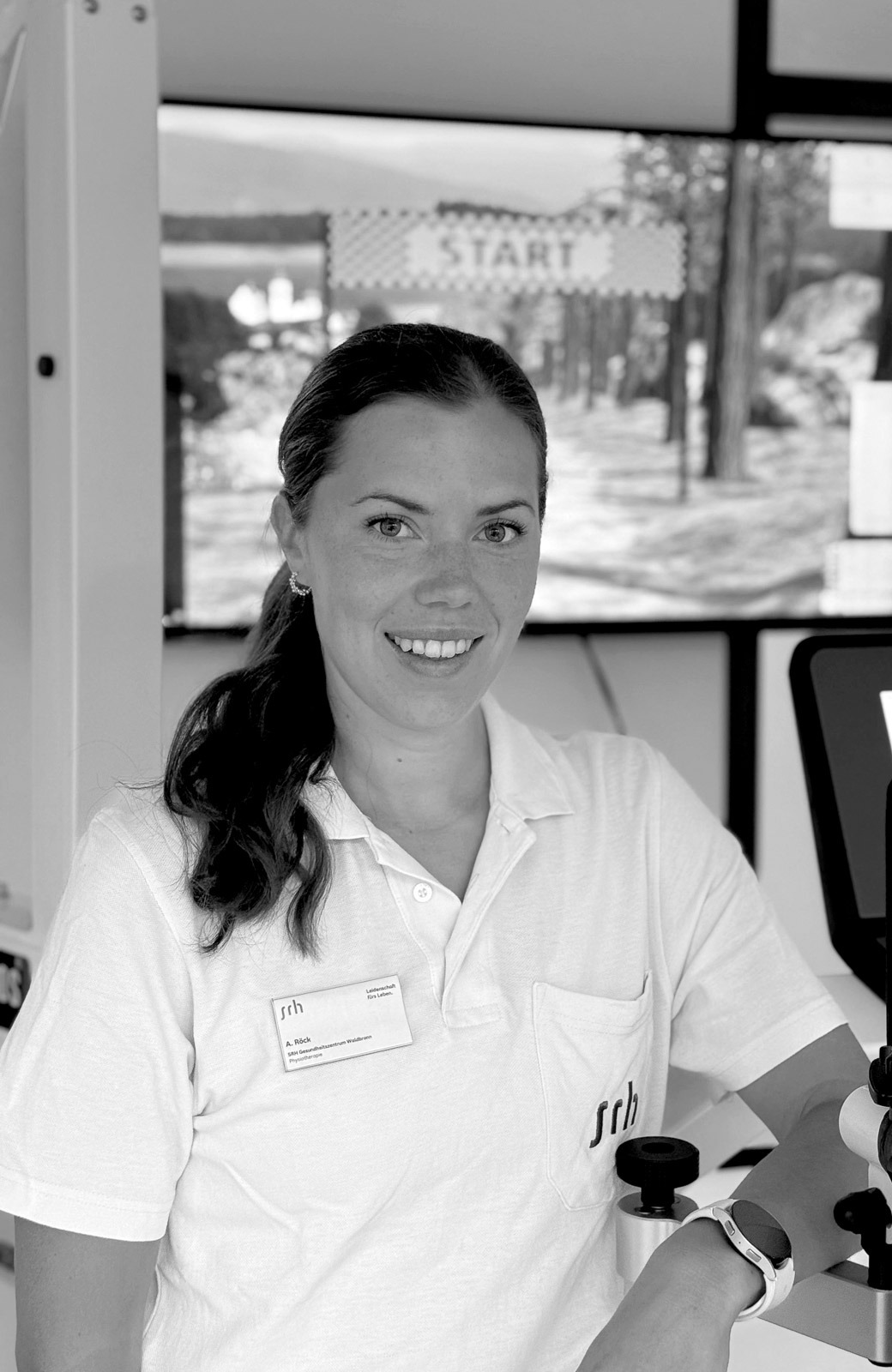
Anja Röck
Physio therapist (B.Sc.)
After a stroke, regaining the ability to walk is the central goal of rehabilitation for many patients. There is clear scientific evidence of what is needed for this: the ReMoS guideline recommends 500 to 1,000 steps per therapy session in order to initiate an effective motor learning process. For patients, this means intensive repetition, confidence in training and noticeable progress. This is precisely where the gait lab at SRH Gesundheitszentrum Waldbronn (SRH Health Centre Waldbronn) comes in – with the clear aim of making evidence-based therapy a real experience for patients.
With the lyra, we can support patients who previously were barely able to exercise actively. They achieve movement goals that seemed unattainable just a short time ago.
Before the introduction of the gait lab, however, this evidence could only be implemented to a limited extent in everyday rehabilitation. Manual patient stabilisation imposed a substantial physical burden on therapists and required considerable resources, as two to three practitioners were frequently needed to provide adequate weight-bearing support, facilitate lower limb advancement and simultaneously maintain continuous fall risk monitoring. Training intensity remained limited. For patients, this had specific consequences: too few steps, slower progress, lower self-efficacy. From the patient’s point of view, there was a gap between what would help and what was possible.
SRH Gesundheitszentrum Waldbronn: a gait laboratory for modern rehabilitation
The SRH Gesundheitszentrum Nordschwarzwald has set itself the task of promoting the walking ability of rehabilitants – for more independence and active participation in life. A gait laboratory was set up, closely orientated to the principles of motor learning: it is equipped with special treadmills in its own therapy room and enables targeted, modern gait rehabilitation.
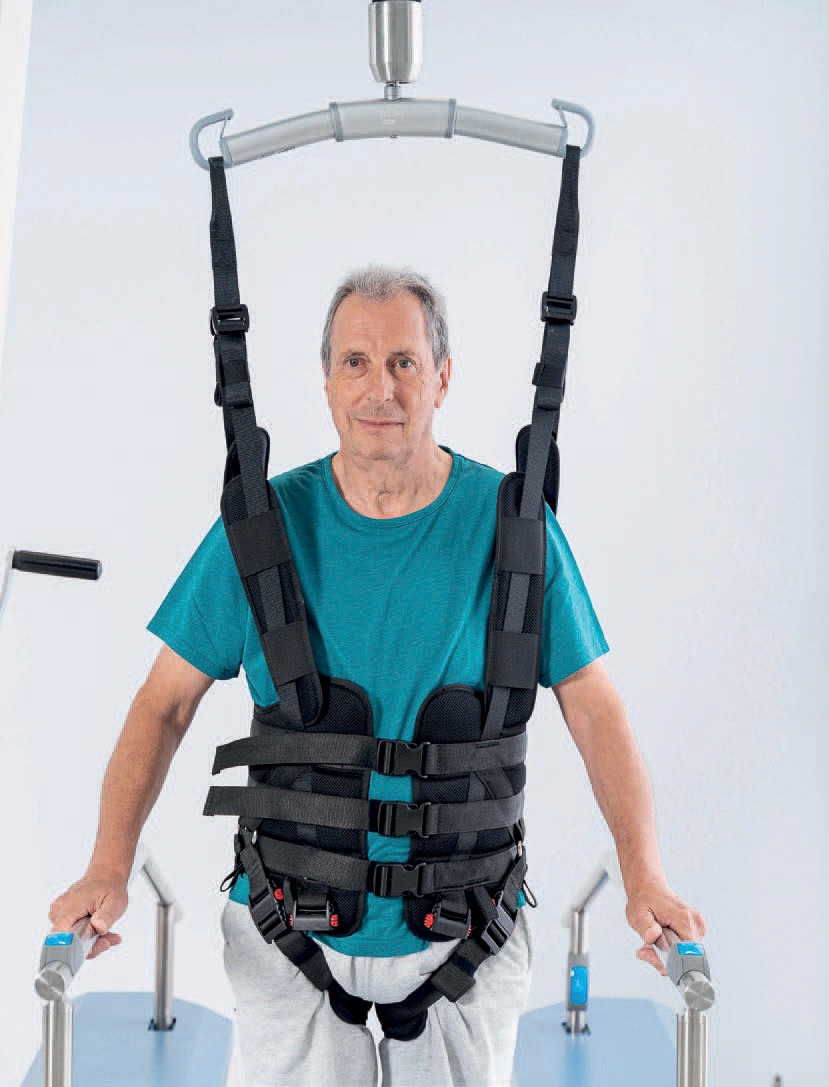
A central component is the THERA-Trainer lyra, an end-effector gait trainer that complements traditional individual and group physiotherapy. It enables intensive, efficient and safe gait training, especially for patients who are unable to walk.
The effect is measurable and immediately noticeable for patients. The evaluation of previous treatments shows: as early as the first training session, an average of 562 steps is achieved with the lyra, in the seventh session over 1,000 steps. This means that patients not only fulfil the guideline – they surpass it.
Before the introduction of the gait lab, these values were around 40 steps in the first session and around 60 steps in the seventh session. This difference is crucial for patients. The high number of steps facilitates the motor learning process, increases walking economy and boosts the patient’s confidence in their own body. Visible progress has a motivating effect and increases active participation in therapy, a key factor for sustainable recovery.
Thanks to the lyra, the team requires significantly less physical effort. No more tedious supporting or guiding is necessary. Patients can be positioned quickly and safely in the device and the device settings can be applied easily and intuitively. This creates valuable room for manoeuvre for targeted patient motivation, immediate positive feedback on the number of steps they have achieved and the promotion of motor learning – with noticeably greater therapeutic meaningfulness and motivation.
Patients not only walk on the lyra; rather, therapists intelligently and individually adjust parameters such as weight relief, stride length and frequency. Sessions are designed to be highly effective through progressive control in the sense of shaping: every adjustment avoids over- or under-exertion and optimises the training benefit.
A central component is the THERA-Trainer lyra, an end-effector gait trainer that complements traditional individual and group physiotherapy. It enables intensive, efficient and safe gait training, especially for patients who are unable to walk.
The effect is measurable and immediately noticeable for patients. The evaluation of previous treatments shows: as early as the first training session, an average of 562 steps is achieved with the lyra, in the seventh session over 1,000 steps. This means that patients not only fulfil the guideline – they surpass it.
Before the introduction of the gait lab, these values were around 40 steps in the first session and around 60 steps in the seventh session. This difference is crucial for patients. The high number of steps facilitates the motor learning process, increases walking economy and boosts the patient’s confidence in their own body. Visible progress has a motivating effect and increases active participation in therapy, a key factor for sustainable recovery.
Thanks to the lyra, the team requires significantly less physical effort. No more tedious supporting or guiding is necessary. Patients can be positioned quickly and safely in the device and the device settings can be applied easily and intuitively. This creates valuable room for manoeuvre for targeted patient motivation, immediate positive feedback on the number of steps they have achieved and the promotion of motor learning – with noticeably greater therapeutic meaningfulness and motivation.
Patients not only walk on the lyra; rather, therapists intelligently and individually adjust parameters such as weight relief, stride length and frequency. Sessions are designed to be highly effective through progressive control in the sense of shaping: every adjustment avoids over- or under-exertion and optimises the training benefit.
From stroke to paraplegia – lyra expands the boundaries of neurorehabilitation
The lyra demonstrates its therapeutic potential far beyond its use in stroke rehabilitation. At our clinic, we have observed significant therapeutic successes in various neurological diseases and the associated functional impairments – including multiple sclerosis, Parkinson’s disease, brain tumours and paraplegia. The measurable functional improvements in strength, endurance and mobility in particular emphasise the central importance of robotic-assisted gait therapy with the lyra. By focussing on the targeted improvement of walking ability, intensive cardiopulmonary training also strengthens general resilience and contributes to the prevention of contractures, pneumonia and thrombosis. As a result, the lyra is establishing itself as a holistic therapy tool that significantly supports rehabilitation while sustainably improving the quality of life of patients.
“Since I started training with the lyra, I finally feel like I’m really moving again. The constant tension and pain caused by sitting so much has decreased significantly. And the best thing of all: I can now walk for much longer with my forearm rollator than before – I’m finally making progress again.”
Lyra integration establishes sustainable gait rehabilitation in the gait lab
By integrating the THERA-Trainer lyra into the gait lab, its full potential can be optimally utilised. It is not a single device, but a sophisticated, robotic-assisted therapy concept that combines three systems in a targeted manner. All devices are firmly integrated into a joint treatment concept – tailored to the respective functional condition and the patient’s recovery process. The result is a modern, holistic form of gait rehabilitation that enables sustainable progress.
Anja Röck
Physio therapist (B.Sc.)
Anja Röck is a physio therapist (B.Sc.) at SRH Gesundheitszentrum Waldbronn and specialises in neurorehabilitation. She supervises physiotherapy students and is a member of the “Innovation and Research in Therapy” team at the SRH health centres in the Northern Black Forest
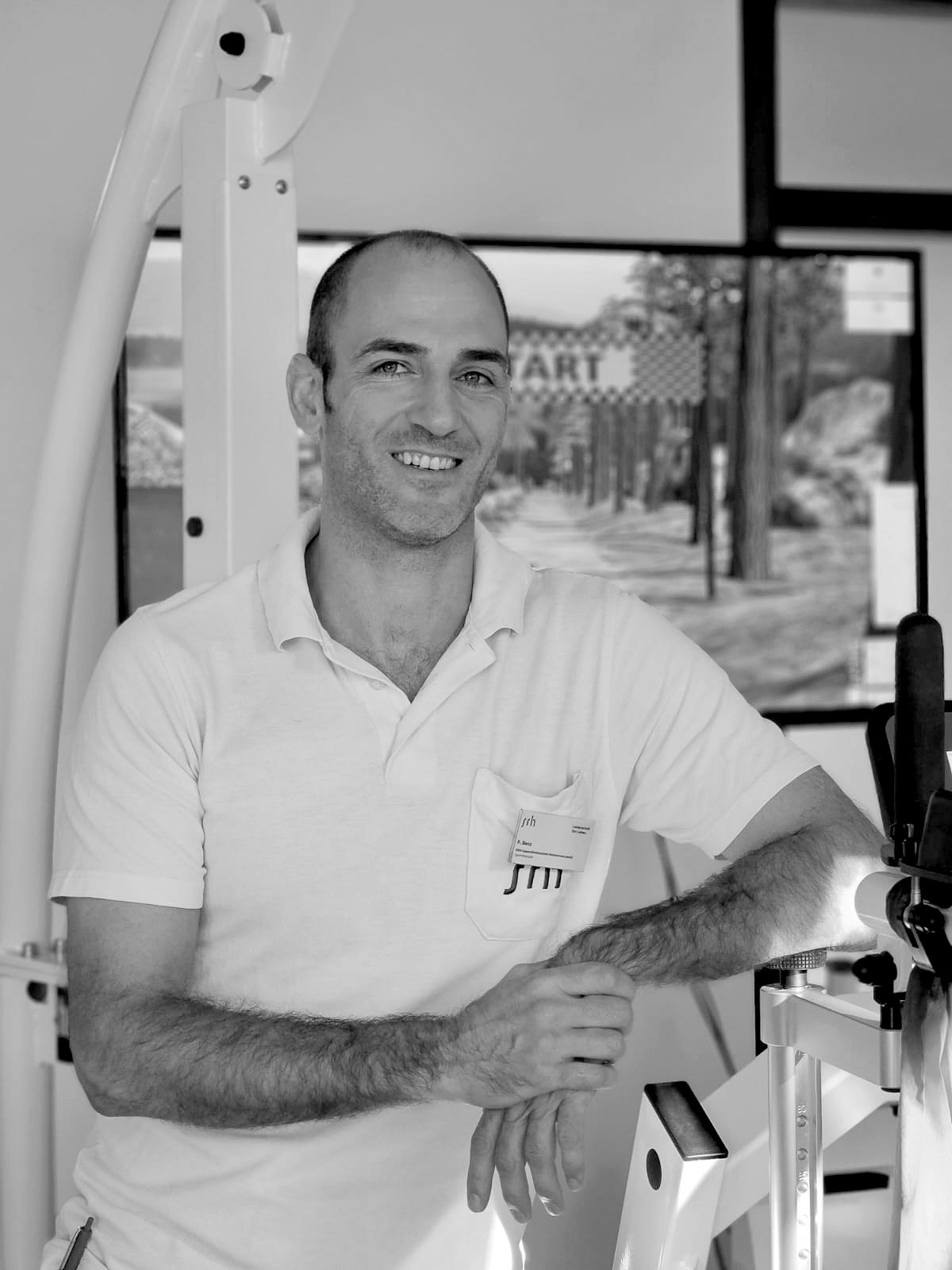
Pascal Benz
Sports scientist (Mag.)
Pascal Benz is a sports scientist (Mag.) with over ten years of experience in neurorehabilitation. Together with Anja Röck, he set up the gait laboratory and successfully integrated it into everyday clinical practice. He is also a member of the “Innovation and Research in Therapy” team, which specifically transfers scientific findings into practice. In this way, he combines research and everyday clinical practice to promote innovative therapeutic approaches in neurorehabilitation.
References:
- Deutsche Gesellschaft für Neurorehabilitation. (2015). S2e-Leit linie: Rehabilitation der Mobilität nach Schlaganfall (ReMoS). Retrieved from https://remos.dgnr.de
Related contents
Find related exciting contents in our media library.
Mehr laden
This is not what you are searching for? Knowledge

Meet our specialists.
Are you interested in our solutions? Schedule a meeting with a Consultant to talk through your strategy and understand how TEHRA-Trainer can help you to advance rehabilitation.