


THERAPY & PRACTICE
Exercise training among haemodialysis patients
An underestimated component of care provision

Jakob Tiebel
Health Business Consultant
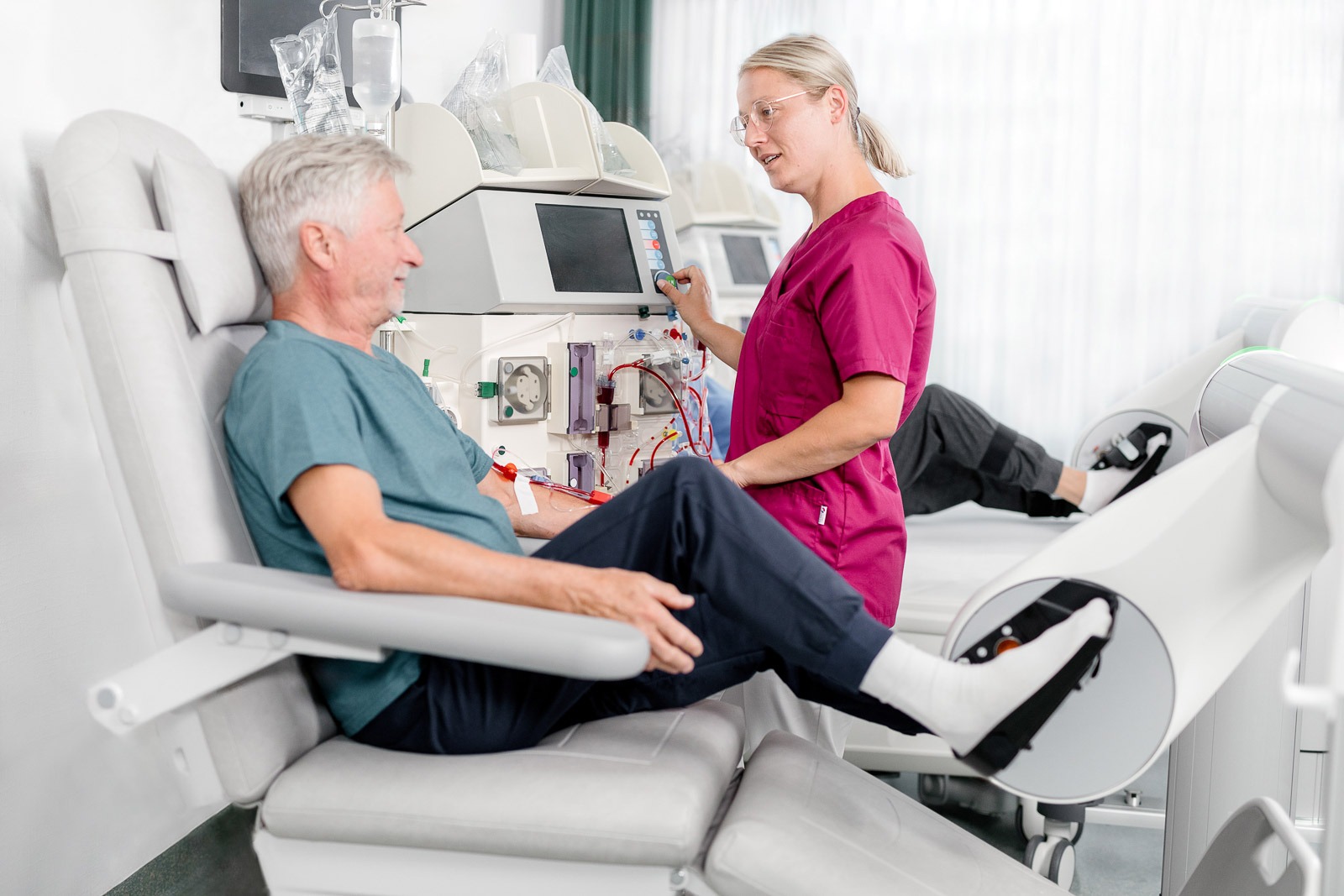
Haemodialysis saves lives – but for many patients it also means a gradual loss of physical performance, independence and quality of life. What was long regarded as an unavoidable side effect is increasingly being seen in a different light: targeted exercise is key to reducing hospitalisation and halting functional decline. A recently published specialist article demonstrates why exercise therapy for dialysis patients is far more than a nice-to-have – and why it has yet to become standard practice in clinical management.
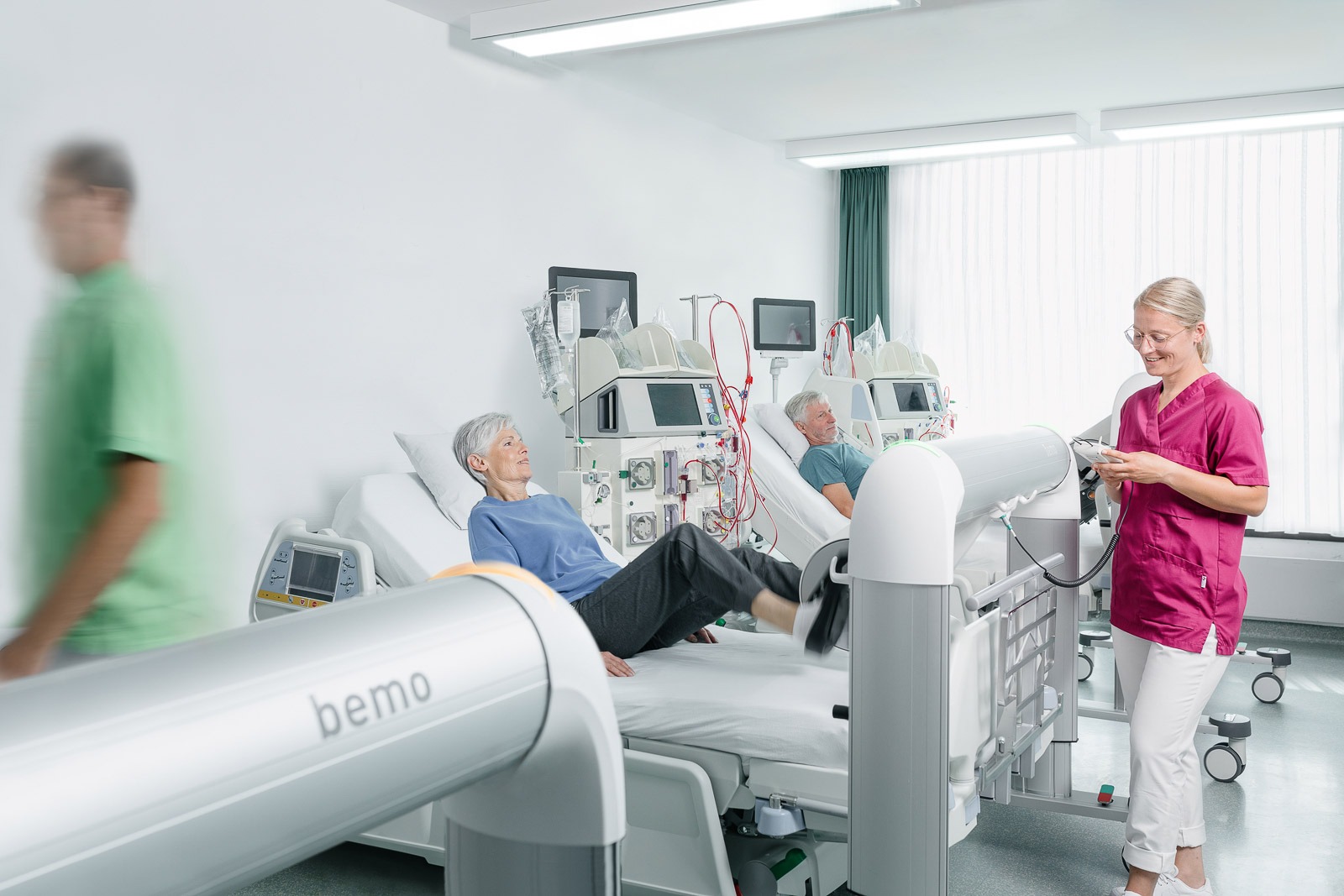
Patients with chronic renal failure on haemodialysis are among the most vulnerable patient groups. They have an increased risk of complicated and protracted disease progression and often present a geriatric appearance in the sense of frailty at a comparatively young age. Functional limitations, reduced resilience and an increased hospitalisation rate are the result. Against this background, exercise therapy becomes increasingly important. As the DiaTT study, among others, shows, structured physical training can achieve clinically relevant effects in dialysis patients. In particular, a significant reduction in the hospitalisation duration was demonstrated. Exercise training not only has an effect on physical performance, but also helps to stabilise general state of health and preserve independence.
The article, which was recently published in Nieren- und Hochdruckkrankheiten, a specialist journal focusing on renal and hypertensive diseases, takes a comprehensive look at this topic. Author Kerstin Anding-Rost, who was also significantly involved in the DiaTT study, discusses exercise therapy interventions both during dialysis treatment and as home training programmes. Suitable training concepts, their individual adaptation and options for structured progress monitoring are presented.
The article places particular emphasis on the need for qualified guidance and support from appropriately trained staff in order to ensure the safety and effectiveness of the measures. Despite the well-documented positive effects, the issue of remuneration remains unresolved and represents a key barrier to widespread implementation. Regardless of this, the article makes it clear that exercise therapy should be seen as an integral part of the care provided to haemodialysis patients in order to sustainably improve prognosis, functional capacity and quality of life.
The article, which was recently published in Nieren- und Hochdruckkrankheiten, a specialist journal focusing on renal and hypertensive diseases, takes a comprehensive look at this topic. Author Kerstin Anding-Rost, who was also significantly involved in the DiaTT study, discusses exercise therapy interventions both during dialysis treatment and as home training programmes. Suitable training concepts, their individual adaptation and options for structured progress monitoring are presented.
The article places particular emphasis on the need for qualified guidance and support from appropriately trained staff in order to ensure the safety and effectiveness of the measures. Despite the well-documented positive effects, the issue of remuneration remains unresolved and represents a key barrier to widespread implementation. Regardless of this, the article makes it clear that exercise therapy should be seen as an integral part of the care provided to haemodialysis patients in order to sustainably improve prognosis, functional capacity and quality of life.
Dialysis prolongs life – exercise decides what this life looks like.
Jakob Tiebel
Health Business Consultant
Jakob Tiebel is OT and studied applied psychology with a focus on health economics. He has clinical expertise from his previous therapeutic work in neurorehabilitation. He conducts research and publishes on the theory-practice transfer in neurorehabilitation and is the owner of an agency for digital health marketing.
References:
- K. Anding-Rost, C. Grupp (2025). Exercise therapy in hemodia lysis patients. Nieren- und Hochdruckkrankheiten 54: 261–267. https://www.dustri.com/nc/de/article-response-page. html?artId=192212&doi=10.5414%2FNHX02471&abstractLang=en
Related contents
Find related exciting contents in our media library.
Mehr laden
This is not what you are searching for? Knowledge

Meet our specialists.
Are you interested in our solutions? Schedule a meeting with a Consultant to talk through your strategy and understand how TEHRA-Trainer can help you to advance rehabilitation.