


SCIENCE
New NICE guideline on rehabilitation for chronic neurological disorders
An evidence-based frame of reference for coordinated, real-world and person-centred care

Jakob Tiebel
Health Business Consultant
In October 2025, the National Institute for Health and Care Excellence (NICE) published a comprehensive guideline on the rehabilitation of children, young people and adults with chronic neurological disorders and acquired neurological impairments. This guideline covers rehabilitative care in all settings – from acute care and outpatient rehabilitation to community and long-term care – and aims to create an evidence-based, coordinated and person-centred framework for neurorehabilitation.
The guideline is aimed at healthcare professionals, clinical teams, social and care structures, decision-makers, and those affected and their relatives. It complements and links with existing NICE guidelines on specific neurological conditions such as motor neurone disease, multiple sclerosis and Parkinson’s disease, as well as guidelines on acute care for head and spinal injuries. It does not include guidelines on rehabilitation for stroke in adults, dementia, epilepsy or cerebral palsy – these are covered by separate NICE recommendations.
Basic principles of the guideline
he guideline sets out a new paradigm for neurological rehabilitation that emphasises the following core principles:
• Holistic and person-centred rehabilitation that addresses physical, cognitive, psychosocial and participatory aspects in equal measure.
• Lifelong care, i.e. lifelong rehabilitative support that is geared towards individual needs and objectives.
• Coordination and continuity of care, underpinned by a single point of contact (e.g. key contact or case manager) for navigating the healthcare system.
• Multidisciplinary cooperation between health, social and community services, including voluntary and charitable sectors.
The aim is to reduce inequalities in care, smooth transitions between care sectors and establish consistently high standards for all those affected.
• Holistic and person-centred rehabilitation that addresses physical, cognitive, psychosocial and participatory aspects in equal measure.
• Lifelong care, i.e. lifelong rehabilitative support that is geared towards individual needs and objectives.
• Coordination and continuity of care, underpinned by a single point of contact (e.g. key contact or case manager) for navigating the healthcare system.
• Multidisciplinary cooperation between health, social and community services, including voluntary and charitable sectors.
The aim is to reduce inequalities in care, smooth transitions between care sectors and establish consistently high standards for all those affected.
Physical activity and exercise
A central chapter of the guideline deals with physical activity and targeted exercise therapy – key elements of any neurological rehabilitation programme.
Individual programmes and target agreement
The guideline recommends the joint development of a physical activity and exercise programme between the practitioner and the person affected in order to optimise muscle power, endurance and physical function. Factors such as fatigue, pain, cognitive
impairment and the risk of possible damage should be taken into account. Supervision, self-exercise and local programmes should be combined as required, and the dose of exercise (frequency, duration, intensity) should be agreed on a clinically relevant basis.
Functionally orientated promotion of movement
For individuals with functional neurological disorders, activities that encourage goal-oriented, planned movement while recognising symptom awareness, but focus attention on achieving functional goals, are recommended.
Individual programmes and target agreement
The guideline recommends the joint development of a physical activity and exercise programme between the practitioner and the person affected in order to optimise muscle power, endurance and physical function. Factors such as fatigue, pain, cognitive
impairment and the risk of possible damage should be taken into account. Supervision, self-exercise and local programmes should be combined as required, and the dose of exercise (frequency, duration, intensity) should be agreed on a clinically relevant basis.
Functionally orientated promotion of movement
For individuals with functional neurological disorders, activities that encourage goal-oriented, planned movement while recognising symptom awareness, but focus attention on achieving functional goals, are recommended.
Specialist support
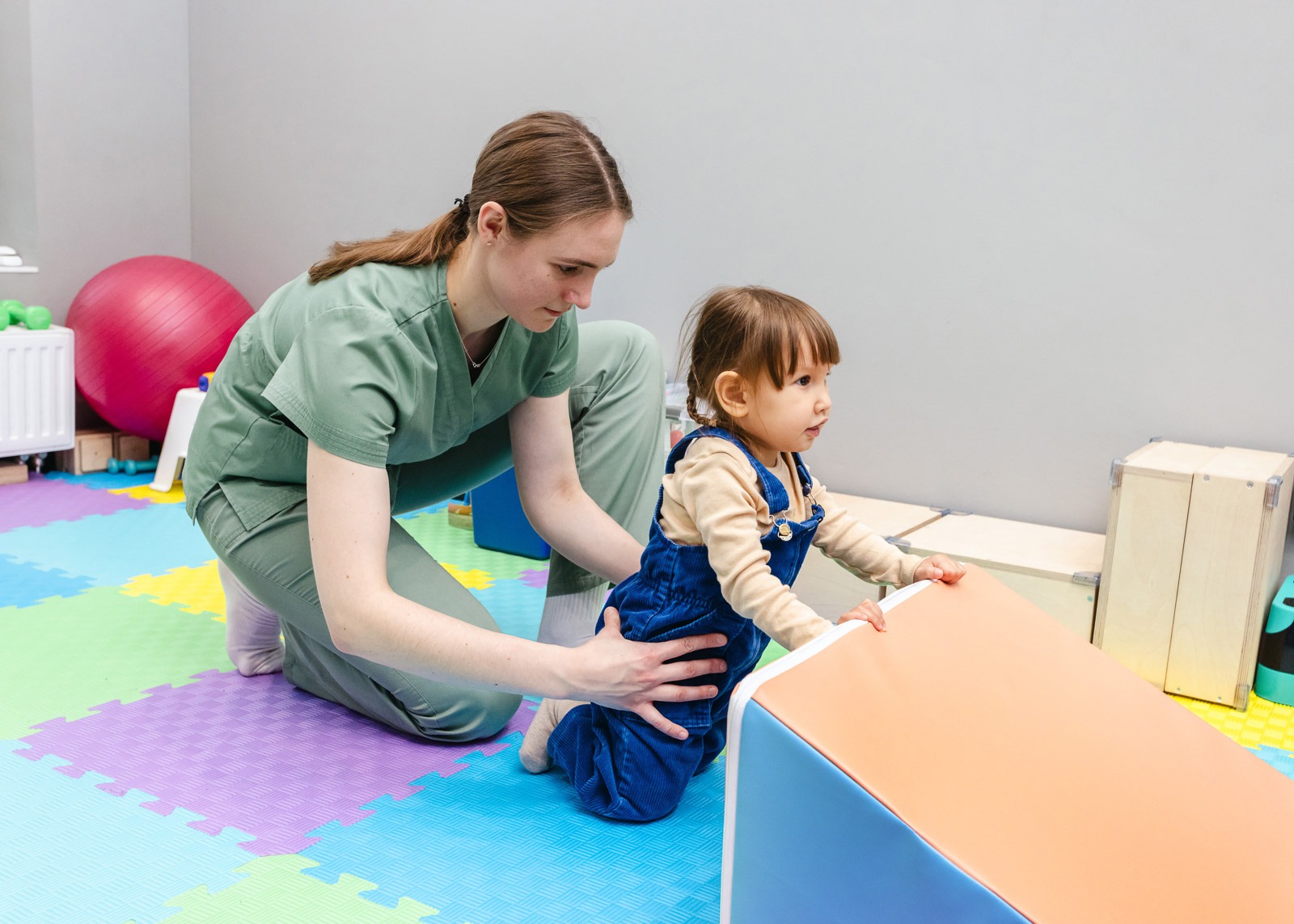
Physical activity programmes should be developed and supervised by professionals with expertise in exercise programmes, such as physiotherapists or occupational therapists with a neurological focus.
Physical activity programmes should be developed and supervised by professionals with expertise in exercise programmes, such as physiotherapists or occupational therapists with a neurological focus.
Rehabilitation is an ongoing process – the new NICE guideline sets a new evidence-based, lifelong standard for this.
Promotion of long-term behavioural change
The guideline recommends the use of behavioural strategies, including cognitive behavioural therapy, motivational interviewing techniques or intervention-based approaches in order to support lifelong activity and exercise participation. Barriers such as social, cultural or structural obstacles should be jointly identified and addressed.
The guideline recommends the use of behavioural strategies, including cognitive behavioural therapy, motivational interviewing techniques or intervention-based approaches in order to support lifelong activity and exercise participation. Barriers such as social, cultural or structural obstacles should be jointly identified and addressed.
Stability, mobility and limb function
Another core chapter deals with functional aspects of physical rehabilitation.
Targeted training programmes
For problems with stability, mobility or limb function, the guideline recommends specific, targeted training approaches, including:
• Function-orientated training and task-based training (e.g. gait training, balance exercises, sensorimotor tasks).
• Treadmill- and robotic-assisted gait training to promote both mobility and endurance.
• Use of robotics and game modes to improve motivation and training quality where available.
The guideline emphasises the integration of these exercises into everyday life – at home and in the community – and recommends agreeing clear training programmes that can also be carried out independently or with the support of family and caregivers.
Targeted training programmes
For problems with stability, mobility or limb function, the guideline recommends specific, targeted training approaches, including:
• Function-orientated training and task-based training (e.g. gait training, balance exercises, sensorimotor tasks).
• Treadmill- and robotic-assisted gait training to promote both mobility and endurance.
• Use of robotics and game modes to improve motivation and training quality where available.
The guideline emphasises the integration of these exercises into everyday life – at home and in the community – and recommends agreeing clear training programmes that can also be carried out independently or with the support of family and caregivers.
Context and significance for practice and care
The new NICE guideline represents a paradigm shift in neurorehabilitative care in that it no longer calls for selective therapies, but for coordinated, lifelong and person-centred case management that integrates physical, psychosocial and functional goals. It calls for clear assessments, common objectives, multidisciplinary collaboration and the provision of a single point of contact to navigate the healthcare system.
The guideline also emphasises that successful implementation does not happen by itself: it requires well-resourced, coordinated healthcare systems, political commitment, training and expansion of the rehabilitative workforce, and sufficient funding in order to realise the recommended person-centred, integrated and lifelong service delivery models.
The guideline also emphasises that successful implementation does not happen by itself: it requires well-resourced, coordinated healthcare systems, political commitment, training and expansion of the rehabilitative workforce, and sufficient funding in order to realise the recommended person-centred, integrated and lifelong service delivery models.
Conclusion
The new NICE guideline provides a comprehensive, evidence-based framework for the rehabilitation of chronic neurological diseases and sets new standards for the organisation of rehabilitative care. With its recommendations on physical activity, functional training, integration of robotics/VR, holistic care and long-term care coordination, it provides a broad basis for clinical practice, care planning and health policy decisions in neurorehabilitation.
Jakob Tiebel
Health Business Consultant
Jakob Tiebel is OT and studied applied psychology with a focus on health economics. He has clinical expertise from his previous therapeutic work in neurorehabilitation. He conducts research and publishes on the theory-practice transfer in neurorehabilitation and is the owner of an agency for digital health marketing.
References:
- www.nice.org.uk/ guidance/ng252
Related contents
Find related exciting contents in our media library.
Mehr laden
This is not what you are searching for? Knowledge

Meet our specialists.
Are you interested in our solutions? Schedule a meeting with a Consultant to talk through your strategy and understand how TEHRA-Trainer can help you to advance rehabilitation.