


THERAPY-Magazin
A comparison of the best end-effector gait trainers
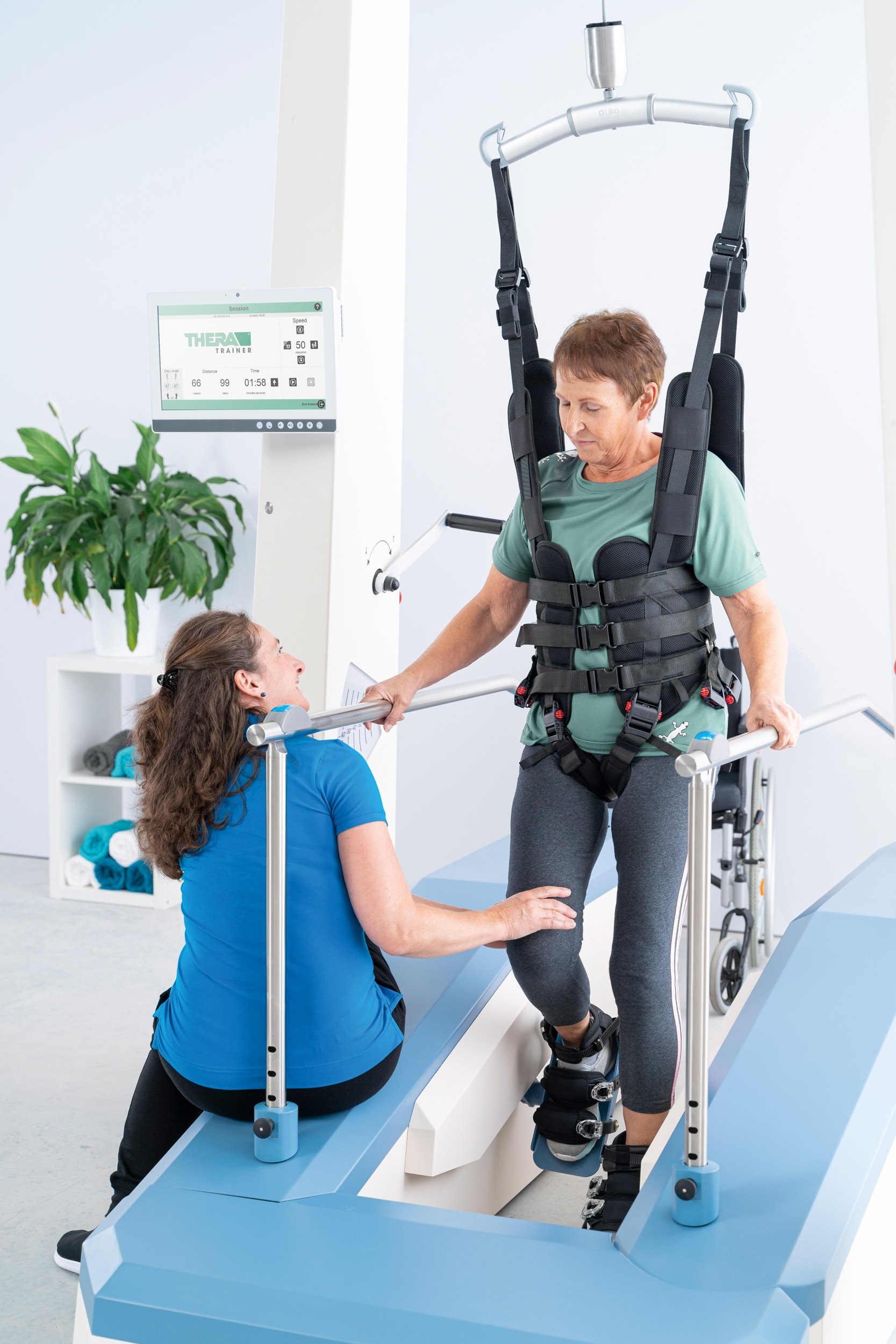
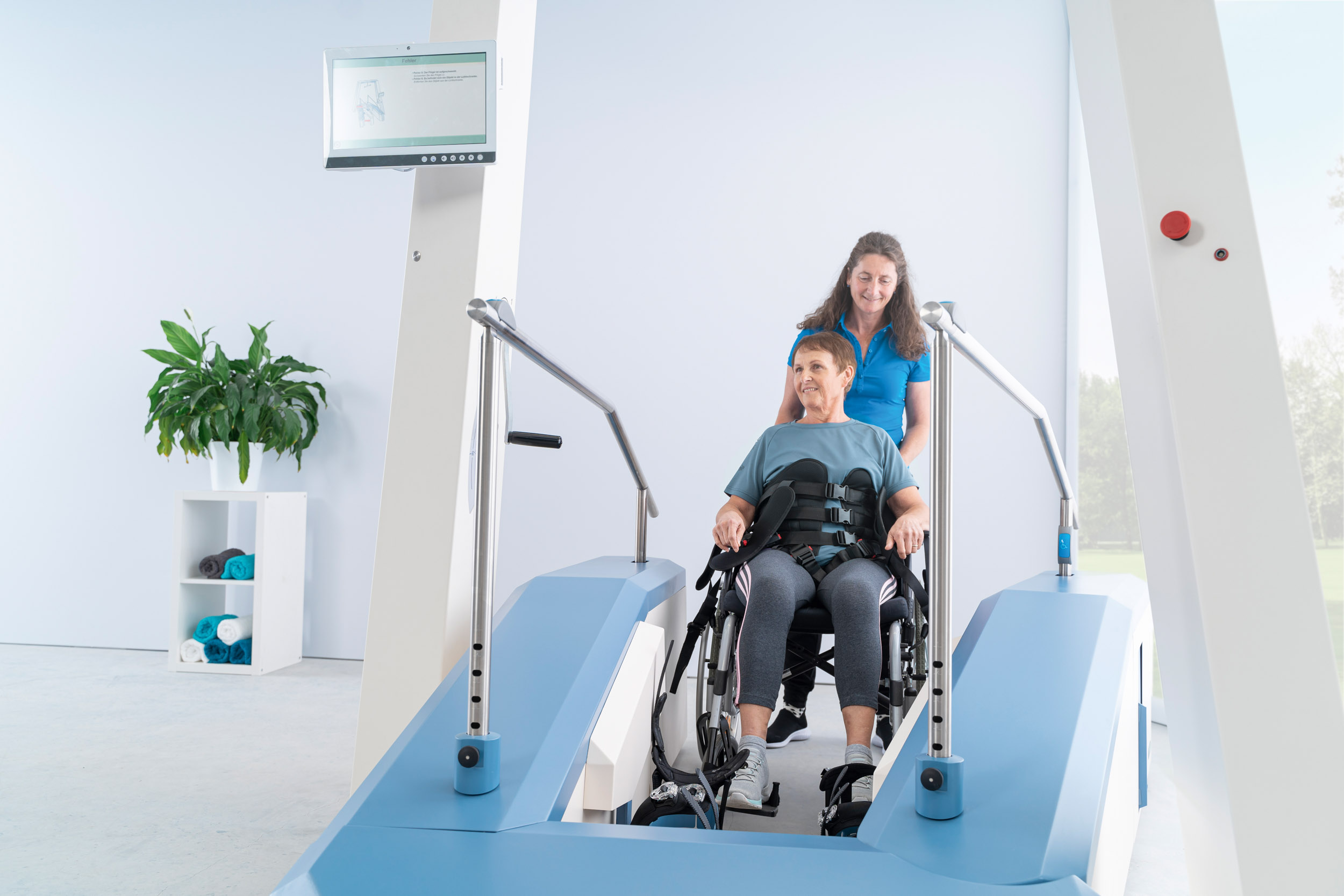
There are various ways to relearn how to walk following a stroke using robotics devices. In everyday clinical practice, exoskeleton-supported (e.g. Lokomat) and end-effector-based gait trainers (e.g. THERA-Trainer lyra) are mainly used. Treadmills are used with and without weight relief in the later phase. But which therapy is the most effective for improving walking?

Jakob Tiebel
Health Business Consultant
To answer this question, researchers conducted a systematic review of randomised controlled trials with network meta-analysis. Indirect comparisons and network meta-analyses represent a key evolution of traditional meta-analyses. The primary endpoint was walking speed, while the secondary endpoints were walking ability, gait endurance and gait stability. No gait training or conventional gait training served as the reference category. This was contrasted with treadmill training with or without bodyweight relief, treadmill training with and without a speed paradigm, and electromechanically-assisted gait training with end-effector and exoskeleton devices. The systematic search resulted in 40,567 hits. The evaluation included 95 randomised controlled trials with a total of 4,458 patients after a stroke. For the primary endpoint of walking speed, significant improvements were achieved through gait training with end-effector-assisted devices (MD = 0.16 m/s; 95% CI = 0.04–0.28). None of the other interventions improved walking speed significantly. For the secondary endpoint of gait endurance, end-effector-assisted gait training and treadmill training with bodyweight relief showed a significant improvement (MD = 47 m, CI: 4-90 and MD = 38 m, CI 4-72, respectively). No network meta-analysis was performed for the secondary endpoint of walking ability due to significant inconsistencies. No difference was identified between the safety of the individual interventions.
Compared to conventional gait rehabilitation, treadmill therapy with partial bodyweight relief achieves significant and clinically significant improvements in gait endurance compared to conventional therapy.
Compared to conventional gait rehabilitation, treadmill therapy with partial bodyweight relief achieves significant and clinically significant improvements in gait endurance compared to conventional therapy.
The researchers come to the conclusion that, compared to conventional gait rehabilitation, end-effector-assisted gait training in particular significantly and clinically improves gait speed and gait endurance following a stroke.
Comments:
A highly interesting study with unexpected results! The title of the publication was later criticised as being misleading.
Walking speed had been chosen as the primary endpoint. The title is “The Improvement of Walking Ability Following Stroke”. Actually, the parameters of walking ability, walking speed, walking distance and steadiness have to be differentiated. Whether this was an oversight remains unclear.
But it changes nothing about the quality and significance of the results. The end effector also remains the method of choice for regaining walking ability, as demonstrated by current meta-analyses and guidelines.
A highly interesting study with unexpected results! The title of the publication was later criticised as being misleading.
Walking speed had been chosen as the primary endpoint. The title is “The Improvement of Walking Ability Following Stroke”. Actually, the parameters of walking ability, walking speed, walking distance and steadiness have to be differentiated. Whether this was an oversight remains unclear.
But it changes nothing about the quality and significance of the results. The end effector also remains the method of choice for regaining walking ability, as demonstrated by current meta-analyses and guidelines.
Jakob Tiebel
Health Business Consultant
Jakob Tiebel is OT and studied applied psychology with a focus on health economics. He has clinical expertise from his previous therapeutic work in neurorehabilitation. He conducts research and publishes on the theory-practice transfer in neurorehabilitation and is the owner of an agency for digital health marketing.
References:
- Mehrholz J, Pohl M, Kugler J, Elsner B. (2018). The Improvement of Walking Ability Following Stroke. Dtsch Arztebl Int. 2018 Sep 28;115(39):639-645. doi: 10.3238/arztebl.2018.0639. PubMed PMID: 30375325; PubMed Central PMCID: PMC6224539
Related contents
Find related exciting contents in our media library.
Mehr laden
This is not what you are searching for? Knowledge

Meet our specialists.
Are you interested in our solutions? Schedule a meeting with a Consultant to talk through your strategy and understand how TEHRA-Trainer can help you to advance rehabilitation.