


RESERACH & EVIDENCE
Latest research.
Stay up to date with the latest scientific findings and clinical evidence on our THERA-Trainer products. Learn how modern therapy concepts and proven outcomes support patient recovery and functional improvement.
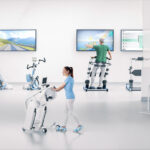
Stay up to date with the latest scientific findings and clinical evidence on our THERA-Trainer products. Learn how modern therapy concepts and proven outcomes support patient recovery and functional improvement.
Pazo-Palacios et al. (2025)
Both functional improvements and positive economic effects (LOS) are evident
Radovanović V., et al. (2025)
Robot-assisted therapy (with TT tigo) combined with conventional rehabilitation significantly improved motor function recovery after ischemic stroke compared to conventional therapy alone. The experimental group showed markedly greater improvements in both upper and lower extremity function, supporting the effectiveness of robotic-assisted rehabilitation in stroke recovery.
Ahmad et al. (2024)
Adding early bedside bicycle training to inpatient cardiac rehabilitation following heart valve surgery leads to significantly better outcomes
Bethoux, F. (2024)
High-intensity aerobic cycling, particularly using forced-rate (FE), is feasible for individuals with MS and resulted in measurable improvements in walking speed—from 0.61 to 0.68 m/s on average (p = 0.010). FE showed a greater increase (+0.09 m/s) than VE (+0.03 m/s), although the difference was not statistically significant (p = 0.17)
Brookman et al. (2024)
The exercise program featuring gamified indoor cycling in long-term care facilities demonstrated significant improvements in the physical, mental, and social health of older adults. The combination of exercise, competition, technology, and social interaction was particularly effective.
Rojo et al. (2024)
In this pilot RCT, both groups (with and without VR) showed short-term improvements in range of motion, particularly in active hip flexion and passive knee extension. The use of virtual reality did not result in additional functional benefits—but VR can serve as a motivational supplement.
Abe et al. (2023)
A single session of rhythmic leg cycling led to a significant improvement in spinal inhibition (D1 inhibition) and a reduction in spastic reflexes (H-reflex, Hₘₐₓ/H-M wave) in adults with cerebral palsy, accompanied by increased knee MAV (greater mobility). These findings suggest plastic changes in spinal inhibitory networks and demonstrate that even a single cycling session can reduce spasticity—through targeted modulation of presynaptic inhibition.
Linder et al. (2023)
The 8-week forced-rate cycling program led to a significant increase in walking speed (+0.09 m/s) and a marked improvement in endurance performance (6MWT +53 m) in patients with chronic stroke. “Responders” who demonstrated clinically relevant progress—including improved gait kinematics and kinetics—benefited significantly from this.
Ringenbach et al. (2023)
Motor-assisted cycling training (ACT) significantly improved both the confidence in one’s own movement abilities and the positive perception of the training in adults with Down syndrome, whereas voluntary cycling only increased self‑efficacy. The concept is particularly promising for a population with cognitive impairments, as motivation and self-assessment can be enhanced through external support.
Shinohara et al. (2023)
Ergometer training in bed led to a significantly faster recovery from ICU-AW and markedly greater gains in strength, particularly in the legs. There were no significant differences in upper extremity and functional scores (FSS, FIM, grip strength).
Lin et al. (2022)
Low-resistance cycling training over 8 weeks demonstrably led to improved muscle strength (MVC), better neural activation (VA), and stronger reflexes (twitch force) in the knee extensors among patients with Parkinson’s disease—all of which were statistically significant (p < 0.05). Of particular relevance is the marked improvement in central fatigue resilience (CFI)—a centrally controlled aspect—while peripheral fatigue values remained unchanged.
Linder et al. (2022)
The 8-week moderate-to-vigorous aerobic cycling program resulted in a significant increase in walking speed (+0.14 m/s) among individuals with moderate Parkinson’s disease, while walking performance in the control group deteriorated. This improvement was accompanied by a normalization of walking biomechanics—better cadence, longer strides, and an improved stance phase.
Vitacca et al. (2022)
This study shows that a tailored inpatient rehabilitation program incorporating a gradual introduction of cycle ergometer training in COVID-19 ARDS survivors improves both functional performance (SPPB) and significantly increases mobility levels—regardless of the initial performance level. The 6-minute walk test improved by up to 115 m with stable oxygen saturation. The training was feasible and effective during the rehabilitation stay.
Barclay et al. (2019)
Active-passive cycling training (APT) was highly feasible and safe for sedentary MS patients with moderate to severe disability. All participants in the training group completed the program in full and demonstrated significant improvements in exercise performance, spasticity, endurance, function, and quality of life.
Rayegani et al. (2011)
Electric-assisted cycling resulted in significant improvements in patients with spinal cord injuries who had been wounded in combat
Fowler et al. (2010)
The PEDALS cycling training program was safe, feasible, and clinically promising for ambulatory children with spastic cerebral palsy
Holmes, C., et al. (2025). Home-based motorised cycling in adults with cerebral palsy: A feasibility study. Open original publication
Abe et al. (2023). Leg Cycling Leads to Improvement of Spasticity by Enhancement of Presynaptic Inhibition in Patients with Cerebral Palsy. Open original publication
Fowler et al. (2010). Pediatric Endurance and Limb Strengthening (PEDALS) Using Stationary Cycling – A Randomized Controlled Trial. Open original publication
Ringenbach et al. (2023). Assisted Cycle Therapy (ACT) Improved Self‑Efficacy and Exercise Perception in Middle‑Age Adults with Down Syndrome. Open original publication
Lai, Y., et al. (2025). Intradialytic Exercise: Effects on Arterial Stiffness and Gait Speed in Patients Undergoing Hemodialysis. Open original publication
Paglialonga, F., et al. (2014). Intradialytic cycling in children and young adults on chronic hemodialysis. Open original publication
Pazo-Palacios et al. (2025). Effects of in-bed cycling in critically ill adults: A systematic review and meta-analysis of randomised clinical trials. Open original publication
Wi, J., et al. (2024). Feasibility and safety of in-bed cycling/stepping in critically ill patients. Open original publication
Shinohara et al. (2023). The Effect of In-Bed Leg Cycling Exercises on Muscle Strength in Patients With ICU-Acquired Weakness. Open original publication
Newman, A. N. L., et al. (2021). CardiO Cycle: a pilot feasibility study of in-bed cycling in critically ill patients post cardiac surgery. Open original publication
Nickels, M., et al. (2020). Acceptability, safety, and feasibility of in-bed cycling with critically ill patients. Open original publication
Waldauf, P., et al. (2020). Effects of Rehabilitation Interventions on Clinical Outcomes in Critically Ill Patients: Systematic Review and Meta-Analysis of Randomized Controlled Trials*.. Open original publication
Ringdal, M., et al. (2018). In-bed cycling in the ICU; patient safety and recollections with motivational effects. Open original publication
Choong, K., et al. (2015). In-bed mobilization in critically ill children: Safety & feasibility study. Open original publication
Camargo Pires-Neto, R., et al. (2013). Very early passive cycling in mechanically ventilated critically ill patients: Physiological and Safety aspects - A case series. Open original publication
Kammerlander, A., et al. (2025). Effect of Eccentric Cycling on Oxygen Uptake and Hemodynamics in Patients with Chronic Obstructive Pulmonary Disease: A Randomized Controlled Crossover Trial. Open original publication
Ahmad et al. (2024). Effect of Adding Early Bedside Cycling to Inpatient Cardiac Rehabilitation after Heart Valve Surgery. Open original publication
Karatzanos, E., et al. (2021). Acute Cardiorespiratory Responses to Different Exercise Modalities in Chronic Heart Failure Patients—A Pilot Study. Open original publication
Nakaya, Y., et al. (2021). Early cardiac rehabilitation for acute decompensated heart failure safely improves physical function (PEARL study): a randomized controlled trial. Open original publication
Pymer, S. C., et al. (2021). Considering the Feasibility, Tolerability, and Safety of High-Intensity Interval Training as a Novel Treatment for Patients With Intermittent Claudication. Open original publication
Bethoux, F. (2024). Intensive Aerobic Cycling Is Feasible and Elicits Improvements in Gait Velocity in Individuals With Multiple Sclerosis. Open original publication
Barclay et al. (2019). The Effect of Cycling Using Active-Passive Trainers on Spasticity, Cardiovascular Fitness, Function and QoL in People with Moderate to Severe MS – A Feasibility Study. Open original publication
Barclay, R. L., et al. (2019). The effect of cycling using active-passive trainers on spasticity, cardiovascular fitness, function and quality of life in people with moderate to severe Multiple Sclerosis: a feasibility study. Open original publication
Szecsi, J., et al. (2009). Functional electrical stimulation-assisted cycling of patients with multiple sclerosis. Open original publication
Rojo et al. (2024). Effects of a Virtual Reality Cycling Platform on Lower Limb Rehabilitation in Patients With Ataxia and Hemiparesis. Open original publication
Rabelo, M. et al. (2018). Overview of FES-Assisted Cycling Approaches and Their Benefits. Open original publication
Brookman et al. (2024). Evaluation of an exercise program incorporating an international cycling competition: a multimodal intervention model for physical, psychological, and social wellbeing in residential aged care. Open original publication
Philp, F., et al. (2022). A pilot study of a single intermittent arm cycling exercise programme on people affected by Facioscapulohumeral dystrophy (FSHD). Open original publication
Sanzo, R., et al. (2021). The effects of exercise and active assisted cycle ergometry in post-operative total knee arthroplasty patients - a randomized controlled trial. Open original publication
Wainwright, T., et al. (2020). A cycling and education intervention for the treatment of hip osteoarthritis. Open original publication
Keogh, J. W., et al. (2018). Is high-intensity interval cycling feasible and more beneficial than continuous cycling for knee osteoarthritic patients? Results of a randomised control feasibility trial. Open original publication
Palmieri, J., et al. (2024). Bicycling for Rehabilitation of Persons With Parkinson Disease. Open original publication
Lin et al. (2022). Effects of Lower Limb Cycling Training on Different Components of Force and Fatigue in Individuals With Parkinson’s Disease. Open original publication
Linder et al. (2022). An 8‑week aerobic cycling intervention elicits improved gait velocity and biomechanics in persons with Parkinson’s disease. Open original publication
Tiihonen, M., et al. (2021). Parkinson's disease patients benefit from bicycling. Open original publication
Segura, C., et al. (2020). Effect of a High-Intensity Tandem Bicycle Exercise Program on Clinical Severity, Functional Magnetic Resonance Imaging, and Plasma Biomarkers in Parkinson's Disease. Open original publication
Tiihonen, M., et al. (2019). Parkinson’s disease patients benefit from bicycling - a systematic review and meta-analysis. Open original publication
Ridgel, A. L., et al. (2015). Dynamic high-cadence cycling improves motor symptoms in Parkinson’s disease. Open original publication
Vitacca et al. (2022). In-Patient Trajectories and Effects of Training in Survivors of COVID-19–Associated Acute Respiratory Failure. Open original publication
Dionne, J., et al. (2023). Safety and Feasibility of Early Activity-Based Therapy Following Severe Traumatic Spinal Cord Injury: Results from a Single-Arm Pilot Trial. Open original publication
Phadke, C. P., et al. (2018). Impact of passive leg cycling in persons with spinal cord injury: A systematic review. Open original publication
Galea, M. P., et al. (2017). SCIPA Switch-On: A Randomized Controlled Trial Investigating the Efficacy and Safety of Functional Electrical Stimulation–Assisted Cycling and Passive Cycling Initiated Early After Traumatic Spinal Cord Injury. Open original publication
Nardone, A., et al. (2017). Passive cycling in neurorehabilitation after spinal cord injury. Open original publication
Nardone, R., et al. (2016). Effects of passive pedaling exercise on intracortical inhibition in humans with spinal cord injury. Open original publication
Rayegani et al. (2011). The Effect of Electrical Passive Cycling on Spasticity in War Veterans with Spinal Cord Injury. Open original publication
Rayegani, S. M., et al. (2011). The Effect of Electrical Passive Cycling on Spasticity in War Veterans with SCI. Open original publication
Kakebeeke, T. H., et al. (2005). The effect of passive cycling movements on spasticity after spinal cord injury. Open original publication
Radovanović V., et al. (2025). The Significance of Robot-Assisted Therapy on the Recovery of Motor Function in Patients After Ischemic Stroke. Open original publication
Romanova E., et al. (2025). Functional Recovery in Patients with Atrial Fibrillation and Diabetes Mellitus Following Early Post-Stroke Rehabilitation. Open original publication
Linder, S., et al. (2024). The utilization of forced-rate cycling to facilitate motor recovery following stroke. Open original publication
Linder et al. (2023). Increased Comfortable Gait Speed Is Associated With Improved Gait Biomechanics in Persons With Chronic Stroke Completing an 8-Week Forced‑Rate Aerobic Cycling Intervention. Open original publication
Holzapfel, S. G., et al. (2019). Acute effects of assisted cycling therapy on post-stroke motor function. Open original publication
Vanroy, C., et al. (2017). Effectiveness of Active Cycling in Subacute Stroke: A Randomized Controlled Trial. Open original publication
Peri, A., et al. (2016). Can FES-Augmented Active Cycling Training Improve Motor Recovery in Stroke Patients?. Open original publication
Bauer, P., et al. (2015). Functional electrical stimulation-assisted active cycling—Therapeutic effects in patients with hemiparesis from 7 days to 6 months after stroke: A randomized controlled pilot study. Open original publication
Jansen, M., et al. (2013). Assisted Bicycle Training Delays Functional Deterioration in Boys With Duchenne Muscular Dystrophy: The Randomized Controlled Trial “No Use Is Disuse”. Open original publication
Jäggi, S. M., et al. (2023)
The use of cognitive-motor exergames is safe, easy to implement, and shows promising effects on cognitive and motor functions in Parkinson’s patients undergoing inpatient rehabilitation.
Ordahan, B., et al. (2015)
The additional training with the balance trainer leads to greater improvements in balance and mobility in stroke patients compared to conventional rehabilitation alone, while no significant difference is observed in the level of independence in daily activities.
Haksever, B., et al. (2021). The Dynamic Innovative Balance System Improves Balance Ability: A Single-blind RCT. Open original publication
Swanenburg, J., et al. (2020). Exergaming With Integrated Head Turn Tasks Improves Compensatory Saccade Pattern in Some Patients With Chronic Peripheral Unilateral Vestibular Hypofunction. Open original publication
Swinnen, N., et al. (2021). The efficacy of exergaming in people with major neurocognitive disorder residing in long-term care facilities: a pilot randomized controlled trial. Open original publication
Altorfer, A., et al. (2021). Feasibility of Cognitive-Motor Exergames in Geriatric Inpatient Rehabilitation: A Pilot Randomized Controlled Study. Open original publication
Roh, C., et al. (2021). Efficacy of an Integrated Training Device in Improving Muscle Strength and Balance. Open original publication
Schättin, A., et al. (2021). Design and Evaluation of User-Centered Exergames for Patients with Multiple Sclerosis: Multilevel Usability and Feasibility Studies. Open original publication
Thera-Trainer Team, et al. (2023). Avoiding falls through balance training (THERA-Trainer). Open original publication
Chan, K., et al. (2021). Effects of exergaming on functional outcomes in people with chronic stroke: A systematic review and meta‐analysis. Open original publication
Manser, P., et al. (2024). Exergame training to improve cognitive and physical function in older adults: a randomized controlled trial. Open original publication
Seinsche, J., et al. (2023). Older adults' needs and requirements for a comprehensive exergame-based telerehabilitation system: A focus group study. Open original publication
Uematsu, A., et al. (2023). Effects of 8 weeks of exergaming on dual-task gait and cognition in healthy older adults. Open original publication
Hou, H., et al. (2022). Effect of Cognition and Dual-Task Training on Older Adults' Cognitive and Motor Function. Open original publication
Hou, H., et al. (2022). The effects of exergame training on physical and cognitive functions in older adults: A randomized controlled trial. Open original publication
Jiang, J., et al. (2022). Effects of exergames on executive functions, cognitive and motor functions in older adults: a systematic review. Open original publication
Bakker, J., et al. (2020). Balance training monitoring and individual response during unstable vs. stable balance Exergaming in elderly adults: Findings from a randomized controlled trial. Open original publication
Palmgren, A., et al. (2020). Effectiveness of evidence-based balance training transferred into clinical setting. Open original publication
de Bruin, E. D., et al. (2019). Playing Exergames Facilitates Central Drive to the Ankle Dorsiflexors During Gait in Older Adults; a Quasi-Experimental Investigation. Open original publication
Maillot, P., et al. (2019). Effects of exergame training on cognitive and physical functions in healthy older adults. Open original publication
Morat, M., et al. (2019). Effects of Stepping Exergames Under Stable Versus Unstable Conditions on Balance and Strength in Healthy Community-Dwelling Older Adults: A Three-Armed Randomized Controlled Trial. Open original publication
Rebsamen, S., et al. (2019). Exergame-Driven High-Intensity Interval Training in Untrained Community-Dwelling Older Adults: A Formative One-Group Quasi-Experimental Feasibility Trial. Open original publication
Swanenburg, J., et al. (2018). Exergaming in a Moving Virtual World to Train Vestibular Functions and Gait: A Proof-of-Concept-Study with Older Adults. Open original publication
Schättin, S., et al. (2016). Adaptations of Prefrontal Brain Activity, Executive Functions, and Gait in Healthy Elderly Following Exergame and Balance Training: A Randomized Controlled Study. Open original publication
Lesinski, M., et al. (2015). A Systematic Review and Meta-analysis: Effectiveness of Balance Training for Older Adults. Open original publication
Jäggi, S. M., et al. (2023). Feasibility and effects of cognitive-motor exergames on fall risk factors in typical and atypical Parkinson’s inpatients: A randomized controlled pilot study. Open original publication
Evers, J., et al. (2024). Neuroathletic training in stroke rehabilitation: A single-blind randomized controlled trial. Open original publication
Huber S., et al. (2021). Personalized Motor-Cognitive Exergame Training in Chronic Stroke Patients: A Feasibility Study. Open original publication
Ordahan, B., et al. (2015). Impact of exercises administered to stroke patients with balance trainer on rehabilitation results: a randomized controlled study. Open original publication
Lee, M., et al. (1996). Clinical evaluation of a new biofeedback standing balance training device. Open original publication
Kim, Y., et al (2024)
Robot-assisted gait rehabilitation, particularly using end-effector systems, can significantly improve balance, gait ability, and cognitive function in stroke patients. The study identified patient groups that are most likely to benefit from specific types of robotic therapy in order to optimize rehabilitation
Lee, D., et al. (2024)
Robot-assisted gait training significantly improves walking ability, muscle strength, and activities of daily living in patients with spinal cord injuries. Subacute patients and longer intervention periods (>2 months) show greater benefits.
Lee, D., et al. (2023)
The combination of end-effector-based robot-assisted gait therapy and conventional physical therapy significantly improves walking ability in subacute stroke patients more effectively than conventional therapy alone.
Bruni, V., et al. (2018)
Robot-assisted gait rehabilitation for stroke patients shows significant overall improvements in walking ability, although no clear advantage of any particular type of device has been identified.
Mazzoleni, S., et al. (2017)
Robot-assisted end-effector-based gait training demonstrates significant motor improvements in patients with chronic stroke and can be effective as a standalone form of rehabilitation.
Hesse, S. (2013)
End-effector-based gait trainers lead to a significantly higher rate of regaining the ability to walk independently in stroke patients than conventional physical therapy alone.
Mehrholz, J., et al. (2012)
Electromechanically assisted gait rehabilitation following a stroke improves walking ability. In this review, end-effector devices showed advantages over exoskeletons in terms of achieving independent walking.
Choi, S., et al. (2024). Overground Gait Training With a Wearable Robot in Children With Cerebral Palsy. Open original publication
Asirelli, P., et al. (2024). Can robotic gait training with end effectors improve lower-limb functions in patients affected by multiple sclerosis? Results from a retrospective case–control …. Open original publication
Hotz, V. J., et al. (2024). Robot-assisted gait training in patients with various neurological diseases. Open original publication
Hotz, V. J., et al. (2024). Robot-assisted gait training in patients with various neurological diseases: Mixed-methods feasibility study. Open original publication
Hesse, S. (2013). Evidence of end-effector based gait machines in gait rehabilitation after CNS lesion. Open original publication
Lee, D., et al. (2024). Robot-Assisted Gait Training in Individuals With Spinal Cord Injury: A Meta-analysis. Open original publication
Kim, J., et al. (2021). Effects on the Motor Function, Proprioception, Balance, and Gait Ability of the End-Effector Robot-Assisted Gait Training for Spinal Cord Injury Patients. Open original publication
Shin, J., et al. (2021). Effects of end-effector robot-assisted gait training on gait and balance in spinal cord injury patients. Open original publication
Bonanno, L., et al. (2025). May Patients with Chronic Stroke Benefit from Robotic Gait Training?. Open original publication
Unverricht, P., et al. (2025). The Feasibility and Therapeutic Effect of Hybrid End-effector Robot-Assisted Gait Training. Open original publication
Chen, S., et al 2024 (2024). How robot-assisted gait training affects gait ability, balance and quality of life after stroke: A systematic review. Open original publication
Kim, Y., et al (2024). Identifying optimal candidates and interventions in physical therapy and exoskeletal and end-effector robot-assisted gait training for balance, gait, and cognition: A longitudinal study of 190 patients with stroke. Open original publication
Lee, D., et al. (2023). End-effector lower limb robot-assisted gait training effects in subacute stroke patients: A randomized controlled pilot trial. Open original publication
Kim, J., et al. (2020). Neuroplastic effects of end-effector robotic gait training for hemiparetic stroke: a randomised controlled trial. Open original publication
Marensi, E., et al. (2020). Effectiveness of Intervention Based on End-effector Gait Trainer in Older Patients With Stroke: A Systematic Review. Open original publication
Aprile, I., Iacovelli, C., Goffredo, M., Cruciani, A., Galli, M., Simbolotti, C., ... & Franceschini, M. (2019). Efficacy of end-effector Robot-Assisted Gait Training in subacute stroke patients. Open original publication
Aprile, I., Iacovelli, C., Goffredo, M., Cruciani, A., Galli, M., Simbolotti, C., ... & Franceschini, M. (2019). Efficacy of end-effector Robot-Assisted Gait Training in subacute stroke patients: Clinical and gait outcomes from a pilot bi-centre study. Open original publication
Goffredo, M., et al. (2019). Stroke Gait Rehabilitation: A Comparison of End-Effector, Overground Exoskeleton, and Conventional Gait Training. Open original publication
Bruni, V., et al. (2018). What does best evidence tell us about robotic gait rehabilitation in stroke patients: A systematic review and meta-analysis. Open original publication
Mazzoleni, S., et al. (2017). Robot-assisted end-effector-based gait training in chronic stroke patients: A multicentric uncontrolled observational retrospective clinical study. Open original publication
Mehrholz, J., et al. (2012). Electromechanical-assisted gait training after stroke: A systematic review comparing end-effector and exoskeleton devices. Open original publication
You need to load content from reCAPTCHA to submit the form. Please note that doing so will share data with third-party providers.
More InformationYou are currently viewing a placeholder content from Turnstile. To access the actual content, click the button below. Please note that doing so will share data with third-party providers.
More Information